




Morton's neuroma surgery
Minimally invasive surgery designed to remove the thickening of the plantar nerve and relieve chronic foot pain.
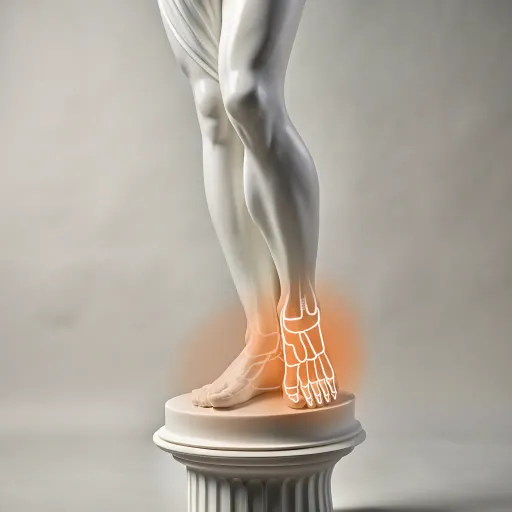
Morton's neuroma is the pathological growth of connective tissue around a plantar nerve in the metatarsal region. It develops due to prolonged pressure and chronic overload of the forefoot and is often associated with transverse flatfoot and valgus deformity.
One characteristic symptom is a burning pain between the third and fourth toes on the front of the foot, which appears after wearing shoes, especially narrow ones, for a short time. The pain can be so severe that a person has to take off their shoes and massage their foot. Additionally, the pain may occur while sitting or walking. In some cases, the lesion affects the space between the second and third toes. Sometimes, several neuromas form on one foot at once. Patients often feel as if there is a foreign object in their shoe and experience numbness, tingling, and decreased sensitivity in their toes.
No special preparation is required, except for standard preoperative examinations to rule out any contraindications. Diagnostics include fluorography, ECG, laboratory tests, and imaging methods (X-ray, MRI, or CT) to determine the exact location of the neuroma.
The procedure is performed under local or short-term general anesthesia and takes 20–30 minutes. The surgeon makes a small, 1–1.5 cm incision, carefully cuts the ligament that is compressing the nerve, isolates the neuroma, and excises it. The wound is usually sutured intradermally, which ensures a good cosmetic result and eliminates the need for suture removal. After the procedure, a sterile bandage is applied, and after a few hours, you can step on the operated leg and move around without significant restrictions.
We use advanced microsurgical instruments to minimize trauma to the surrounding tissues.
The rehabilitation period following neuroma removal takes about three weeks. While recovering, avoid putting too much strain on the foot, wear supportive footwear and insoles, and start physical therapy to speed up the healing process. In two weeks, most patients can resume their regular activities, and after one month, they can play sports again. However, regular check-ups with a healthcare professional are essential to prevent a recurrence.
Benefits
Minimal trauma
A small incision and gentle neuroma removal technique.
Fast recovery
Patients can step on the operated foot on the day of surgery.
No scars
Cosmetic intradermal sutures leave almost no trace of the procedure.
Relapse prevention
Proper neuroma removal techniques prevent tissue regrowth and recurrence of pain.
Frequently Asked Questions
Is it possible to avoid surgery?
How can neuroma recurrence be prevented?
How painful is the procedure?
Didn't find an answer to your question?
You can describe your problem in detail and ask a question to the doctor. He will answer you and help you find a solution
Врачи
Смотреть всех врачейSimilar referral activities
Implantable pacemaker programming
Adjustment and monitoring of an implanted pacemaker to optimize heart rhythm.
SIBO breath test
The hydrogen-methane breath test is a noninvasive method of diagnosing small intestinal bacterial overgrowth (SIBO). This test measures the concentration of hydrogen and methane in exhaled air after the patient ingests lactulose. This helps identify an imbalance in intestinal bacterial flora.
13C-urea breath test
13C-urea breath test is a painless, non-invasive method used to detect Helicobacter pylori infection in the stomach. It is based on the ability of H. pylori to break down urea using the enzyme urease.
Endoscopic removal of epithelial formations of the gastrointestinal tract (removal of polyps)
Most gastrointestinal polyps belong to precancerous conditions, and colon polyps are essentially the only way to develop cancer, therefore they require mandatory removal.
Pediatric ophthalmologist appointment
Specialist consultation aimed at visual impairment diagnostics and treatment in children of any age.
How to reach


- Route from exit 4 of the «Belorusskaya» metro station
- Route from exit 2 of the «Belorusskaya» metro station
How to get
From the Belorusskaya metro station of the Zamoskvoretskaya line - exit 4 After exiting the subway, walk through the pedestrian tunnel and climb the stairs. Move towards the railway tracks, go down the stairs immediately after them and walk along the house, then turn right onto 1st Yamskoye Pole Street. At the turn to 3rd Yamsky Pole Street, cross the road at the pedestrian crossing and continue along 1st Yamsky Field Street, after a few buildings on the left you will see Olympus Clinic MARS.
Travel time
9 minutes
Landmark
Olympus Clinic MARS sign
How to get
From the Belorusskaya metro station of the Ring line - exit 2. After exiting the subway, turn left and walk to the pedestrian crossing. Cross the road through two pedestrian crossings and move along the Tverskoy overpass. Go down the stairs immediately after the railway tracks, walk along the house, then turn right onto 1st Yamskoye Pole Street. At the turn to 3rd Yamsky Pole Street, cross the road at the pedestrian crossing and continue along 1st Yamsky Field Street, after a few buildings on the left you will see Olympus Clinic MARS
Travel time
11 minutes
Landmark
Olympus Clinic MARS sign
Parking lot map
Exit 3 from the metro and 640 meters straight ahead, the clinic will be on the right. Landmark - sign Olymp Clinic
- Route from the «Sukharevskaya» metro station
- Route from the «Tsvetnoy Boulevard» metro station
From the metro station "Tsvetnoy Bulvar"
1 exit to the city, then left to the Garden Ring, at the crossing to the right, crossing the boulevard, one more crossing and at the traffic light to the left. The Olymp Clinic building is located overlooking the Garden Ring to the right of the crossing. Travel time is approximately 9 minutes. Landmark - sign Olymp Clini
From the metro station "Sukharevskaya"
Exit 3 from the metro and 640 meters straight ahead, the clinic will be on the right. Landmark - sign Olymp Clinic
Parking lot map
Exit 3 from the metro and 640 meters straight ahead, the clinic will be on the right. Landmark - sign Olymp Clinic
- The route from the «Airport» metro station
- Route from the «Sokol» metro station
From Sokol metro station
The last car from the center: follow the signs for Exit 5. From the glass doors to the right and go to the end of the passage. Exit to the city by the steps to the left. After exiting the crossing to the street, go straight along Leningradsky Prospekt to the intersection with Chapaevsky Lane. Next, turn right (onto Chapaevsky Lane) and walk to the Triumph Palace residential complex. Entrance to the territory: through checkpoint No. 1, opposite the Vkusville store, you will need to present your passport. After passing through the checkpoint, go up the stairs to the fountain, opposite it you will see our clinic.
Travel time
10-12 minutes
From the Airport metro station
The first car from the center: follow the Exit 2-3 signs. Turn left out of the glass doors and walk to the end of the passage. After exiting the crossing to the street, go straight along Leningradsky Prospekt to the intersection with Chapaevsky Lane. Next, turn left (onto Chapaevsky Lane) and walk to the Triumph Palace residential complex. Entrance to the territory: through checkpoint No. 1, opposite the Vkusville store, you will need to present your passport. After passing through the checkpoint, go up the stairs to the fountain, opposite it you will see our clinic.
Travel time
12-15 minutes
How to get
Entry to the territory is prohibited, but there are free city parking lots around the Triumph Palace residential complex, where you can easily find a place for your car.
- Route from exit 4 of the «Belorusskaya» metro station
- Route from exit 2 of the «Belorusskaya» metro station
How to get
From the Belorusskaya metro station of the Zamoskvoretskaya line - exit 4 After exiting the subway, walk through the pedestrian tunnel and climb the stairs. Move towards the railway tracks, go down the stairs immediately after them and walk along the house, then turn right onto 1st Yamskoye Pole Street. At the turn to 3rd Yamsky Pole Street, cross the road at the pedestrian crossing and continue along 1st Yamsky Field Street, after a few buildings on the left you will see Olympus Clinic MARS.
Travel time
9 minutes
Landmark
Olympus Clinic MARS sign
How to get
From the Belorusskaya metro station of the Ring line - exit 2. After exiting the subway, turn left and walk to the pedestrian crossing. Cross the road through two pedestrian crossings and move along the Tverskoy overpass. Go down the stairs immediately after the railway tracks, walk along the house, then turn right onto 1st Yamskoye Pole Street. At the turn to 3rd Yamsky Pole Street, cross the road at the pedestrian crossing and continue along 1st Yamsky Field Street, after a few buildings on the left you will see Olympus Clinic MARS
Travel time
11 minutes
Landmark
Olympus Clinic MARS sign
Parking lot map
Exit 3 from the metro and 640 meters straight ahead, the clinic will be on the right. Landmark - sign Olymp Clinic