




Behavioral disorders in children and adolescents diagnostics and treatment
Behavioral disorders in children and adolescents are characterized by disruptive behavior, such as aggression, stubbornness, impulsiveness, a tendency toward conflict, and antisocial behavior. These aren't just mood swings or a bad attitude, but rather signs the child needs medical and psychotherapeutic help.
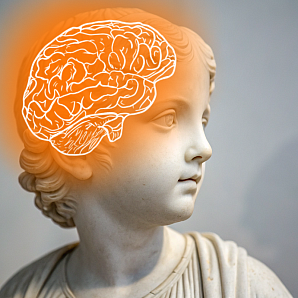
If not corrected in time, behavioral disorders can lead to problems in school and with peers and adults. In adolescence, they can lead to risky behavior.
The diagnostic examination includes a conversation with the child and their parents, an observation of their behavioral reactions, and psychodiagnostic testing. The specialist will assess the duration and severity of symptoms, the conditions of the child's upbringing, how well the child has adapted to school, and the presence of any concomitant disorders (e.g., anxiety or emotional disorders). It is important to identify risk factors such as an unfavorable family environment, uncontrolled peer influence, past traumatic experiences, and nervous system characteristics. Common manifestations include frequent conflicts with adults and peers, aggressive and destructive behavior, and a tendency to violate rules and prohibitions.
The treatment program is adapted to each patient and includes psychotherapy (cognitive-behavioral, family, and group therapy; corrective techniques (development of self-control skills, training in constructive conflict resolution, social interaction training) . It is also important to work with the family through parental counseling and, in cases of severe symptoms and accompanying disorders, pharmacotherapy.
A stable daily routine, family support, forming positive role models, limiting the negative influence of the media and unfavorable social factors can help reduce the risk of developing behavioral disorders. It is important to teach children constructive ways of expressing their emotions, self-control, and communication skills. Regular preventive consultations can help identify changes in a timely manner and prevent complications.
After active treatment, the child will continue to be monitored by a specialist. Supportive psychotherapy sessions, an expansion of social contacts, and support in the school environment are recommended. Developing confidence, forming stable positive behaviors, and reinforcing constructive ways of interacting with others are important parts of rehabilitation.
Benefits
Personalized approach
Selecting therapy based on the child's age and personality traits
Comprehensive support
Combining psychotherapy, corrective activities, and family support
Accurate diagnostics
Using contemporary psychodiagnostic methods
Positive action
Restoring social adaptation and reducing the risk of relapse
Frequently Asked Questions
Can behavioral disorders be prevented?
Is medication always prescribed for treatment?
How do behavioral disorders differ from typical disobedience?
Didn't find an answer to your question?
You can describe your problem in detail and ask a question to the doctor. He will answer you and help you find a solution
Врачи
Смотреть всех врачей
Similar referral activities
Child psychiatrist appointment
It is necessary to see a child psychiatrist when a child or teenager is experiencing emotional, behavioral, or communication difficulties. The specialist evaluates the patient's mental state and developmental characteristics, then selects appropriate methods of correction or treatment.
Neuropsychiatric disorders in children and adolescents diagnostics and treatment
Neuropsychiatric disorders are conditions that fall at the intersection of neurology and psychiatry. Examples include ADHD, tics, and ASD. These disorders are associated with peculiarities of the nervous system and are manifested in behavior and mental health.
Mental disorders in children and adolescents diagnostics and treatment
Mental disorders refer to a wide range of mental health conditions, including affective, cognitive, personality, and psychotic disorders, which affect a child's thinking, perception, emotions, and development.
Emotional disorders in children and adolescents diagnostics and treatment
Emotional disorders in children often manifest during developmental transitions, including adolescence. These disorders affect well-being, academic performance, communication with peers, and overall quality of life. Therefore, they require timely diagnosis and treatment.
How to reach


How to get
From the Belorusskaya metro station of the Zamoskvoretskaya line - exit 4 After exiting the subway, walk through the pedestrian tunnel and climb the stairs. Move towards the railway tracks, go down the stairs immediately after them and walk along the house, then turn right onto 1st Yamskoye Pole Street. At the turn to 3rd Yamsky Pole Street, cross the road at the pedestrian crossing and continue along 1st Yamsky Field Street, after a few buildings on the left you will see Olympus Clinic MARS.
Travel time
9 minutes
Landmark
Olympus Clinic MARS sign
How to get
From the Belorusskaya metro station of the Ring line - exit 2. After exiting the subway, turn left and walk to the pedestrian crossing. Cross the road through two pedestrian crossings and move along the Tverskoy overpass. Go down the stairs immediately after the railway tracks, walk along the house, then turn right onto 1st Yamskoye Pole Street. At the turn to 3rd Yamsky Pole Street, cross the road at the pedestrian crossing and continue along 1st Yamsky Field Street, after a few buildings on the left you will see Olympus Clinic MARS
Travel time
11 minutes
Landmark
Olympus Clinic MARS sign
From the metro station "Tsvetnoy Bulvar"
1 exit to the city, then left to the Garden Ring, at the crossing to the right, crossing the boulevard, one more crossing and at the traffic light to the left. The Olymp Clinic building is located overlooking the Garden Ring to the right of the crossing. Travel time is approximately 9 minutes. Landmark - sign Olymp Clini
From the metro station "Sukharevskaya"
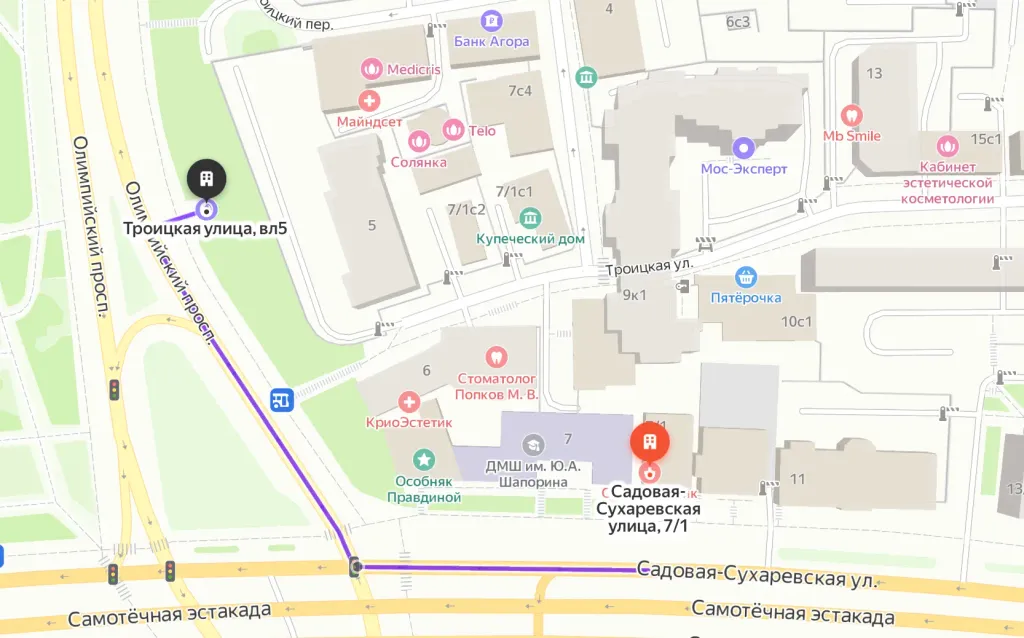
Exit 3 from the metro and 640 meters straight ahead, the clinic will be on the right. Landmark - sign Olymp Clinic
Parking lot map
Exit 3 from the metro and 640 meters straight ahead, the clinic will be on the right. Landmark - sign Olymp Clinic
From Sokol metro station
The last car from the center: follow the signs for Exit 5. From the glass doors to the right and go to the end of the passage. Exit to the city by the steps to the left. After exiting the crossing to the street, go straight along Leningradsky Prospekt to the intersection with Chapaevsky Lane. Next, turn right (onto Chapaevsky Lane) and walk to the Triumph Palace residential complex. Entrance to the territory: through checkpoint No. 1, opposite the Vkusville store, you will need to present your passport. After passing through the checkpoint, go up the stairs to the fountain, opposite it you will see our clinic.
Travel time
10-12 minutes
From the Airport metro station
The first car from the center: follow the Exit 2-3 signs. Turn left out of the glass doors and walk to the end of the passage. After exiting the crossing to the street, go straight along Leningradsky Prospekt to the intersection with Chapaevsky Lane. Next, turn left (onto Chapaevsky Lane) and walk to the Triumph Palace residential complex. Entrance to the territory: through checkpoint No. 1, opposite the Vkusville store, you will need to present your passport. After passing through the checkpoint, go up the stairs to the fountain, opposite it you will see our clinic.
Travel time
12-15 minutes
How to get
Entry to the territory is prohibited, but there are free city parking lots around the Triumph Palace residential complex, where you can easily find a place for your car. Free parking area:

How to get
From the Belorusskaya metro station of the Zamoskvoretskaya line - exit 4 After exiting the subway, walk through the pedestrian tunnel and climb the stairs. Move towards the railway tracks, go down the stairs immediately after them and walk along the house, then turn right onto 1st Yamskoye Pole Street. At the turn to 3rd Yamsky Pole Street, cross the road at the pedestrian crossing and continue along 1st Yamsky Field Street, after a few buildings on the left you will see Olympus Clinic MARS.
Travel time
9 minutes
Landmark
Olympus Clinic MARS sign
How to get
From the Belorusskaya metro station of the Ring line - exit 2. After exiting the subway, turn left and walk to the pedestrian crossing. Cross the road through two pedestrian crossings and move along the Tverskoy overpass. Go down the stairs immediately after the railway tracks, walk along the house, then turn right onto 1st Yamskoye Pole Street. At the turn to 3rd Yamsky Pole Street, cross the road at the pedestrian crossing and continue along 1st Yamsky Field Street, after a few buildings on the left you will see Olympus Clinic MARS
Travel time
11 minutes
Landmark
Olympus Clinic MARS sign