

Vulvoscopy and colposcopy
Instrumental gynecological examinations that help to identify and detect pathology of the female genital organs in the early stages.

Vulvoscopy allows you to examine the external genitalia in detail, which helps in the diagnosis of vulvar pathology: leukoplakia, sclerotrophic lichen and others. And colposcopy is used to examine the cervix and vagina and helps to detect epithelial changes: erosion and dysplasia.
Benefits
A unique opportunity to detect cancer at an early stage
The only procedure that detects cancer at an early stage.
High precision
A clear image of the cervix, which helps the doctor to more accurately determine the condition of tissues and changes.
Minimal invasiveness
Patient comfort during the procedure.
Monitoring the effectiveness of treatment
After treatment, the doctor may conduct a control study to assess the effectiveness of the therapy.
Consultation
During the consultation, the doctor examines the patient in a gynecological chair. After an external examination, vulvoscopy and colposcopy of the cervix are performed. Before colposcopy, sexual rest is recommended for 2 days before the procedure, as well as a temporary refusal to use vaginal candles, douching for a specified period.

Vulvoscopy and colposcopy
Vulvoscopy lasts 5-10 minutes. The doctor examines the external genitalia, assesses the condition of the skin, mucous membrane. Cervical colposcopy is performed using a colposcope, a special microscope with built–in lighting. The vaginal walls are dilated with an expander, and the examination itself lasts no more than 10-15 minutes. During this time, the gynecologist evaluates the condition of the vaginal mucosa, cervix, and takes swabs.
Post-procedural period
After these diagnostic rehabilitation procedures there are no restrictions. The woman can return to her usual work schedule.
Frequently Asked Questions
What is the difference between vulvoscopy and colposcopy?
Нужно ли как-то готовиться к этим обследованиям?
Can a doctor prescribe additional examination methods after colposcopy or vulvoscopy?
Didn't find an answer to your question?
You can describe your problem in detail and ask a question to the doctor. He will answer you and help you find a solution
Врачи
Смотреть всех врачей

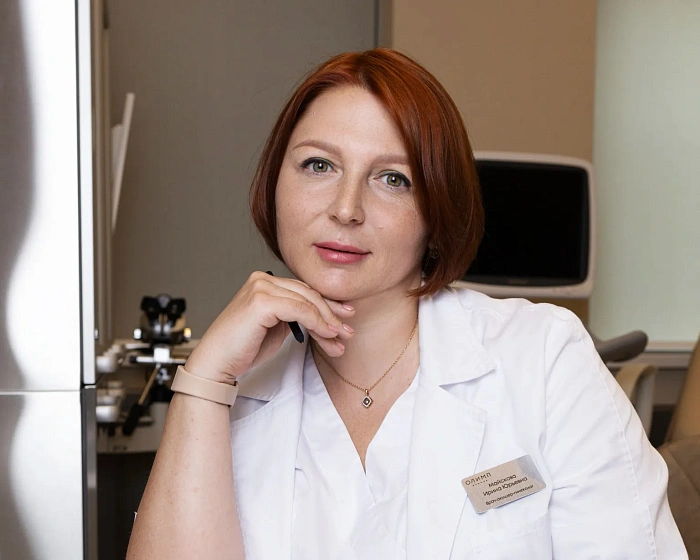
Candidate of Medical Sciences. An obstetrician-gynecologist.

Gynecologist, endoscopic surgeon. Head of the gynecology department.
Indications and contraindications
Indications
Inflammation of the perineum
Redness, swelling in the perineum, the presence of inflammatory processes in the perineum
Discharge, bleeding
The appearance of brown, brownish or sucked discharge from the genital tract
Pathology of the cervix
Changes in the cervix detected during examination in the mirrors
Pain for sexual intercourse
Discomfort during intimacy, pain in the lower abdomen
Pregnancy
Vaginal examination and cervix during pregnancy
Discomfort in the intimate area
Itching, burning, other discomfort
Expected effect
Effective diagnostics
Vulvoscopy and colposcopy are the main methods of hardware diagnostics in gynecology for assessing the condition of the mucous membrane of the vagina, cervix, as well as identifying malignant tumors.
Elimination of risks
Vulvoscopy is an examination of the external part of the genital organs, during which the gynecologist can determine the condition of the mucous membrane and possible tissue damage: neoplasms, erosions. The procedure is quick and painless.
Monitoring of the body's condition
They allow the doctor to track the progress of treatment and changes in the vulva and cervix.
Effective treatment of diseases
Due to the early detection of pathologies, the doctor can prescribe effective treatment, which contributes to a rapid recovery and reduces the risk of complications.
Similar referral activities
Consultation of a gynecologist
Medical examination aimed at diagnosing, treating and preventing diseases of the female reproductive system.
Removal of tumors in the intimate area
A procedure aimed at eliminating benign growths such as papillomas, warts, cysts and genital warts.
Reproductive surgery
Surgical treatment and simultaneous accurate diagnosis of female infertility factors: adhesions, endometriosis, congenital malformations of the genital organs, obstruction of the fallopian tubes, intrauterine pathology (septum and synechia), polycystic ovary syndrome.
Cervical plastic surgery
Cervical plastic surgery (tracheloplasty) is a surgical restoration of the anatomical structure and function of the cervix, which helps to maintain the health of the reproductive system.
Treatment of vulvar diseases
Vulvar diseases, including chronic fissures, sclerotrophic lichen and other dermatological conditions. We offer modern and effective treatment methods aimed at reducing symptoms and restoring the normal condition of the vulva skin.
Correction of menopause problems
The onset of menopause is often accompanied by a number of physical and mental manifestations unpleasant for a woman. The gynecologist will choose therapy, which can relieve or completely eliminate the symptoms.
News & Media
The event lasted from 24 to 26 May, and the theme was Aesthetic gynecology and perineology: the balance of beauty and functionality.
Find answers to your questions and feel more confident.
Everything you need to know about the cervix is now collected in one article on the website of the "Daughter-mother".
We all understand why girls should visit a gynecologist. This specialist will help solve various problems related to women's health — from pregnancy management to the prevention of sexually transmitted diseases. However, over time, when women get out of reproductive age, they begin to contact a gynecologist less and less often, mistakenly believing that they no longer need his help. But a gynecologist is not only about reproductive health, he can help in solving many other issues related to the female body. So what questions can your mother ask a gynecologist about?
Intimate problems are often hushed up, it is awkward to talk about them even with a doctor. However, if the issue concerns the health of the pelvic floor, it is better not to waste time and immediately consult a doctor. After all, problems with this area can lead to very unpleasant consequences.
Abnormal uterine bleeding is when the bleeding goes beyond the normal menstrual cycle. The discharge may be more abundant or last longer. The "normal" menstrual cycle is different for everyone. But menstruation shouldn't be a problem for you.: a serious condition that prevents you from engaging in any activity, forces you to skip work or study. In the article we will tell you how to distinguish abnormal uterine bleeding.
How to reach


- Route from exit 4 of the «Belorusskaya» metro station
- Route from exit 2 of the «Belorusskaya» metro station
How to get
From the Belorusskaya metro station of the Zamoskvoretskaya line - exit 4 After exiting the subway, walk through the pedestrian tunnel and climb the stairs. Move towards the railway tracks, go down the stairs immediately after them and walk along the house, then turn right onto 1st Yamskoye Pole Street. At the turn to 3rd Yamsky Pole Street, cross the road at the pedestrian crossing and continue along 1st Yamsky Field Street, after a few buildings on the left you will see Olympus Clinic MARS.
Travel time
9 minutes
Landmark
Olympus Clinic MARS sign
How to get
From the Belorusskaya metro station of the Ring line - exit 2. After exiting the subway, turn left and walk to the pedestrian crossing. Cross the road through two pedestrian crossings and move along the Tverskoy overpass. Go down the stairs immediately after the railway tracks, walk along the house, then turn right onto 1st Yamskoye Pole Street. At the turn to 3rd Yamsky Pole Street, cross the road at the pedestrian crossing and continue along 1st Yamsky Field Street, after a few buildings on the left you will see Olympus Clinic MARS
Travel time
11 minutes
Landmark
Olympus Clinic MARS sign
Parking lot map
Exit 3 from the metro and 640 meters straight ahead, the clinic will be on the right. Landmark - sign Olymp Clinic
- Route from the «Sukharevskaya» metro station
- Route from the «Tsvetnoy Boulevard» metro station
From the metro station "Tsvetnoy Bulvar"
1 exit to the city, then left to the Garden Ring, at the crossing to the right, crossing the boulevard, one more crossing and at the traffic light to the left. The Olymp Clinic building is located overlooking the Garden Ring to the right of the crossing. Travel time is approximately 9 minutes. Landmark - sign Olymp Clini
From the metro station "Sukharevskaya"
Exit 3 from the metro and 640 meters straight ahead, the clinic will be on the right. Landmark - sign Olymp Clinic
Parking lot map
Exit 3 from the metro and 640 meters straight ahead, the clinic will be on the right. Landmark - sign Olymp Clinic
- The route from the «Airport» metro station
- Route from the «Sokol» metro station
From Sokol metro station
The last car from the center: follow the signs for Exit 5. From the glass doors to the right and go to the end of the passage. Exit to the city by the steps to the left. After exiting the crossing to the street, go straight along Leningradsky Prospekt to the intersection with Chapaevsky Lane. Next, turn right (onto Chapaevsky Lane) and walk to the Triumph Palace residential complex. Entrance to the territory: through checkpoint No. 1, opposite the Vkusville store, you will need to present your passport. After passing through the checkpoint, go up the stairs to the fountain, opposite it you will see our clinic.
Travel time
10-12 minutes
From the Airport metro station
The first car from the center: follow the Exit 2-3 signs. Turn left out of the glass doors and walk to the end of the passage. After exiting the crossing to the street, go straight along Leningradsky Prospekt to the intersection with Chapaevsky Lane. Next, turn left (onto Chapaevsky Lane) and walk to the Triumph Palace residential complex. Entrance to the territory: through checkpoint No. 1, opposite the Vkusville store, you will need to present your passport. After passing through the checkpoint, go up the stairs to the fountain, opposite it you will see our clinic.
Travel time
12-15 minutes
How to get
Entry to the territory is prohibited, but there are free city parking lots around the Triumph Palace residential complex, where you can easily find a place for your car.
- Route from exit 4 of the «Belorusskaya» metro station
- Route from exit 2 of the «Belorusskaya» metro station
How to get
From the Belorusskaya metro station of the Zamoskvoretskaya line - exit 4 After exiting the subway, walk through the pedestrian tunnel and climb the stairs. Move towards the railway tracks, go down the stairs immediately after them and walk along the house, then turn right onto 1st Yamskoye Pole Street. At the turn to 3rd Yamsky Pole Street, cross the road at the pedestrian crossing and continue along 1st Yamsky Field Street, after a few buildings on the left you will see Olympus Clinic MARS.
Travel time
9 minutes
Landmark
Olympus Clinic MARS sign
How to get
From the Belorusskaya metro station of the Ring line - exit 2. After exiting the subway, turn left and walk to the pedestrian crossing. Cross the road through two pedestrian crossings and move along the Tverskoy overpass. Go down the stairs immediately after the railway tracks, walk along the house, then turn right onto 1st Yamskoye Pole Street. At the turn to 3rd Yamsky Pole Street, cross the road at the pedestrian crossing and continue along 1st Yamsky Field Street, after a few buildings on the left you will see Olympus Clinic MARS
Travel time
11 minutes
Landmark
Olympus Clinic MARS sign
Parking lot map
Exit 3 from the metro and 640 meters straight ahead, the clinic will be on the right. Landmark - sign Olymp Clinic