

Ultrasound of the liver
Ultrasound examination of the liver allows you to visualize the structure and assess the condition of the liver.
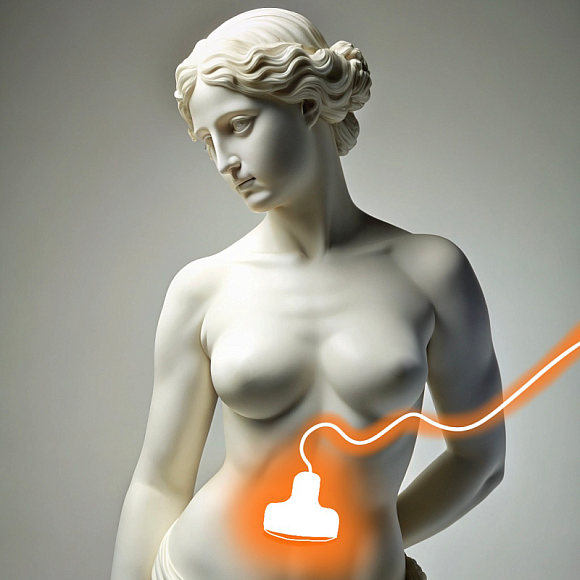
The liver plays a key role in metabolic processes, detoxification of the body and synthesis of important proteins. Ultrasound of the liver helps to identify diseases such as hepatitis, cirrhosis, fatty degeneration and tumors in the early stages.
Benefits
Painlessness and safety
Ultrasound of the liver is a non—invasive and painless procedure that does not harm the body.
High information content
The study provides detailed information about the condition of the liver, which helps in the accurate diagnosis of diseases.
Speed of implementation
The procedure takes a little time, the results are available immediately after the study.
A wide range of applications
Ultrasound is used to diagnose various liver diseases and monitor the effectiveness of treatment.
Preparation for liver ultrasound
2-3 days before the study, products that cause gas formation (legumes, cabbage, carbonated drinks) should be excluded from the diet. On the eve of the procedure, you should refrain from eating for 6-8 hours and drinking for 2-3 hours. Smoking and chewing gum should also be avoided.
Liver ultrasound procedure
The doctor applies a gel to the patient's skin, which improves the contact of the ultrasound sensor with the skin. The sensor moves along the surface of the abdomen, transmitting an image of the liver to the monitor. The doctor evaluates the size, shape, structure and echogenicity of the liver, identifying possible pathological changes. The procedure usually takes about 15-20 minutes.
Recommendations after liver ultrasound
After performing a liver ultrasound, the patient can immediately return to normal business. It is important to follow the doctor's recommendations, especially if pathologies have been identified that require observation or treatment.

Врачи
Смотреть всех врачей
Indications and contraindications
Indications
Pain and discomfort in the liver area
Pain in the right hypochondrium, which may be associated with liver disease.
Jaundice of the skin and mucous membranes
The appearance of jaundice, which may indicate impaired liver function.
Increased levels of liver enzymes
With changes in biochemical blood tests, such as an increase in ALT and AST levels.
Diagnosis and monitoring of chronic liver diseases
Ultrasound is used to detect and monitor diseases such as hepatitis, cirrhosis, fatty degeneration and liver tumors.
Expected effect
Accurate diagnosis
Ultrasound can detect diseases such as hepatitis, cirrhosis, fatty degeneration and tumors, and assess their severity.
Monitoring of chronic diseases
Regular ultrasound allows you to track the dynamics of chronic liver diseases and adjust treatment.
Identification of hidden pathologies
Detection of diseases in the early stages, when symptoms have not yet appeared.
Monitoring the effectiveness of treatment
Ultrasound is used to evaluate the results of treatment and helps doctors adjust therapy.
Similar referral activities
Ultrasound of the abdominal cavity
Ultrasound allows you to visualize internal organs such as the liver, gallbladder, pancreas, spleen, kidneys and other structures.
Ultrasound of the gallbladder
A study that allows you to assess the condition and functionality of the gallbladder, as well as identify pathologies such as stones, inflammatory processes and neoplasms.
Ultrasound of the mammary glands
A diagnostic method that allows you to evaluate the structure of breast tissue and identify pathological changes. Suitable for women of all ages and health conditions.
Ultrasound of the pelvic organs
Ultrasound allows you to visualize and assess the condition of the internal organs of the pelvis in women and men. In women, the study includes examination of the uterus, ovaries and fallopian tubes, in men — the prostate gland and seminal vesicles.
Ultrasound of the kidneys and ureters
Ultrasound of the kidneys and ureters is a diagnostic study using ultrasound waves to visualize the kidneys and ureters, which allows you to identify stones, tumors, cysts, inflammatory and other pathological processes in these organs.
Ultrasound of the thyroid gland
A diagnostic method that allows you to evaluate the structure, size and blood supply of the thyroid gland, parathyroid glands and regional lymph nodes. It is indispensable in the diagnosis of diseases such as thyroiditis, thyrotoxicosis, nodular goiter and tumor processes.
How to reach


- Route from exit 4 of the «Belorusskaya» metro station
- Route from exit 2 of the «Belorusskaya» metro station
How to get
From the Belorusskaya metro station of the Zamoskvoretskaya line - exit 4 After exiting the subway, walk through the pedestrian tunnel and climb the stairs. Move towards the railway tracks, go down the stairs immediately after them and walk along the house, then turn right onto 1st Yamskoye Pole Street. At the turn to 3rd Yamsky Pole Street, cross the road at the pedestrian crossing and continue along 1st Yamsky Field Street, after a few buildings on the left you will see Olympus Clinic MARS.
Travel time
9 minutes
Landmark
Olympus Clinic MARS sign
How to get
From the Belorusskaya metro station of the Ring line - exit 2. After exiting the subway, turn left and walk to the pedestrian crossing. Cross the road through two pedestrian crossings and move along the Tverskoy overpass. Go down the stairs immediately after the railway tracks, walk along the house, then turn right onto 1st Yamskoye Pole Street. At the turn to 3rd Yamsky Pole Street, cross the road at the pedestrian crossing and continue along 1st Yamsky Field Street, after a few buildings on the left you will see Olympus Clinic MARS
Travel time
11 minutes
Landmark
Olympus Clinic MARS sign
Parking lot map
Exit 3 from the metro and 640 meters straight ahead, the clinic will be on the right. Landmark - sign Olymp Clinic
- Route from the «Sukharevskaya» metro station
- Route from the «Tsvetnoy Boulevard» metro station
From the metro station "Tsvetnoy Bulvar"
1 exit to the city, then left to the Garden Ring, at the crossing to the right, crossing the boulevard, one more crossing and at the traffic light to the left. The Olymp Clinic building is located overlooking the Garden Ring to the right of the crossing. Travel time is approximately 9 minutes. Landmark - sign Olymp Clini
From the metro station "Sukharevskaya"
Exit 3 from the metro and 640 meters straight ahead, the clinic will be on the right. Landmark - sign Olymp Clinic
Parking lot map
Exit 3 from the metro and 640 meters straight ahead, the clinic will be on the right. Landmark - sign Olymp Clinic
- The route from the «Airport» metro station
- Route from the «Sokol» metro station
From Sokol metro station
The last car from the center: follow the signs for Exit 5. From the glass doors to the right and go to the end of the passage. Exit to the city by the steps to the left. After exiting the crossing to the street, go straight along Leningradsky Prospekt to the intersection with Chapaevsky Lane. Next, turn right (onto Chapaevsky Lane) and walk to the Triumph Palace residential complex. Entrance to the territory: through checkpoint No. 1, opposite the Vkusville store, you will need to present your passport. After passing through the checkpoint, go up the stairs to the fountain, opposite it you will see our clinic.
Travel time
10-12 minutes
From the Airport metro station
The first car from the center: follow the Exit 2-3 signs. Turn left out of the glass doors and walk to the end of the passage. After exiting the crossing to the street, go straight along Leningradsky Prospekt to the intersection with Chapaevsky Lane. Next, turn left (onto Chapaevsky Lane) and walk to the Triumph Palace residential complex. Entrance to the territory: through checkpoint No. 1, opposite the Vkusville store, you will need to present your passport. After passing through the checkpoint, go up the stairs to the fountain, opposite it you will see our clinic.
Travel time
12-15 minutes
How to get
Entry to the territory is prohibited, but there are free city parking lots around the Triumph Palace residential complex, where you can easily find a place for your car.
- Route from exit 4 of the «Belorusskaya» metro station
- Route from exit 2 of the «Belorusskaya» metro station
How to get
From the Belorusskaya metro station of the Zamoskvoretskaya line - exit 4 After exiting the subway, walk through the pedestrian tunnel and climb the stairs. Move towards the railway tracks, go down the stairs immediately after them and walk along the house, then turn right onto 1st Yamskoye Pole Street. At the turn to 3rd Yamsky Pole Street, cross the road at the pedestrian crossing and continue along 1st Yamsky Field Street, after a few buildings on the left you will see Olympus Clinic MARS.
Travel time
9 minutes
Landmark
Olympus Clinic MARS sign
How to get
From the Belorusskaya metro station of the Ring line - exit 2. After exiting the subway, turn left and walk to the pedestrian crossing. Cross the road through two pedestrian crossings and move along the Tverskoy overpass. Go down the stairs immediately after the railway tracks, walk along the house, then turn right onto 1st Yamskoye Pole Street. At the turn to 3rd Yamsky Pole Street, cross the road at the pedestrian crossing and continue along 1st Yamsky Field Street, after a few buildings on the left you will see Olympus Clinic MARS
Travel time
11 minutes
Landmark
Olympus Clinic MARS sign
Parking lot map
Exit 3 from the metro and 640 meters straight ahead, the clinic will be on the right. Landmark - sign Olymp Clinic