




Preconception health for men
We offer a set of diagnostic measures aimed at assessing the general state of health, reproductive function and identifying possible diseases that may affect conception and the health of the future child.
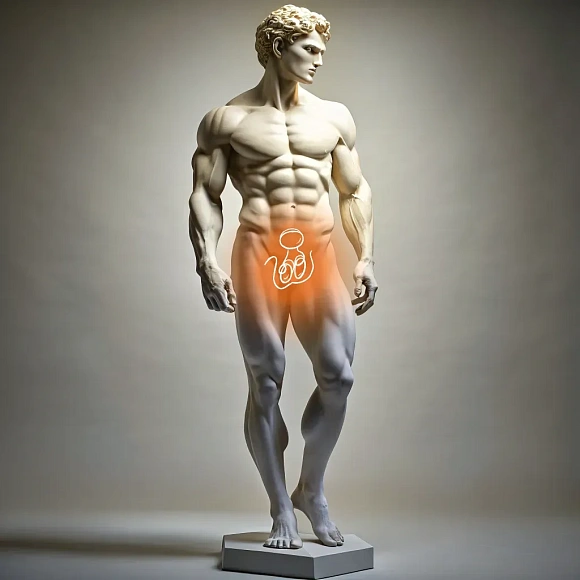
Planning a pregnancy is a responsible step that requires careful preparation. A man's health plays an important role in the successful conception and birth of a healthy baby.
Before planning a pregnancy, it is important to make sure that a man's reproductive system is functioning properly. Common causes of male infertility may include spermatogenesis disorders, hormonal disorders, sexually transmitted infections, and genetic abnormalities. Examination results help identify possible abnormalities and timely provide the necessary treatment or correction, which increases the chances of successful conception and the birth of a healthy child.
Laboratory equipment for running tests. Ultrasound machines for scrotal examination.
Consultation with a urologist or andrologist. Spermogram analysis to assess semen quality. Laboratory tests for sexually transmitted infections (STIs). Hormonal tests (testosterone, LH, FSH, estradiol, SHBG, inhibin B and prolactin levels). Ultrasound of the scrotal organs to detect anatomical abnormalities.
Preconception checkup includes laboratory tests and physical examinations. For example, ultrasound of the pelvic and scrotal organs will help assess the condition of the prostate gland, seminal vesicles and testicles. Genetic testing will identify hereditary diseases, such as cystic fibrosis, Klinefelter syndrome and other pathologies. The patient will also need to be tested for sexually transmitted infections (STIs).
After the examination, the physician will discuss the results with the patient and give preconception recommendations on how to improve health. The patient may be advised to make lifestyle changes, take vitamins and mineral supplements to improve semen quality, and receive treatment for identified diseases and infections.
Benefits
Comprehensive reproductive health assessment
Examination allows identification and correction of factors that may hinder conception.
Early detection of abnormalities
Examination helps detect and eliminate possible issues in time.
Increased fertility
Treating identified abnormalities helps improve semen quality and increase the chances of conception.
Preventing hereditary diseases
Diagnostics allows to exclude genetic risks and prevent the transmission of hereditary diseases.
Frequently Asked Questions
What is the significance of the spermogram in the examination?
Can spermogram results be improved?
What should be done if examination reveals abnormalities?
Didn't find an answer to your question?
You can describe your problem in detail and ask a question to the doctor. He will answer you and help you find a solution
Врачи
Смотреть всех врачей

Similar referral activities
Spermatocelectomy
A surgical procedure to remove a cystic mass in the testicular epididymis.
Microsurgical varicocele treatment (Marmar method)
One of the most efficient and safe ways to treat varicocele, particularly when it comes to preserving fertility and minimising the risks of recurrence.
Microsurgical varicocele treatment
Surgical treatment of varicocele. During surgery, the dilated veins of the testicle and the spermatic cord are removed to restore normal blood supply and improve reproductive function.
Minimally invasive ureteral stone removal
An advanced technique aimed at safe and effective removal of ureteral stones with minimal trauma.
Minimally invasive kidney stone removal
An advanced technique aimed at safe and effective removal of kidney stones with minimal trauma.
Circumcision
Circumcision is the surgical removal of the foreskin covering the head of the penis. It may be performed for medical indications, sanitary purposes, or cultural and religious reasons.
How to reach


- Route from exit 4 of the «Belorusskaya» metro station
- Route from exit 2 of the «Belorusskaya» metro station
How to get
From the Belorusskaya metro station of the Zamoskvoretskaya line - exit 4 After exiting the subway, walk through the pedestrian tunnel and climb the stairs. Move towards the railway tracks, go down the stairs immediately after them and walk along the house, then turn right onto 1st Yamskoye Pole Street. At the turn to 3rd Yamsky Pole Street, cross the road at the pedestrian crossing and continue along 1st Yamsky Field Street, after a few buildings on the left you will see Olympus Clinic MARS.
Travel time
9 minutes
Landmark
Olympus Clinic MARS sign
How to get
From the Belorusskaya metro station of the Ring line - exit 2. After exiting the subway, turn left and walk to the pedestrian crossing. Cross the road through two pedestrian crossings and move along the Tverskoy overpass. Go down the stairs immediately after the railway tracks, walk along the house, then turn right onto 1st Yamskoye Pole Street. At the turn to 3rd Yamsky Pole Street, cross the road at the pedestrian crossing and continue along 1st Yamsky Field Street, after a few buildings on the left you will see Olympus Clinic MARS
Travel time
11 minutes
Landmark
Olympus Clinic MARS sign
Parking lot map
Exit 3 from the metro and 640 meters straight ahead, the clinic will be on the right. Landmark - sign Olymp Clinic
- Route from the «Sukharevskaya» metro station
- Route from the «Tsvetnoy Boulevard» metro station
From the metro station "Tsvetnoy Bulvar"
1 exit to the city, then left to the Garden Ring, at the crossing to the right, crossing the boulevard, one more crossing and at the traffic light to the left. The Olymp Clinic building is located overlooking the Garden Ring to the right of the crossing. Travel time is approximately 9 minutes. Landmark - sign Olymp Clini
From the metro station "Sukharevskaya"
Exit 3 from the metro and 640 meters straight ahead, the clinic will be on the right. Landmark - sign Olymp Clinic
Parking lot map
Exit 3 from the metro and 640 meters straight ahead, the clinic will be on the right. Landmark - sign Olymp Clinic
- The route from the «Airport» metro station
- Route from the «Sokol» metro station
From Sokol metro station
The last car from the center: follow the signs for Exit 5. From the glass doors to the right and go to the end of the passage. Exit to the city by the steps to the left. After exiting the crossing to the street, go straight along Leningradsky Prospekt to the intersection with Chapaevsky Lane. Next, turn right (onto Chapaevsky Lane) and walk to the Triumph Palace residential complex. Entrance to the territory: through checkpoint No. 1, opposite the Vkusville store, you will need to present your passport. After passing through the checkpoint, go up the stairs to the fountain, opposite it you will see our clinic.
Travel time
10-12 minutes
From the Airport metro station
The first car from the center: follow the Exit 2-3 signs. Turn left out of the glass doors and walk to the end of the passage. After exiting the crossing to the street, go straight along Leningradsky Prospekt to the intersection with Chapaevsky Lane. Next, turn left (onto Chapaevsky Lane) and walk to the Triumph Palace residential complex. Entrance to the territory: through checkpoint No. 1, opposite the Vkusville store, you will need to present your passport. After passing through the checkpoint, go up the stairs to the fountain, opposite it you will see our clinic.
Travel time
12-15 minutes
How to get
Entry to the territory is prohibited, but there are free city parking lots around the Triumph Palace residential complex, where you can easily find a place for your car.
- Route from exit 4 of the «Belorusskaya» metro station
- Route from exit 2 of the «Belorusskaya» metro station
How to get
From the Belorusskaya metro station of the Zamoskvoretskaya line - exit 4 After exiting the subway, walk through the pedestrian tunnel and climb the stairs. Move towards the railway tracks, go down the stairs immediately after them and walk along the house, then turn right onto 1st Yamskoye Pole Street. At the turn to 3rd Yamsky Pole Street, cross the road at the pedestrian crossing and continue along 1st Yamsky Field Street, after a few buildings on the left you will see Olympus Clinic MARS.
Travel time
9 minutes
Landmark
Olympus Clinic MARS sign
How to get
From the Belorusskaya metro station of the Ring line - exit 2. After exiting the subway, turn left and walk to the pedestrian crossing. Cross the road through two pedestrian crossings and move along the Tverskoy overpass. Go down the stairs immediately after the railway tracks, walk along the house, then turn right onto 1st Yamskoye Pole Street. At the turn to 3rd Yamsky Pole Street, cross the road at the pedestrian crossing and continue along 1st Yamsky Field Street, after a few buildings on the left you will see Olympus Clinic MARS
Travel time
11 minutes
Landmark
Olympus Clinic MARS sign
Parking lot map
Exit 3 from the metro and 640 meters straight ahead, the clinic will be on the right. Landmark - sign Olymp Clinic