

Consultation with a rehabilitation medicine physician
The doctor of the department of rehabilitation and restorative treatment is engaged in restoring or compensating for the lost functions of the patient after various injuries, operations and diseases.
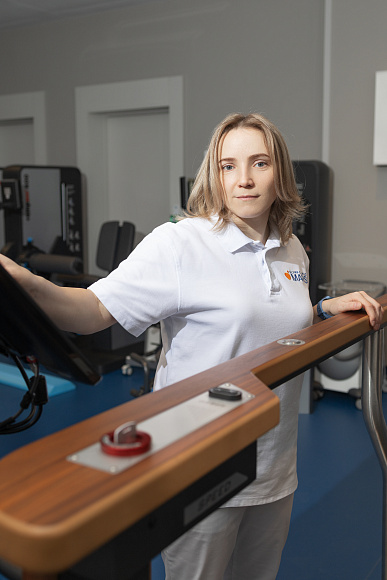
The doctor of the department of rehabilitation and rehabilitation treatment, based on the collection of anamnesis, examination and analysis of the patient's research results, develops an individual treatment program, which may include physical exercises, physiotherapy, massage, manual therapy.
Recovery is necessary after injuries to the musculoskeletal system, cardiovascular and neurological diseases, surgical interventions and other medical conditions. The goal of rehabilitation is to help the patient regain lost skills, improve motor activity and give freedom of movement, reduce pain and improve the quality of life. It is important to start rehabilitation treatment as early as possible in order to achieve the best results and prevent the development of chronic complications. Regular consultations with the doctor of the rehabilitation and rehabilitation department help to monitor the patient's progress and make changes to the treatment plan, if necessary.
During the consultation, the doctor of the department of rehabilitation and rehabilitation treatment collects complaints, anamnesis of life and disease, social and professional anamnesis, conducts a clinical examination, evaluates the anatomical and functional state of organs and systems of the human body: muscle strength, joint mobility, general physical shape, etc. If necessary, laboratory and instrumental examinations are prescribed. After the examination, the doctor develops an individual rehabilitation plan, including physical exercises, physiotherapy, massage and other treatment methods.
It is important to follow the doctor's recommendations, attend repeated consultations to monitor the condition and adjust the rehabilitation plan.
Before consulting a doctor of the department of rehabilitation and rehabilitation treatment, it is recommended: Collect the results of previous studies and analyses. Prepare a list of all medications and dietary supplements taken. Write down all the symptoms and functional limitations. Inform the doctor about all chronic diseases, injuries and operations. Report the presence of allergies.
To consult a rehabilitologist , the following tools are used to assess the physical condition (dynamometers, goniometers). Equipment for physiotherapy and rehabilitation.
Individual approach Rehabilitation is selected taking into account the characteristics of the patient and the specific disease. Comprehensive recovery The program includes various techniques for restoring body functions. Prevention of complications Regular consultations help to prevent the development of chronic complications. Improving the quality of life Rehabilitation promotes a return to an active and fulfilling life.
Benefits
Individual approach
Rehabilitation is selected taking into account the characteristics of the patient and the specific disease.
Comprehensive recovery
The program includes various methods for restoring body functions.
Prevention of complications
Regular consultations help to prevent the development of chronic complications.
Improving the quality of life
Rehabilitation promotes a return to an active and fulfilling life.
What will you learn at the consultation?
A rehabilitologist will not only answer your questions, but also create a clear picture of your condition. The doctor will explain how to restore the lost functions, which methods are right for you, and what results can be expected.
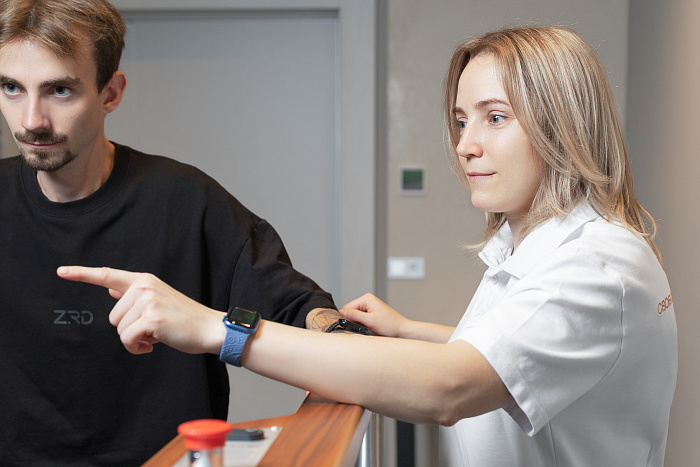
Why is consultation important?
Rehabilitation is a process that requires a competent approach. The consultation allows you to understand the current state of the body, determine the real goals of recovery and choose the best treatment methods. Without a preliminary analysis, the risk of choosing ineffective procedures or excessive workloads increases.
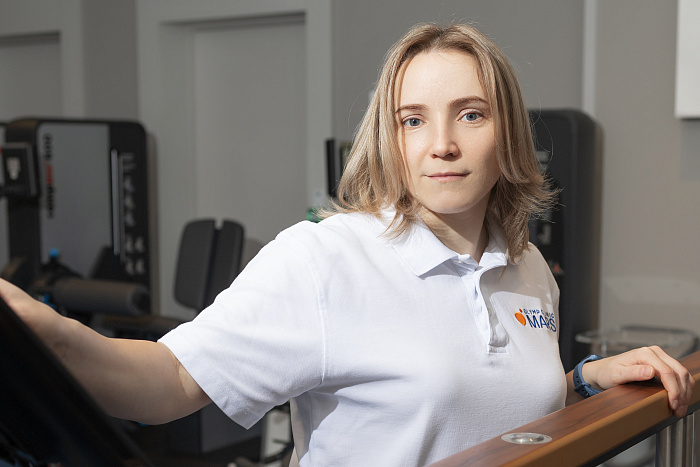
Врачи
Смотреть всех врачей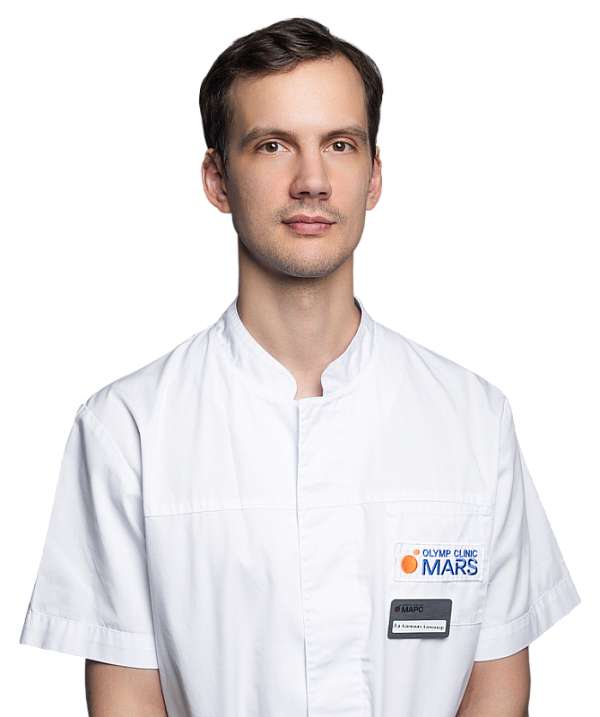
Manual Therapist, Exercise Therapy and Sports Medicine Specialist
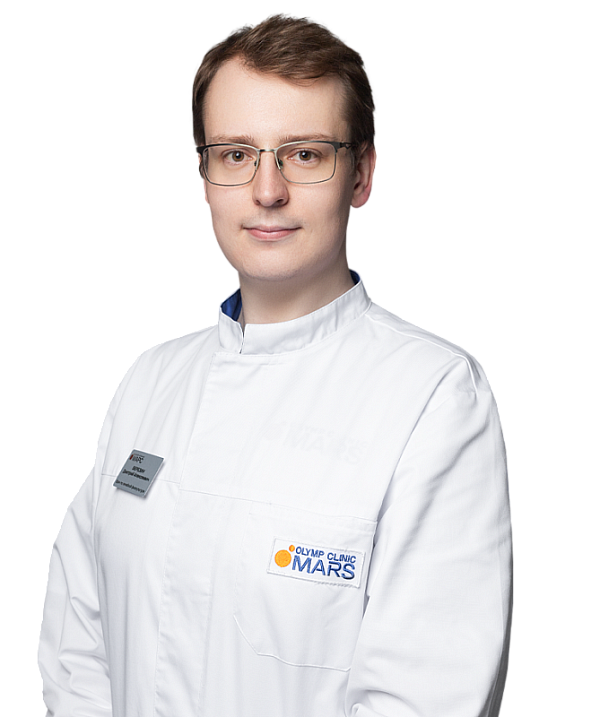
Exercise Therapy and Sports Medicine Physician
Similar referral activities
High-intensity magnetic therapy (SIS)
The method of physiotherapy, which is based on the effect of a powerful pulsed magnetic field on body tissues, which contributes to pain relief, reduces inflammation and accelerates tissue regeneration.
Techar therapy
A method of physiotherapy based on the use of electromagnetic waves of a certain frequency for a deep impact on the tissues of the body.
Shock Wave therapy (UHT)
A treatment method based on the effect of acoustic shock waves on body tissues.
Low-frequency electrostatic therapy
A method of physiotherapy based on the effect of a low-frequency electrostatic field on body tissues.
Mechanotherapy
A rehabilitation method based on the use of mechanical devices to restore joint mobility and increase muscle strength in patients after injuries and operations on the musculoskeletal system.
Therapeutic massage
One of the options for manual action on the soft tissues of the body, aimed at the restoration, treatment and prevention of various diseases.
How to reach


- Route from exit 4 of the «Belorusskaya» metro station
- Route from exit 2 of the «Belorusskaya» metro station
How to get
From the Belorusskaya metro station of the Zamoskvoretskaya line - exit 4 After exiting the subway, walk through the pedestrian tunnel and climb the stairs. Move towards the railway tracks, go down the stairs immediately after them and walk along the house, then turn right onto 1st Yamskoye Pole Street. At the turn to 3rd Yamsky Pole Street, cross the road at the pedestrian crossing and continue along 1st Yamsky Field Street, after a few buildings on the left you will see Olympus Clinic MARS.
Travel time
9 minutes
Landmark
Olympus Clinic MARS sign
How to get
From the Belorusskaya metro station of the Ring line - exit 2. After exiting the subway, turn left and walk to the pedestrian crossing. Cross the road through two pedestrian crossings and move along the Tverskoy overpass. Go down the stairs immediately after the railway tracks, walk along the house, then turn right onto 1st Yamskoye Pole Street. At the turn to 3rd Yamsky Pole Street, cross the road at the pedestrian crossing and continue along 1st Yamsky Field Street, after a few buildings on the left you will see Olympus Clinic MARS
Travel time
11 minutes
Landmark
Olympus Clinic MARS sign
Parking lot map
Exit 3 from the metro and 640 meters straight ahead, the clinic will be on the right. Landmark - sign Olymp Clinic
- Route from the «Sukharevskaya» metro station
- Route from the «Tsvetnoy Boulevard» metro station
From the metro station "Tsvetnoy Bulvar"
1 exit to the city, then left to the Garden Ring, at the crossing to the right, crossing the boulevard, one more crossing and at the traffic light to the left. The Olymp Clinic building is located overlooking the Garden Ring to the right of the crossing. Travel time is approximately 9 minutes. Landmark - sign Olymp Clini
From the metro station "Sukharevskaya"
Exit 3 from the metro and 640 meters straight ahead, the clinic will be on the right. Landmark - sign Olymp Clinic
Parking lot map
Exit 3 from the metro and 640 meters straight ahead, the clinic will be on the right. Landmark - sign Olymp Clinic
- The route from the «Airport» metro station
- Route from the «Sokol» metro station
From Sokol metro station
The last car from the center: follow the signs for Exit 5. From the glass doors to the right and go to the end of the passage. Exit to the city by the steps to the left. After exiting the crossing to the street, go straight along Leningradsky Prospekt to the intersection with Chapaevsky Lane. Next, turn right (onto Chapaevsky Lane) and walk to the Triumph Palace residential complex. Entrance to the territory: through checkpoint No. 1, opposite the Vkusville store, you will need to present your passport. After passing through the checkpoint, go up the stairs to the fountain, opposite it you will see our clinic.
Travel time
10-12 minutes
From the Airport metro station
The first car from the center: follow the Exit 2-3 signs. Turn left out of the glass doors and walk to the end of the passage. After exiting the crossing to the street, go straight along Leningradsky Prospekt to the intersection with Chapaevsky Lane. Next, turn left (onto Chapaevsky Lane) and walk to the Triumph Palace residential complex. Entrance to the territory: through checkpoint No. 1, opposite the Vkusville store, you will need to present your passport. After passing through the checkpoint, go up the stairs to the fountain, opposite it you will see our clinic.
Travel time
12-15 minutes
How to get
Entry to the territory is prohibited, but there are free city parking lots around the Triumph Palace residential complex, where you can easily find a place for your car.
- Route from exit 4 of the «Belorusskaya» metro station
- Route from exit 2 of the «Belorusskaya» metro station
How to get
From the Belorusskaya metro station of the Zamoskvoretskaya line - exit 4 After exiting the subway, walk through the pedestrian tunnel and climb the stairs. Move towards the railway tracks, go down the stairs immediately after them and walk along the house, then turn right onto 1st Yamskoye Pole Street. At the turn to 3rd Yamsky Pole Street, cross the road at the pedestrian crossing and continue along 1st Yamsky Field Street, after a few buildings on the left you will see Olympus Clinic MARS.
Travel time
9 minutes
Landmark
Olympus Clinic MARS sign
How to get
From the Belorusskaya metro station of the Ring line - exit 2. After exiting the subway, turn left and walk to the pedestrian crossing. Cross the road through two pedestrian crossings and move along the Tverskoy overpass. Go down the stairs immediately after the railway tracks, walk along the house, then turn right onto 1st Yamskoye Pole Street. At the turn to 3rd Yamsky Pole Street, cross the road at the pedestrian crossing and continue along 1st Yamsky Field Street, after a few buildings on the left you will see Olympus Clinic MARS
Travel time
11 minutes
Landmark
Olympus Clinic MARS sign
Parking lot map
Exit 3 from the metro and 640 meters straight ahead, the clinic will be on the right. Landmark - sign Olymp Clinic