




Treatment of fractures of the humerus
Shoulder fracture is one of the most common injuries caused by falls, direct blows or accidents. It can lead to sharp pain, swelling, impaired shoulder movement and loss of arm function, which significantly affects the patient's quality of life.
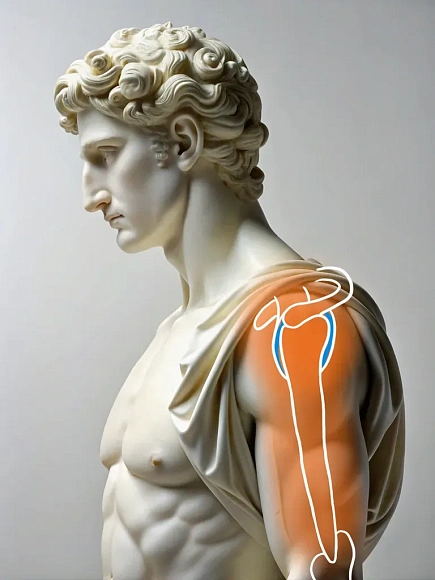
Shoulder fractures can vary in nature from simple linear fractures to complex splinter injuries. These injuries are typically accompanied by significant pain, swelling, and limited mobility.
Shoulder fracture treatment depends on the type and extent of the fracture. Displaced or complex fractures require surgical intervention - osteosynthesis. This surgery involves securing the bone fragments with steel components, which allows proper fusion and restoration of arm function. Osteosynthesis is performed using minimally invasive techniques, which reduces trauma and accelerates the recovery process. Most patients can begin rehabilitation the first few days after surgery under the supervision of a specialist.
Common blood and urine tests. Coagulogram ( blood clotting assessment). X-ray or computed tomography (CT) scan of the shoulder Consultation with an anesthesiologist to choose the best anesthesia option. Examination and consultation with a general practitioner for an overall assessment of the patient's health.
Shoulder fracture treatment depends on the type and extent of the fracture. For slight or non-displaced fractures, the arm is immobilized with a splint or cast to ensure proper fusion of the bone. Surgery is required for displaced, complex fractures or in cases of threat to adjacent tissues. Surgery may include open reduction and internal fixation of the bone fragments with steel plates, screws and pins. In closed splinter and open displaced fractures, with significant soft tissue damage, the surgeon may resort to skeletal traction or Ilizarov compression-distraction apparatus fixation.
Rehabilitation starts after the treatment, to restore mobility, strength and arm function. The physician may prescribe physiotherapy, exercise therapy and, optionally, massage. The rehabilitation program is selected individually, based on the patient's physical condition and the extent of the fracture.
X-ray equipment for intraoperative monitoring. Steel retainer set (plates, screws, pins) to secure bone fragments.
Benefits
Anatomy restoration
Securing and fusion of the bone fragments help to return proper form and shoulder function.
Pain relief and mobility restoration
Patients can return to normal life, including lifting and moving the hand
Preventing complications
Treatment is aimed at preventing shoulder deformity, chronic pain and mobility limitations.
Frequently Asked Questions
Is surgery required for a fractured shoulder?
How long does rehabilitation take after a shoulder fracture?
Will I be able to move my arm right after surgery?
Didn't find an answer to your question?
You can describe your problem in detail and ask a question to the doctor. He will answer you and help you find a solution
Врачи
Смотреть всех врачей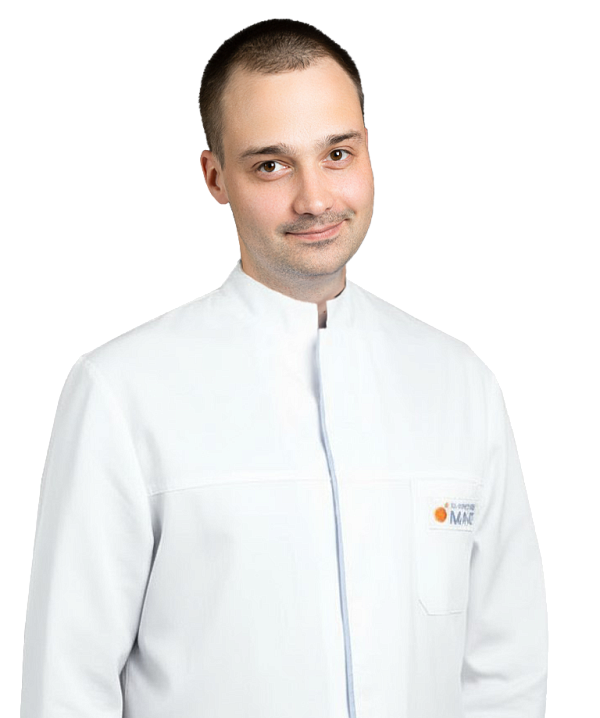
Candidate of Medical Sciences. Orthopedic Trauma Surgeon. Head of the Traumatology Department.
Similar referral activities
Arthroscopy of the ankle joint
Ankle arthroscopy is a minimally invasive surgical procedure used to diagnose and treat various diseases and injuries of the ankle joint.
Arthroscopy of the knee joint
Knee arthroscopy is a minimally invasive surgical procedure for the diagnosis and treatment of injuries and diseases of the knee joint. It allows examining the joint for damage and eliminating the identified defects.
Arthroscopy of the elbow joint
Arthroscopy of the elbow joint is a minimally invasive surgical intervention that allows for accurate diagnosis and simultaneous treatment of joint injuries.
Arthrodesis of the joints of the fingers of the hand
The destruction of the joints of the fingers of the hand is accompanied by pronounced pain and impaired functions. Arthrodesis is a surgical intervention in which the affected joint is completely immobilized, which relieves pain and progression of inflammation.
Arthroscopic revision of the cystic joint
The condition of the wrist joints determines the functioning of the hand. Arthroscopic revision is a minimally invasive diagnostic procedure that assesses the condition of the joint tissues, which is necessary for planning subsequent treatment.
Arthroscopy of the shoulder joint
Arthroscopy of the shoulder joint is a minimally invasive surgical procedure designed to diagnose and treat various diseases and injuries of the shoulder joint.
News & Media
On April 4 and 5, 2025, the IX ASTAOR International Congress was held — a large-scale meeting of specialists in the field of sports traumatology, orthopedics, arthroscopy and rehabilitation. Doctors, nurses, rehabilitologists and other professionals from different cities of Russia and the world came to share their practical experience and discuss current injury treatment technologies.
Olymp Clinic MARS extends beyond providing high-quality medical care to serve as a comprehensive scientific and educational platform. The clinic will host training events for students, residents, and postgraduates, while physicians will have the opportunity to enhance their qualifications.
An interregional scientific and practical conference, entitled "Advanced Arthroscopic Treatment in Traumatology and Orthopedics," was held in Voronezh on November 1-2. The event convened over 120 specialists from across Russia, including traumatologists, orthopedists, and rehabilitation specialists.
The first manned spacecraft in almost a decade has been successfully launched in the United States. According to many experts, the launch of the world's first private spacecraft marks a new era in space exploration.
A bone fracture is a common injury that almost everyone has been through. Although human bones are very strong, if the external force is too great, they can break like a plastic ruler when it is bent too much. In the article we will tell you how to act in case of a fracture.
Summer is a time for walking, outdoor activities and sports. The sun and warm weather encourage us to spend more time outside and enjoy nature. But the more we move, the higher the risk of injury becomes. It is not surprising that bruises and dislocations become frequent companions of summer leisure. Of course, in case of serious injuries such as fractures, it is necessary to consult a doctor immediately. But what to do with less significant injuries — minor bruises, sprains with slight swelling and pain? In such cases, you can help yourself and others on your own, knowing the basics of first aid. In this article, we will tell you how to cope with injuries sustained during summer activities and quickly return to your usual lifestyle.
How to reach


- Route from exit 4 of the «Belorusskaya» metro station
- Route from exit 2 of the «Belorusskaya» metro station
How to get
From the Belorusskaya metro station of the Zamoskvoretskaya line - exit 4 After exiting the subway, walk through the pedestrian tunnel and climb the stairs. Move towards the railway tracks, go down the stairs immediately after them and walk along the house, then turn right onto 1st Yamskoye Pole Street. At the turn to 3rd Yamsky Pole Street, cross the road at the pedestrian crossing and continue along 1st Yamsky Field Street, after a few buildings on the left you will see Olympus Clinic MARS.
Travel time
9 minutes
Landmark
Olympus Clinic MARS sign
How to get
From the Belorusskaya metro station of the Ring line - exit 2. After exiting the subway, turn left and walk to the pedestrian crossing. Cross the road through two pedestrian crossings and move along the Tverskoy overpass. Go down the stairs immediately after the railway tracks, walk along the house, then turn right onto 1st Yamskoye Pole Street. At the turn to 3rd Yamsky Pole Street, cross the road at the pedestrian crossing and continue along 1st Yamsky Field Street, after a few buildings on the left you will see Olympus Clinic MARS
Travel time
11 minutes
Landmark
Olympus Clinic MARS sign
Parking lot map
Exit 3 from the metro and 640 meters straight ahead, the clinic will be on the right. Landmark - sign Olymp Clinic
- Route from the «Sukharevskaya» metro station
- Route from the «Tsvetnoy Boulevard» metro station
From the metro station "Tsvetnoy Bulvar"
1 exit to the city, then left to the Garden Ring, at the crossing to the right, crossing the boulevard, one more crossing and at the traffic light to the left. The Olymp Clinic building is located overlooking the Garden Ring to the right of the crossing. Travel time is approximately 9 minutes. Landmark - sign Olymp Clini
From the metro station "Sukharevskaya"
Exit 3 from the metro and 640 meters straight ahead, the clinic will be on the right. Landmark - sign Olymp Clinic
Parking lot map
Exit 3 from the metro and 640 meters straight ahead, the clinic will be on the right. Landmark - sign Olymp Clinic
- The route from the «Airport» metro station
- Route from the «Sokol» metro station
From Sokol metro station
The last car from the center: follow the signs for Exit 5. From the glass doors to the right and go to the end of the passage. Exit to the city by the steps to the left. After exiting the crossing to the street, go straight along Leningradsky Prospekt to the intersection with Chapaevsky Lane. Next, turn right (onto Chapaevsky Lane) and walk to the Triumph Palace residential complex. Entrance to the territory: through checkpoint No. 1, opposite the Vkusville store, you will need to present your passport. After passing through the checkpoint, go up the stairs to the fountain, opposite it you will see our clinic.
Travel time
10-12 minutes
From the Airport metro station
The first car from the center: follow the Exit 2-3 signs. Turn left out of the glass doors and walk to the end of the passage. After exiting the crossing to the street, go straight along Leningradsky Prospekt to the intersection with Chapaevsky Lane. Next, turn left (onto Chapaevsky Lane) and walk to the Triumph Palace residential complex. Entrance to the territory: through checkpoint No. 1, opposite the Vkusville store, you will need to present your passport. After passing through the checkpoint, go up the stairs to the fountain, opposite it you will see our clinic.
Travel time
12-15 minutes
How to get
Entry to the territory is prohibited, but there are free city parking lots around the Triumph Palace residential complex, where you can easily find a place for your car.
- Route from exit 4 of the «Belorusskaya» metro station
- Route from exit 2 of the «Belorusskaya» metro station
How to get
From the Belorusskaya metro station of the Zamoskvoretskaya line - exit 4 After exiting the subway, walk through the pedestrian tunnel and climb the stairs. Move towards the railway tracks, go down the stairs immediately after them and walk along the house, then turn right onto 1st Yamskoye Pole Street. At the turn to 3rd Yamsky Pole Street, cross the road at the pedestrian crossing and continue along 1st Yamsky Field Street, after a few buildings on the left you will see Olympus Clinic MARS.
Travel time
9 minutes
Landmark
Olympus Clinic MARS sign
How to get
From the Belorusskaya metro station of the Ring line - exit 2. After exiting the subway, turn left and walk to the pedestrian crossing. Cross the road through two pedestrian crossings and move along the Tverskoy overpass. Go down the stairs immediately after the railway tracks, walk along the house, then turn right onto 1st Yamskoye Pole Street. At the turn to 3rd Yamsky Pole Street, cross the road at the pedestrian crossing and continue along 1st Yamsky Field Street, after a few buildings on the left you will see Olympus Clinic MARS
Travel time
11 minutes
Landmark
Olympus Clinic MARS sign
Parking lot map
Exit 3 from the metro and 640 meters straight ahead, the clinic will be on the right. Landmark - sign Olymp Clinic