

Diagnosis and treatment of atopic dermatitis
Комплексный подход к диагностике и лечению атопического дерматита, включающий индивидуальный подбор схем терапии и уход за кожей.
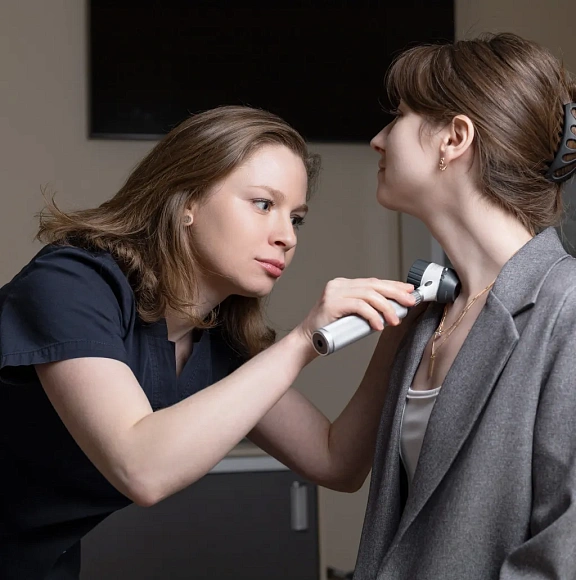
Атопический дерматит — распространенное заболевание, которое часто начинается в детском возрасте, сопровождается периодическими обострениями и может сохраняться на протяжении жизни. Для достижения стойкой ремиссии и избавления от зуда, высыпаний и сухости кожи требуется грамотное лечение.
У детей болезнь может начинаться с ярко-красных пятен с мокнущими элементами на поверхности, которые затем покрываются корками, у взрослых — с утолщения кожи, покраснения и трещин в локтевых, подколенных ямках. Симптомы часто обостряются из-за контакта с аллергенами, стресса или повреждения кожи, а также из-за смены климатического сезона. Лечение направлено на устранение воспаления, восстановление барьерной функции кожи и минимизацию рецидивов. Медикаментозная терапия, уход за кожей и исключение триггеров позволяют контролировать заболевание.
Benefits
Prevention of complications
Regular skin care reduces the risk of infections and other complications.
Individual therapy
Treatment is selected taking into account the stage and features of the course of the disease.
Effective treatment methods
Modern medications and care products help to achieve long-term remission.
An integrated approach
Therapy eliminates symptoms and prevents relapses.
Diagnosis
The doctor will specify when the first signs appeared, what could provoke them, and how often exacerbations occur. A family history must be collected. The doctor will also find out what kind of treatment was carried out earlier and what basic therapy is carried out at home. In difficult cases, a histological examination may be required (a piece of skin is taken to confirm the diagnosis in the laboratory).
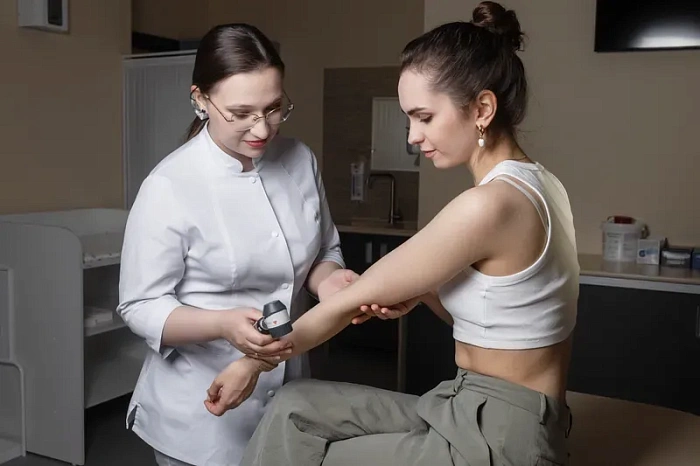
Treatment
The therapy is aimed at reducing inflammation, preventing the development of relapses and restoring the protective functions of the skin. The doctor selects the therapy depending on the stage of the disease and the severity of the symptoms. Glucocorticosteroids in the form of an ointment, cream, or gel for external use may be prescribed, as well as systemic corticosteroids, calcineurin inhibitors, phototherapy, and genetically engineered therapy.
Recovery
After an exacerbation, the patient needs to continue skin care: use moisturizers, avoid aggressive care products.

Врачи
Смотреть всех врачейSimilar referral activities
Dermatoscopy
A method for diagnosing skin neoplasms (moles, age spots, and others) using a dermatoscope, which enlarges the image of the skin and allows you to study the structure of neoplasms in detail.
Dermatologist's appointment
Skin, hair, or nail problems? A dermatologist will prescribe a diagnosis, as well as draw up a treatment or prevention plan for dermatological problems.
How to reach


- Route from exit 4 of the «Belorusskaya» metro station
- Route from exit 2 of the «Belorusskaya» metro station
How to get
From the Belorusskaya metro station of the Zamoskvoretskaya line - exit 4 After exiting the subway, walk through the pedestrian tunnel and climb the stairs. Move towards the railway tracks, go down the stairs immediately after them and walk along the house, then turn right onto 1st Yamskoye Pole Street. At the turn to 3rd Yamsky Pole Street, cross the road at the pedestrian crossing and continue along 1st Yamsky Field Street, after a few buildings on the left you will see Olympus Clinic MARS.
Travel time
9 minutes
Landmark
Olympus Clinic MARS sign
How to get
From the Belorusskaya metro station of the Ring line - exit 2. After exiting the subway, turn left and walk to the pedestrian crossing. Cross the road through two pedestrian crossings and move along the Tverskoy overpass. Go down the stairs immediately after the railway tracks, walk along the house, then turn right onto 1st Yamskoye Pole Street. At the turn to 3rd Yamsky Pole Street, cross the road at the pedestrian crossing and continue along 1st Yamsky Field Street, after a few buildings on the left you will see Olympus Clinic MARS
Travel time
11 minutes
Landmark
Olympus Clinic MARS sign
Parking lot map
Exit 3 from the metro and 640 meters straight ahead, the clinic will be on the right. Landmark - sign Olymp Clinic
- Route from the «Sukharevskaya» metro station
- Route from the «Tsvetnoy Boulevard» metro station
From the metro station "Tsvetnoy Bulvar"
1 exit to the city, then left to the Garden Ring, at the crossing to the right, crossing the boulevard, one more crossing and at the traffic light to the left. The Olymp Clinic building is located overlooking the Garden Ring to the right of the crossing. Travel time is approximately 9 minutes. Landmark - sign Olymp Clini
From the metro station "Sukharevskaya"
Exit 3 from the metro and 640 meters straight ahead, the clinic will be on the right. Landmark - sign Olymp Clinic
Parking lot map
Exit 3 from the metro and 640 meters straight ahead, the clinic will be on the right. Landmark - sign Olymp Clinic
- The route from the «Airport» metro station
- Route from the «Sokol» metro station
From Sokol metro station
The last car from the center: follow the signs for Exit 5. From the glass doors to the right and go to the end of the passage. Exit to the city by the steps to the left. After exiting the crossing to the street, go straight along Leningradsky Prospekt to the intersection with Chapaevsky Lane. Next, turn right (onto Chapaevsky Lane) and walk to the Triumph Palace residential complex. Entrance to the territory: through checkpoint No. 1, opposite the Vkusville store, you will need to present your passport. After passing through the checkpoint, go up the stairs to the fountain, opposite it you will see our clinic.
Travel time
10-12 minutes
From the Airport metro station
The first car from the center: follow the Exit 2-3 signs. Turn left out of the glass doors and walk to the end of the passage. After exiting the crossing to the street, go straight along Leningradsky Prospekt to the intersection with Chapaevsky Lane. Next, turn left (onto Chapaevsky Lane) and walk to the Triumph Palace residential complex. Entrance to the territory: through checkpoint No. 1, opposite the Vkusville store, you will need to present your passport. After passing through the checkpoint, go up the stairs to the fountain, opposite it you will see our clinic.
Travel time
12-15 minutes
How to get
Entry to the territory is prohibited, but there are free city parking lots around the Triumph Palace residential complex, where you can easily find a place for your car.
- Route from exit 4 of the «Belorusskaya» metro station
- Route from exit 2 of the «Belorusskaya» metro station
How to get
From the Belorusskaya metro station of the Zamoskvoretskaya line - exit 4 After exiting the subway, walk through the pedestrian tunnel and climb the stairs. Move towards the railway tracks, go down the stairs immediately after them and walk along the house, then turn right onto 1st Yamskoye Pole Street. At the turn to 3rd Yamsky Pole Street, cross the road at the pedestrian crossing and continue along 1st Yamsky Field Street, after a few buildings on the left you will see Olympus Clinic MARS.
Travel time
9 minutes
Landmark
Olympus Clinic MARS sign
How to get
From the Belorusskaya metro station of the Ring line - exit 2. After exiting the subway, turn left and walk to the pedestrian crossing. Cross the road through two pedestrian crossings and move along the Tverskoy overpass. Go down the stairs immediately after the railway tracks, walk along the house, then turn right onto 1st Yamskoye Pole Street. At the turn to 3rd Yamsky Pole Street, cross the road at the pedestrian crossing and continue along 1st Yamsky Field Street, after a few buildings on the left you will see Olympus Clinic MARS
Travel time
11 minutes
Landmark
Olympus Clinic MARS sign
Parking lot map
Exit 3 from the metro and 640 meters straight ahead, the clinic will be on the right. Landmark - sign Olymp Clinic