




Neuropsychiatric disorders in children and adolescents diagnostics and treatment
Neuropsychiatric disorders are conditions that fall at the intersection of neurology and psychiatry. Examples include ADHD, tics, and ASD. These disorders are associated with peculiarities of the nervous system and are manifested in behavior and mental health.
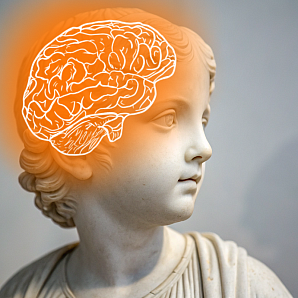
Neuropsychiatric disorders involve conditions that affect both the nervous system and mental health. These disorders manifest as motor and speech impairments, decreased attention, learning difficulties, emotional instability, and a tendency toward impulsive or obsessive-compulsive behavior.
These symptoms may manifest differently in children than in adults. Some conditions improve as the child matures, while others intensify and lead to persistent social adaptation problems without professional help.
The diagnostics cover a comprehensive assessment of the child's condition. The specialist collects the child's medical history and talks to the parents to clarify the symptoms and how they manifest. Standardized psychodiagnostic methods are employed, including Conners rating scales, anxiety and depression questionnaires, attention and memory tests, and projective methods. A consultation with a child psychiatrist and a neurologist is mandatory, in addition to a possible consultation with a neuropsychologist. Electroencephalography (EEG), brain MRI, and laboratory tests may be used to clarify the biological cause of the disorder and rule out metabolic causes. This interdisciplinary approach distinguishes mental disorders from behavioral difficulties and identifies links with neurological developmental characteristics.
A treatment plan is drawn up based on the results of the examination. This plan includes psychotherapy sessions aimed at correcting cognitive functions, teaching self-control strategies, and developing social skills. Play and art therapy techniques, neuropsychological correction, and special educational programs are used in the case of school difficulties. If necessary, the specialist will prescribe medication. We prefer monotherapy to minimize the burden on the child's body and reduce the risk of side effects.
Preventing neuropsychiatric disorders involves early detection of developmental issues, regular checkups with specialists, and working with the family. Parents get tips on organizing daily routines, keeping cognitive activity going, reducing stress, and creating a positive emotional environment.
Benefits
Early detection of problems
A comprehensive examination helps diagnose disorders in the earliest stages, increasing the effectiveness of treatment
Comprehensive rehabilitation
A combination of psychotherapy, neuropsychological correction, and educational support to promote full social adaptation
Minimal medication
Pharmacotherapy is prescribed only when necessary, primarily in the form of monotherapy
Interdisciplinary care
Psychiatrists, neurologists, and neuropsychologists collaborate to provide children with comprehensive support
Frequently Asked Questions
Is hospitalization necessary?
When are medications prescribed?
Can neuropsychiatric disorders be cured?
Didn't find an answer to your question?
You can describe your problem in detail and ask a question to the doctor. He will answer you and help you find a solution
Врачи
Смотреть всех врачей
Similar referral activities
Child psychiatrist appointment
It is necessary to see a child psychiatrist when a child or teenager is experiencing emotional, behavioral, or communication difficulties. The specialist evaluates the patient's mental state and developmental characteristics, then selects appropriate methods of correction or treatment.
Mental disorders in children and adolescents diagnostics and treatment
Mental disorders refer to a wide range of mental health conditions, including affective, cognitive, personality, and psychotic disorders, which affect a child's thinking, perception, emotions, and development.
Behavioral disorders in children and adolescents diagnostics and treatment
Behavioral disorders in children and adolescents are characterized by disruptive behavior, such as aggression, stubbornness, impulsiveness, a tendency toward conflict, and antisocial behavior. These aren't just mood swings or a bad attitude, but rather signs the child needs medical and psychotherapeutic help.
Emotional disorders in children and adolescents diagnostics and treatment
Emotional disorders in children often manifest during developmental transitions, including adolescence. These disorders affect well-being, academic performance, communication with peers, and overall quality of life. Therefore, they require timely diagnosis and treatment.
How to reach


How to get
From the Belorusskaya metro station of the Zamoskvoretskaya line - exit 4 After exiting the subway, walk through the pedestrian tunnel and climb the stairs. Move towards the railway tracks, go down the stairs immediately after them and walk along the house, then turn right onto 1st Yamskoye Pole Street. At the turn to 3rd Yamsky Pole Street, cross the road at the pedestrian crossing and continue along 1st Yamsky Field Street, after a few buildings on the left you will see Olympus Clinic MARS.
Travel time
9 minutes
Landmark
Olympus Clinic MARS sign
How to get
From the Belorusskaya metro station of the Ring line - exit 2. After exiting the subway, turn left and walk to the pedestrian crossing. Cross the road through two pedestrian crossings and move along the Tverskoy overpass. Go down the stairs immediately after the railway tracks, walk along the house, then turn right onto 1st Yamskoye Pole Street. At the turn to 3rd Yamsky Pole Street, cross the road at the pedestrian crossing and continue along 1st Yamsky Field Street, after a few buildings on the left you will see Olympus Clinic MARS
Travel time
11 minutes
Landmark
Olympus Clinic MARS sign
From the metro station "Tsvetnoy Bulvar"
1 exit to the city, then left to the Garden Ring, at the crossing to the right, crossing the boulevard, one more crossing and at the traffic light to the left. The Olymp Clinic building is located overlooking the Garden Ring to the right of the crossing. Travel time is approximately 9 minutes. Landmark - sign Olymp Clini
From the metro station "Sukharevskaya"
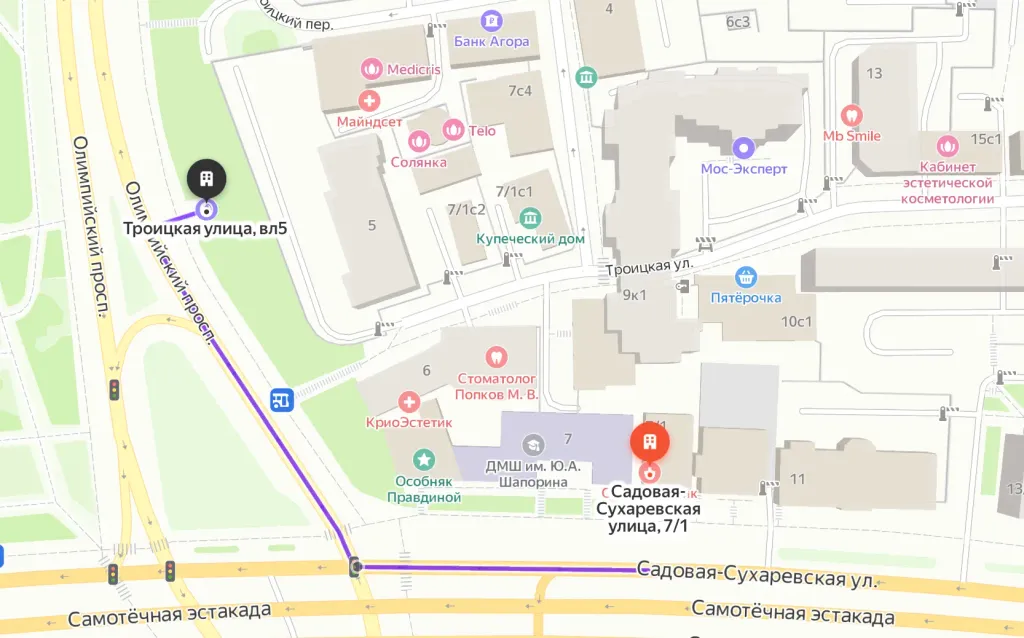
Exit 3 from the metro and 640 meters straight ahead, the clinic will be on the right. Landmark - sign Olymp Clinic
Parking lot map
Exit 3 from the metro and 640 meters straight ahead, the clinic will be on the right. Landmark - sign Olymp Clinic
From Sokol metro station
The last car from the center: follow the signs for Exit 5. From the glass doors to the right and go to the end of the passage. Exit to the city by the steps to the left. After exiting the crossing to the street, go straight along Leningradsky Prospekt to the intersection with Chapaevsky Lane. Next, turn right (onto Chapaevsky Lane) and walk to the Triumph Palace residential complex. Entrance to the territory: through checkpoint No. 1, opposite the Vkusville store, you will need to present your passport. After passing through the checkpoint, go up the stairs to the fountain, opposite it you will see our clinic.
Travel time
10-12 minutes
From the Airport metro station
The first car from the center: follow the Exit 2-3 signs. Turn left out of the glass doors and walk to the end of the passage. After exiting the crossing to the street, go straight along Leningradsky Prospekt to the intersection with Chapaevsky Lane. Next, turn left (onto Chapaevsky Lane) and walk to the Triumph Palace residential complex. Entrance to the territory: through checkpoint No. 1, opposite the Vkusville store, you will need to present your passport. After passing through the checkpoint, go up the stairs to the fountain, opposite it you will see our clinic.
Travel time
12-15 minutes
How to get
Entry to the territory is prohibited, but there are free city parking lots around the Triumph Palace residential complex, where you can easily find a place for your car. Free parking area:

How to get
From the Belorusskaya metro station of the Zamoskvoretskaya line - exit 4 After exiting the subway, walk through the pedestrian tunnel and climb the stairs. Move towards the railway tracks, go down the stairs immediately after them and walk along the house, then turn right onto 1st Yamskoye Pole Street. At the turn to 3rd Yamsky Pole Street, cross the road at the pedestrian crossing and continue along 1st Yamsky Field Street, after a few buildings on the left you will see Olympus Clinic MARS.
Travel time
9 minutes
Landmark
Olympus Clinic MARS sign
How to get
From the Belorusskaya metro station of the Ring line - exit 2. After exiting the subway, turn left and walk to the pedestrian crossing. Cross the road through two pedestrian crossings and move along the Tverskoy overpass. Go down the stairs immediately after the railway tracks, walk along the house, then turn right onto 1st Yamskoye Pole Street. At the turn to 3rd Yamsky Pole Street, cross the road at the pedestrian crossing and continue along 1st Yamsky Field Street, after a few buildings on the left you will see Olympus Clinic MARS
Travel time
11 minutes
Landmark
Olympus Clinic MARS sign