




X-ray-guided knee or hip joint nerve injection
Knee or hip joint nerve block is an injection procedure that helps relieve pain caused by degenerative, inflammatory, or postoperative changes in the joints.
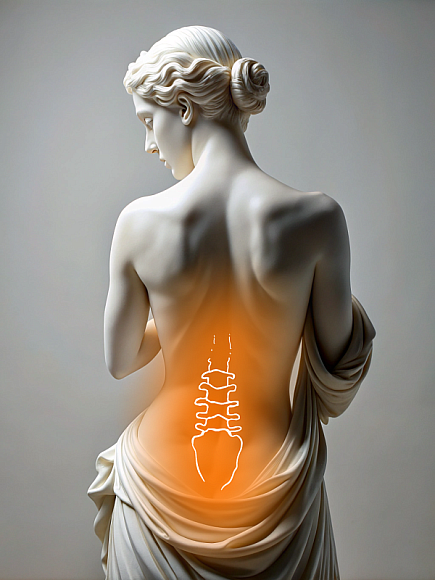
Using X-ray navigation, the surgeon can precisely identify anatomical points and inject a mixture of anesthetic and anti-inflammatory drugs into areas where large peripheral nerves (e.g., the femoral, obturator, or tibial nerves) pass. This blocks the transmission of pain impulses, significantly alleviating the patient's condition.
No special preparation is required for the procedure. However, it is necessary to consult with an anesthesiologist or an orthopedic surgeon. The specialist will evaluate your medical history and current health conditions, as well as analyze the results of MRI, CT, or X-ray examinations. If the patient is taking anticoagulants, the therapy may need to be temporarily adjusted after the initial consultation.
The patient is positioned on the treatment table to allow access to the target areas. The surgeon will first treat the skin with an antiseptic and administer local anesthesia. Then, they will perform an injection near the corresponding nerve trunk under fluoroscopic guidance. Knee joints are most often treated by blocking the genicular nerves and their branches. For the hip joint, branches of the femoral and obturator nerves are blocked. The injected drug may contain a local anesthetic, such as lidocaine or bupivacaine, and a glucocorticosteroid. The procedure takes 15 to 20 minutes and is performed on an outpatient basis.
We use advanced equipment to make sure the procedure is safe and accurate. The primary navigation tool is an EOC (electro-optical converter), an X-ray system that lets the surgeon monitor the needle's position and the direction of the drug injection in real time. We also use special sterile spinal needles that accurately reach the target area without damaging surrounding tissues. Depending on the clinical situation, local anesthetics and anti-inflammatory drugs are used, most often glucocorticosteroids. All procedures are performed under strict sterile conditions with constant monitoring of the patient's condition.
Following the procedure, you will be required to remain at the clinic for about an hour under medical supervision. Physical activity should be reduced for 24 hours after the procedure. Physical therapy, exercise therapy, or a series of injections may be prescribed to consolidate the results. Radiofrequency ablation may be considered for chronic pain.
Benefits
Precise localization
Targets the source of pain
Navigation control
X-ray guidance minimizes the risk of errors
Quick action
Pain often subsides within a few hours
Diagnostic value
Helps confirm whether pain syndrome is associated with a specific nerve
Frequently Asked Questions
Can the injection be repeated?
How can I tell if the injection has worked?
Is driving allowed after the procedure?
Does the injection help everyone?
Didn't find an answer to your question?
You can describe your problem in detail and ask a question to the doctor. He will answer you and help you find a solution
Врачи
Смотреть всех врачей
Orthopedic Trauma Surgeon, Vertebrologist

General surgeon, Professor, Doctor of Medical Sciences. Head of the Spine Surgery Department.
Similar referral activities
Endoscopic stenosis decompression
Endoscopic stenosis decompression is a minimally invasive surgical procedure designed to relieve pressure on the spinal cord and nerve roots caused by narrowing of the spinal canal.
Scoliosis and kyphosis spine surgery (Spine straightening)
Surgical treatment for scoliosis and kyphosis is performed when the spinal curvature progresses and causes pain or impaired posture, or when the patient has a pronounced cosmetic defect. The procedure aims to restore the correct spinal alignment, address cosmetic deformities, and stabilize the spine.
Endoscopic discectomy
Endoscopic discectomy is a minimally invasive surgical procedure aimed at removing pathological disc protrusion that puts pressure on the nerve, with minimal impact on the surrounding tissue.
X-ray-guided transforaminal injection (1 zone)
X-ray-guided transforaminal injection provides targeted relief for pain caused by pinched or inflamed nerve roots in the intervertebral foramen area. This method ensures the accurate administration of drugs with minimal trauma.
Goel-Harms fixation
Goel-Harms fixation is a standard decompression and stabilization technique used for compression fractures, spinal stenosis, segmental instability, or spondylolisthesis.
X-ray-guided facet joint injection (1 spinal segment)
X-ray-guided facet joint injection is a minimally invasive procedure aimed at eliminating pain caused by inflammation or degenerative-dystrophic changes in the facet joints of the spine.
How to reach


- Route from exit 4 of the «Belorusskaya» metro station
- Route from exit 2 of the «Belorusskaya» metro station
How to get
From the Belorusskaya metro station of the Zamoskvoretskaya line - exit 4 After exiting the subway, walk through the pedestrian tunnel and climb the stairs. Move towards the railway tracks, go down the stairs immediately after them and walk along the house, then turn right onto 1st Yamskoye Pole Street. At the turn to 3rd Yamsky Pole Street, cross the road at the pedestrian crossing and continue along 1st Yamsky Field Street, after a few buildings on the left you will see Olympus Clinic MARS.
Travel time
9 minutes
Landmark
Olympus Clinic MARS sign
How to get
From the Belorusskaya metro station of the Ring line - exit 2. After exiting the subway, turn left and walk to the pedestrian crossing. Cross the road through two pedestrian crossings and move along the Tverskoy overpass. Go down the stairs immediately after the railway tracks, walk along the house, then turn right onto 1st Yamskoye Pole Street. At the turn to 3rd Yamsky Pole Street, cross the road at the pedestrian crossing and continue along 1st Yamsky Field Street, after a few buildings on the left you will see Olympus Clinic MARS
Travel time
11 minutes
Landmark
Olympus Clinic MARS sign
Parking lot map
Exit 3 from the metro and 640 meters straight ahead, the clinic will be on the right. Landmark - sign Olymp Clinic
- Route from the «Sukharevskaya» metro station
- Route from the «Tsvetnoy Boulevard» metro station
From the metro station "Tsvetnoy Bulvar"
1 exit to the city, then left to the Garden Ring, at the crossing to the right, crossing the boulevard, one more crossing and at the traffic light to the left. The Olymp Clinic building is located overlooking the Garden Ring to the right of the crossing. Travel time is approximately 9 minutes. Landmark - sign Olymp Clini
From the metro station "Sukharevskaya"
Exit 3 from the metro and 640 meters straight ahead, the clinic will be on the right. Landmark - sign Olymp Clinic
Parking lot map
Exit 3 from the metro and 640 meters straight ahead, the clinic will be on the right. Landmark - sign Olymp Clinic
- The route from the «Airport» metro station
- Route from the «Sokol» metro station
From Sokol metro station
The last car from the center: follow the signs for Exit 5. From the glass doors to the right and go to the end of the passage. Exit to the city by the steps to the left. After exiting the crossing to the street, go straight along Leningradsky Prospekt to the intersection with Chapaevsky Lane. Next, turn right (onto Chapaevsky Lane) and walk to the Triumph Palace residential complex. Entrance to the territory: through checkpoint No. 1, opposite the Vkusville store, you will need to present your passport. After passing through the checkpoint, go up the stairs to the fountain, opposite it you will see our clinic.
Travel time
10-12 minutes
From the Airport metro station
The first car from the center: follow the Exit 2-3 signs. Turn left out of the glass doors and walk to the end of the passage. After exiting the crossing to the street, go straight along Leningradsky Prospekt to the intersection with Chapaevsky Lane. Next, turn left (onto Chapaevsky Lane) and walk to the Triumph Palace residential complex. Entrance to the territory: through checkpoint No. 1, opposite the Vkusville store, you will need to present your passport. After passing through the checkpoint, go up the stairs to the fountain, opposite it you will see our clinic.
Travel time
12-15 minutes
How to get
Entry to the territory is prohibited, but there are free city parking lots around the Triumph Palace residential complex, where you can easily find a place for your car.
- Route from exit 4 of the «Belorusskaya» metro station
- Route from exit 2 of the «Belorusskaya» metro station
How to get
From the Belorusskaya metro station of the Zamoskvoretskaya line - exit 4 After exiting the subway, walk through the pedestrian tunnel and climb the stairs. Move towards the railway tracks, go down the stairs immediately after them and walk along the house, then turn right onto 1st Yamskoye Pole Street. At the turn to 3rd Yamsky Pole Street, cross the road at the pedestrian crossing and continue along 1st Yamsky Field Street, after a few buildings on the left you will see Olympus Clinic MARS.
Travel time
9 minutes
Landmark
Olympus Clinic MARS sign
How to get
From the Belorusskaya metro station of the Ring line - exit 2. After exiting the subway, turn left and walk to the pedestrian crossing. Cross the road through two pedestrian crossings and move along the Tverskoy overpass. Go down the stairs immediately after the railway tracks, walk along the house, then turn right onto 1st Yamskoye Pole Street. At the turn to 3rd Yamsky Pole Street, cross the road at the pedestrian crossing and continue along 1st Yamsky Field Street, after a few buildings on the left you will see Olympus Clinic MARS
Travel time
11 minutes
Landmark
Olympus Clinic MARS sign
Parking lot map
Exit 3 from the metro and 640 meters straight ahead, the clinic will be on the right. Landmark - sign Olymp Clinic