




Scoliosis and kyphosis spine surgery (Spine straightening)
Surgical treatment for scoliosis and kyphosis is performed when the spinal curvature progresses and causes pain or impaired posture, or when the patient has a pronounced cosmetic defect. The procedure aims to restore the correct spinal alignment, address cosmetic deformities, and stabilize the spine.
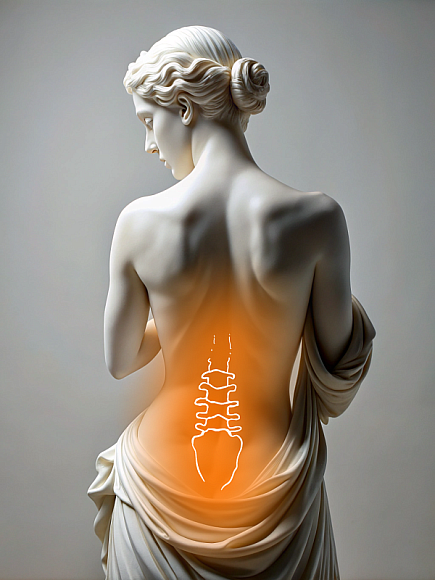
The surgery is classified according to its degree of complexity depending on the severity of the curvature, the extent of the intervention, and associated risk.
Before the operation, an extensive examination is carried out. This includes blood and urine tests, spinal MRI and CT scans, and an ECG. These tests evaluate the extent of the deformity, identify any contraindications, and determine the appropriate anesthesia. The patient is examined by a spine specialist, a general practitioner, and an anesthesiologist. If necessary, functional X-rays are performed. Based on the results, the extent of the correction and the type of metal structure are planned.
The procedure is performed under general anesthesia. First, the surgeon accesses the spine. Then, screws are inserted into the supporting vertebrae. Next, the curvature is corrected by fixing the spine in its new position with rods. Complex cases may require osteotomy, which involves removing parts of the bone to facilitate straightening. Complicated cases require a combined approach or multi-stage intervention. All actions are controlled using X-ray navigation and body function monitoring systems to ensure accurate and safe correction of the spinal axis.
The surgery requires advanced neurosurgical equipment, such as X-ray imaging, navigation systems, and internal organ function monitoring systems. We also use stabilization systems made of titanium from leading international manufacturers. These systems are designed for permanent installation and will keep your spine stable, even under heavy loads.
The early postoperative period is spent in the hospital. On the first day, the patient begins walking independently and receives pain relief. Typically, patients need to stay in the hospital for 5-6 days after surgery. During this time, physical therapists work with patients to speed up their recovery. Wearing a corset after surgery is not required. After discharge, a recovery program, physical and exercise therapy are prescribed. Physical activity is restricted for 3-6 months. Regular checkups and X-ray examinations are conducted to assess the stability of the structure and the progress of fusion.
Benefits
Aesthetic effect
The operation straightens the spine, significantly improving posture and the aesthetic appearance of the body
Improved quality of life
Chronic pain is eliminated and overall well-being is improved
Long-term results
The latest fixation methods stabilize the spine and prevent future deformity progression
Precision
Advanced technology and experienced surgical team ensure accuracy and safety during surgery
Frequently Asked Questions
How long does the procedure take?
Is it possible to avoid metal structures?
Will my spine be fully straightened?
Is it possible to play sports after recovery?
Didn't find an answer to your question?
You can describe your problem in detail and ask a question to the doctor. He will answer you and help you find a solution
Врачи
Смотреть всех врачей
Orthopedic Trauma Surgeon, Vertebrologist
General surgeon, Professor, Doctor of Medical Sciences. Head of the Spine Surgery Department.
Similar referral activities
Endoscopic stenosis decompression
Endoscopic stenosis decompression is a minimally invasive surgical procedure designed to relieve pressure on the spinal cord and nerve roots caused by narrowing of the spinal canal.
Endoscopic discectomy
Endoscopic discectomy is a minimally invasive surgical procedure aimed at removing pathological disc protrusion that puts pressure on the nerve, with minimal impact on the surrounding tissue.
X-ray-guided transforaminal injection (1 zone)
X-ray-guided transforaminal injection provides targeted relief for pain caused by pinched or inflamed nerve roots in the intervertebral foramen area. This method ensures the accurate administration of drugs with minimal trauma.
Goel-Harms fixation
Goel-Harms fixation is a standard decompression and stabilization technique used for compression fractures, spinal stenosis, segmental instability, or spondylolisthesis.
X-ray-guided facet joint injection (1 spinal segment)
X-ray-guided facet joint injection is a minimally invasive procedure aimed at eliminating pain caused by inflammation or degenerative-dystrophic changes in the facet joints of the spine.
X-ray-guided knee or hip joint nerve injection
Knee or hip joint nerve block is an injection procedure that helps relieve pain caused by degenerative, inflammatory, or postoperative changes in the joints.
How to reach


- Route from exit 4 of the «Belorusskaya» metro station
- Route from exit 2 of the «Belorusskaya» metro station
How to get
From the Belorusskaya metro station of the Zamoskvoretskaya line - exit 4 After exiting the subway, walk through the pedestrian tunnel and climb the stairs. Move towards the railway tracks, go down the stairs immediately after them and walk along the house, then turn right onto 1st Yamskoye Pole Street. At the turn to 3rd Yamsky Pole Street, cross the road at the pedestrian crossing and continue along 1st Yamsky Field Street, after a few buildings on the left you will see Olympus Clinic MARS.
Travel time
9 minutes
Landmark
Olympus Clinic MARS sign
How to get
From the Belorusskaya metro station of the Ring line - exit 2. After exiting the subway, turn left and walk to the pedestrian crossing. Cross the road through two pedestrian crossings and move along the Tverskoy overpass. Go down the stairs immediately after the railway tracks, walk along the house, then turn right onto 1st Yamskoye Pole Street. At the turn to 3rd Yamsky Pole Street, cross the road at the pedestrian crossing and continue along 1st Yamsky Field Street, after a few buildings on the left you will see Olympus Clinic MARS
Travel time
11 minutes
Landmark
Olympus Clinic MARS sign
Parking lot map
Exit 3 from the metro and 640 meters straight ahead, the clinic will be on the right. Landmark - sign Olymp Clinic
- Route from the «Sukharevskaya» metro station
- Route from the «Tsvetnoy Boulevard» metro station
From the metro station "Tsvetnoy Bulvar"
1 exit to the city, then left to the Garden Ring, at the crossing to the right, crossing the boulevard, one more crossing and at the traffic light to the left. The Olymp Clinic building is located overlooking the Garden Ring to the right of the crossing. Travel time is approximately 9 minutes. Landmark - sign Olymp Clini
From the metro station "Sukharevskaya"
Exit 3 from the metro and 640 meters straight ahead, the clinic will be on the right. Landmark - sign Olymp Clinic
Parking lot map
Exit 3 from the metro and 640 meters straight ahead, the clinic will be on the right. Landmark - sign Olymp Clinic
- The route from the «Airport» metro station
- Route from the «Sokol» metro station
From Sokol metro station
The last car from the center: follow the signs for Exit 5. From the glass doors to the right and go to the end of the passage. Exit to the city by the steps to the left. After exiting the crossing to the street, go straight along Leningradsky Prospekt to the intersection with Chapaevsky Lane. Next, turn right (onto Chapaevsky Lane) and walk to the Triumph Palace residential complex. Entrance to the territory: through checkpoint No. 1, opposite the Vkusville store, you will need to present your passport. After passing through the checkpoint, go up the stairs to the fountain, opposite it you will see our clinic.
Travel time
10-12 minutes
From the Airport metro station
The first car from the center: follow the Exit 2-3 signs. Turn left out of the glass doors and walk to the end of the passage. After exiting the crossing to the street, go straight along Leningradsky Prospekt to the intersection with Chapaevsky Lane. Next, turn left (onto Chapaevsky Lane) and walk to the Triumph Palace residential complex. Entrance to the territory: through checkpoint No. 1, opposite the Vkusville store, you will need to present your passport. After passing through the checkpoint, go up the stairs to the fountain, opposite it you will see our clinic.
Travel time
12-15 minutes
How to get
Entry to the territory is prohibited, but there are free city parking lots around the Triumph Palace residential complex, where you can easily find a place for your car.
- Route from exit 4 of the «Belorusskaya» metro station
- Route from exit 2 of the «Belorusskaya» metro station
How to get
From the Belorusskaya metro station of the Zamoskvoretskaya line - exit 4 After exiting the subway, walk through the pedestrian tunnel and climb the stairs. Move towards the railway tracks, go down the stairs immediately after them and walk along the house, then turn right onto 1st Yamskoye Pole Street. At the turn to 3rd Yamsky Pole Street, cross the road at the pedestrian crossing and continue along 1st Yamsky Field Street, after a few buildings on the left you will see Olympus Clinic MARS.
Travel time
9 minutes
Landmark
Olympus Clinic MARS sign
How to get
From the Belorusskaya metro station of the Ring line - exit 2. After exiting the subway, turn left and walk to the pedestrian crossing. Cross the road through two pedestrian crossings and move along the Tverskoy overpass. Go down the stairs immediately after the railway tracks, walk along the house, then turn right onto 1st Yamskoye Pole Street. At the turn to 3rd Yamsky Pole Street, cross the road at the pedestrian crossing and continue along 1st Yamsky Field Street, after a few buildings on the left you will see Olympus Clinic MARS
Travel time
11 minutes
Landmark
Olympus Clinic MARS sign
Parking lot map
Exit 3 from the metro and 640 meters straight ahead, the clinic will be on the right. Landmark - sign Olymp Clinic