

Atraumatic removal of wisdom teeth
Wisdom tooth extraction is a surgical operation to extract the third molar from the dental alveoli. The peculiarity of the intervention is the difficulty of access, especially to the roots of the eights.
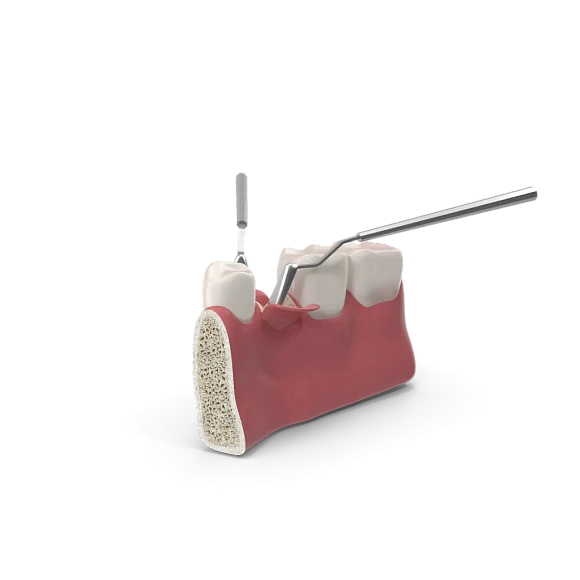
Tooth extraction is performed when it is impossible to treat them or in preparation for prosthetics and the installation of braces
Benefits
Creating space for orthodontic treatment
Freeing up space for teeth alignment and bite correction
Restoring oral health
After tooth extraction, dentures may be required to restore chewing function and smile aesthetics
Improved oral health
Removal of decayed teeth has a positive effect on oral hygiene, as such elements of the dentition are foci of infection
Fast recovery
Due to less tissue injury, wound healing occurs faster.
Rehabilitation after Atraumatic removal of wisdom teeth
The dentist will give you care instructions after the procedure. The care plan includes recommendations on taking painkillers, using cold compresses and dietary restrictions.

The procedure of atraumatic removal of wisdom teeth
Atraumatic tooth extraction involves extraction without forceps and fees. Ligaments are cut off from the dental unit, then segmentation is performed with microsurgical blades. Next, the surgeon applies stitches to close the wound.
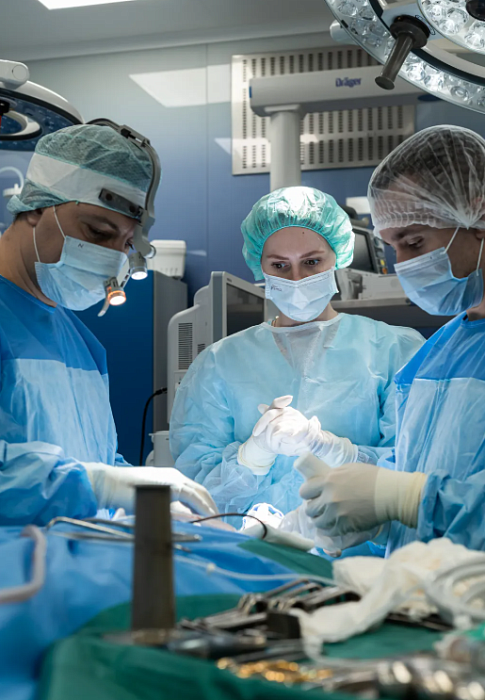
Consultation before Atraumatic removal of wisdom teeth
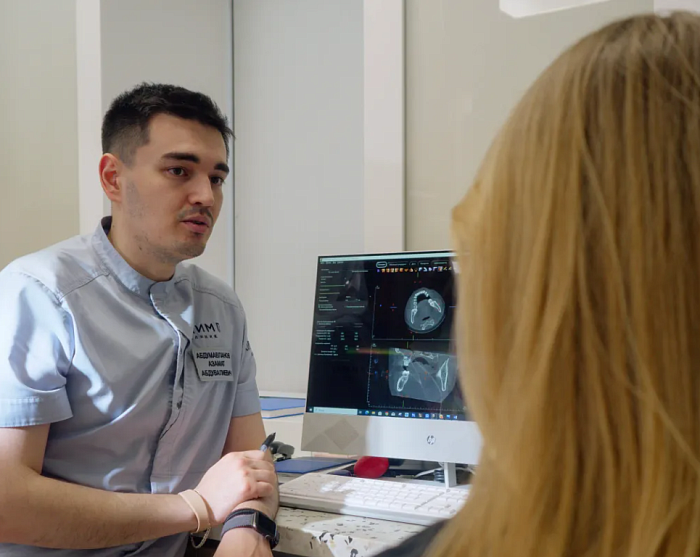
During the consultation, the dentist performs an examination and evaluates the position of the wisdom teeth using radiography. This is necessary to determine the need for deletion.
Врачи
Смотреть всех врачей
Indications and contraindications
Indications
Sensitivity
Painful sensations in the tooth or surrounding tissues
Dystopia
Improper positioning of a tooth leads to difficulty erupting and impingement of a neighboring tooth
Deep caries
Inappropriateness of conservative treatment
Bite abnormalities
Disorders related to the position of the teeth
Сontraindications
Acute infectious diseases
Blood diseases with clotting disorders
Psychoneurological diseases
Teeth located in the area of the neoplasm
Expected effect
Creating space for orthodontic treatment
Freeing up space for teeth alignment and bite correction
Elimination of pain and discomfort
Tooth extraction can provide relief and pain relief
Preventing the spread of infection
Removing an infected tooth can help prevent the infection from spreading to neighboring teeth and tissues
Maintaining the health of gums and adjacent teeth
The surrounding tissues are not injured, and more healthy gum tissue and neighboring teeth are preserved.
Similar referral activities
Plastic bridles and cords
The plastic of the bridles and cords is considered minimally invasive manipulation in the dentist - surgeon's office. The essence of a gentle intervention is to truncate a thin fold of the mucous membrane.
Zirconium crowns
Zirconium crowns are an orthopedic ceramic construction, which is made of a unique material - zirconium dioxide. It has excellent aesthetic and strength properties, as well as a long service life. It is installed on the front and side surfaces of the tooth, without requiring maximum turning
Prostheses on implants
Prosthetics on implants is an innovative method of restoring missing teeth. With a large loss of teeth, systems with an instant load are considered effective: all on 4 and all on 6. The patient immediately receives a beautiful smile and functional teeth.
All on 4
All-on-4 implantation is an effective alternative to removable dentures. The procedure involves placing four artificial implants in one jaw and attaching a denture to them.
All on 6
Implantation of all on 6 is an effective alternative to removable prostheses. The essence of the method is to install four artificial implants on one jaw with subsequent fixation of a fixed prosthesis on them.
Simultaneous implantation
The installation of an implant immediately after tooth extraction in one visit to the doctor is called a one-time implantation. This technique is used to replace lost teeth in the smile area.
News & Media
Nowadays, when every minute counts, dentistry does not stay away from progress. Thanks to new technologies, dental treatment takes much less time. And now dental prosthetics in one day is no longer a fantasy, but a reality. We choose dental prosthetics and tell you what this procedure is and why it is becoming more and more popular.
Dentistry has come a long way from pulling teeth without anesthesia to the introduction of digital technologies. Artificial intelligence-based equipment is becoming a part of modern healthcare. Computer programs help doctors select more effective treatments and make accurate diagnoses. In the article we will tell you more about AI in medicine and what challenges it creates for specialists.
Do you want to know if it's worth changing your usual brush to a more modern electric model? In the article you will find answers to this and the question!
Are you afraid to ask questions to the dentist? The guys from the megamarket did it for you!
Dental prosthetics is the restoration of destroyed teeth. Prosthetics are necessary when more than half of the tooth tissues have been lost, and in other cases, the tooth can be restored with a seal.
A shining Hollywood smile is the dream of many. The color of the teeth plays an important role here, and the sooner you start taking care to preserve its natural attractiveness, the longer you will be able to do without special teeth whitening procedures. How do you take care to preserve the natural color of your teeth? Let's figure this out together so that you can be proud of your smile every day.
How to reach


- Route from exit 4 of the «Belorusskaya» metro station
- Route from exit 2 of the «Belorusskaya» metro station
How to get
From the Belorusskaya metro station of the Zamoskvoretskaya line - exit 4 After exiting the subway, walk through the pedestrian tunnel and climb the stairs. Move towards the railway tracks, go down the stairs immediately after them and walk along the house, then turn right onto 1st Yamskoye Pole Street. At the turn to 3rd Yamsky Pole Street, cross the road at the pedestrian crossing and continue along 1st Yamsky Field Street, after a few buildings on the left you will see Olympus Clinic MARS.
Travel time
9 minutes
Landmark
Olympus Clinic MARS sign
How to get
From the Belorusskaya metro station of the Ring line - exit 2. After exiting the subway, turn left and walk to the pedestrian crossing. Cross the road through two pedestrian crossings and move along the Tverskoy overpass. Go down the stairs immediately after the railway tracks, walk along the house, then turn right onto 1st Yamskoye Pole Street. At the turn to 3rd Yamsky Pole Street, cross the road at the pedestrian crossing and continue along 1st Yamsky Field Street, after a few buildings on the left you will see Olympus Clinic MARS
Travel time
11 minutes
Landmark
Olympus Clinic MARS sign
Parking lot map
Exit 3 from the metro and 640 meters straight ahead, the clinic will be on the right. Landmark - sign Olymp Clinic
- Route from the «Sukharevskaya» metro station
- Route from the «Tsvetnoy Boulevard» metro station
From the metro station "Tsvetnoy Bulvar"
1 exit to the city, then left to the Garden Ring, at the crossing to the right, crossing the boulevard, one more crossing and at the traffic light to the left. The Olymp Clinic building is located overlooking the Garden Ring to the right of the crossing. Travel time is approximately 9 minutes. Landmark - sign Olymp Clini
From the metro station "Sukharevskaya"
Exit 3 from the metro and 640 meters straight ahead, the clinic will be on the right. Landmark - sign Olymp Clinic
Parking lot map
Exit 3 from the metro and 640 meters straight ahead, the clinic will be on the right. Landmark - sign Olymp Clinic
- The route from the «Airport» metro station
- Route from the «Sokol» metro station
From Sokol metro station
The last car from the center: follow the signs for Exit 5. From the glass doors to the right and go to the end of the passage. Exit to the city by the steps to the left. After exiting the crossing to the street, go straight along Leningradsky Prospekt to the intersection with Chapaevsky Lane. Next, turn right (onto Chapaevsky Lane) and walk to the Triumph Palace residential complex. Entrance to the territory: through checkpoint No. 1, opposite the Vkusville store, you will need to present your passport. After passing through the checkpoint, go up the stairs to the fountain, opposite it you will see our clinic.
Travel time
10-12 minutes
From the Airport metro station
The first car from the center: follow the Exit 2-3 signs. Turn left out of the glass doors and walk to the end of the passage. After exiting the crossing to the street, go straight along Leningradsky Prospekt to the intersection with Chapaevsky Lane. Next, turn left (onto Chapaevsky Lane) and walk to the Triumph Palace residential complex. Entrance to the territory: through checkpoint No. 1, opposite the Vkusville store, you will need to present your passport. After passing through the checkpoint, go up the stairs to the fountain, opposite it you will see our clinic.
Travel time
12-15 minutes
How to get
Entry to the territory is prohibited, but there are free city parking lots around the Triumph Palace residential complex, where you can easily find a place for your car.
- Route from exit 4 of the «Belorusskaya» metro station
- Route from exit 2 of the «Belorusskaya» metro station
How to get
From the Belorusskaya metro station of the Zamoskvoretskaya line - exit 4 After exiting the subway, walk through the pedestrian tunnel and climb the stairs. Move towards the railway tracks, go down the stairs immediately after them and walk along the house, then turn right onto 1st Yamskoye Pole Street. At the turn to 3rd Yamsky Pole Street, cross the road at the pedestrian crossing and continue along 1st Yamsky Field Street, after a few buildings on the left you will see Olympus Clinic MARS.
Travel time
9 minutes
Landmark
Olympus Clinic MARS sign
How to get
From the Belorusskaya metro station of the Ring line - exit 2. After exiting the subway, turn left and walk to the pedestrian crossing. Cross the road through two pedestrian crossings and move along the Tverskoy overpass. Go down the stairs immediately after the railway tracks, walk along the house, then turn right onto 1st Yamskoye Pole Street. At the turn to 3rd Yamsky Pole Street, cross the road at the pedestrian crossing and continue along 1st Yamsky Field Street, after a few buildings on the left you will see Olympus Clinic MARS
Travel time
11 minutes
Landmark
Olympus Clinic MARS sign
Parking lot map
Exit 3 from the metro and 640 meters straight ahead, the clinic will be on the right. Landmark - sign Olymp Clinic