




Echocardiography (echocardiography)
Ultrasound examination of the heart, which helps to visualize the structure of the heart muscle, valves, main vessels and surrounding tissues, as well as to assess the functional state of the heart.
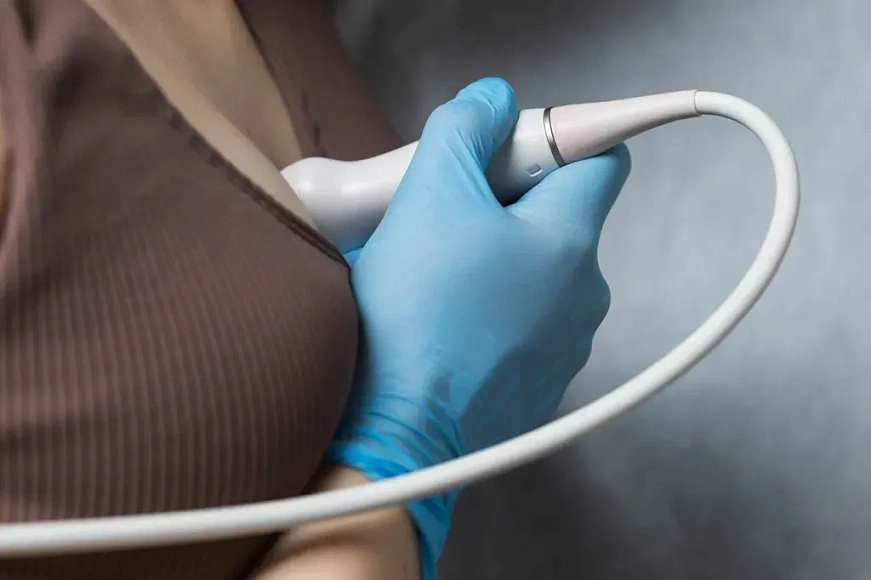
ECHO-KG helps to detect congenital and acquired heart defects, thromboembolism, cardiomyopathy and tumor formations. The study reveals the causes of chest pain, shortness of breath, chronic fatigue and edema.
ECHO-KG is prescribed for pathological changes on an electrocardiogram (ECG), suspected abnormalities of the heart valves, rhythm disturbances, after a myocardial infarction and after surgery on the heart. This technique is also necessary for dynamic monitoring of already diagnosed heart diseases. Thanks to ECHO-KG, the doctor can obtain up to 50 different parameters necessary for a comprehensive assessment of the heart condition.
Special preparation for echocardiography is not required. The patient should prepare the previous results of heart examinations, if any, to analyze the dynamics of the condition.
The patient lies down on his left side to improve the visualization of the heart. The doctor applies gel to the chest for better contact of the sensor with the skin and begins the study by moving the sensor over the chest area. ECHO-KG is performed in several modes: the one-dimensional mode (M-mode) allows you to evaluate the movement of the myocardium and valve structures, the two-dimensional (B-mode) creates an image in two planes, and the Doppler mode is used to analyze blood flow and identify anomalies. The procedure takes about 30-40 minutes and is completely painless.
ECHO-KG is performed using modern ultrasonic devices equipped with high-resolution sensors. For more accurate diagnosis, Doppler modes are also used to assess blood flow in the heart and large vessels.
After the examination, the patient can immediately return to his usual business. The results of the examination and recommendations for treatment are provided immediately or in the near future, after processing the data by a cardiologist.
Benefits
Safety
The procedure is non-invasive and can be performed repeatedly without risk to health.
High precision
Allows you to evaluate up to 50 parameters of the heart.
Availability
ECHO-KG is characterized by a democratic cost.
Suitable for all ages
It is safe for children, the elderly and pregnant women.
Frequently Asked Questions
What is the difference between an echocardiogram and an ECG?
Is it possible to perform an echocardiogram for pregnant women?
How often can I do an echocardiogram?
Didn't find an answer to your question?
You can describe your problem in detail and ask a question to the doctor. He will answer you and help you find a solution
Врачи
Смотреть всех врачейSimilar referral activities
Implantable pacemaker programming
Adjustment and monitoring of an implanted pacemaker to optimize heart rhythm.
SIBO breath test
The hydrogen-methane breath test is a noninvasive method of diagnosing small intestinal bacterial overgrowth (SIBO). This test measures the concentration of hydrogen and methane in exhaled air after the patient ingests lactulose. This helps identify an imbalance in intestinal bacterial flora.
13C-urea breath test
13C-urea breath test is a painless, non-invasive method used to detect Helicobacter pylori infection in the stomach. It is based on the ability of H. pylori to break down urea using the enzyme urease.
Endoscopic removal of epithelial formations of the gastrointestinal tract (removal of polyps)
Most gastrointestinal polyps belong to precancerous conditions, and colon polyps are essentially the only way to develop cancer, therefore they require mandatory removal.
Pediatric ophthalmologist appointment
Specialist consultation aimed at visual impairment diagnostics and treatment in children of any age.
How to reach


- Route from exit 4 of the «Belorusskaya» metro station
- Route from exit 2 of the «Belorusskaya» metro station
How to get
From the Belorusskaya metro station of the Zamoskvoretskaya line - exit 4 After exiting the subway, walk through the pedestrian tunnel and climb the stairs. Move towards the railway tracks, go down the stairs immediately after them and walk along the house, then turn right onto 1st Yamskoye Pole Street. At the turn to 3rd Yamsky Pole Street, cross the road at the pedestrian crossing and continue along 1st Yamsky Field Street, after a few buildings on the left you will see Olympus Clinic MARS.
Travel time
9 minutes
Landmark
Olympus Clinic MARS sign
How to get
From the Belorusskaya metro station of the Ring line - exit 2. After exiting the subway, turn left and walk to the pedestrian crossing. Cross the road through two pedestrian crossings and move along the Tverskoy overpass. Go down the stairs immediately after the railway tracks, walk along the house, then turn right onto 1st Yamskoye Pole Street. At the turn to 3rd Yamsky Pole Street, cross the road at the pedestrian crossing and continue along 1st Yamsky Field Street, after a few buildings on the left you will see Olympus Clinic MARS
Travel time
11 minutes
Landmark
Olympus Clinic MARS sign
Parking lot map
Exit 3 from the metro and 640 meters straight ahead, the clinic will be on the right. Landmark - sign Olymp Clinic
- Route from the «Sukharevskaya» metro station
- Route from the «Tsvetnoy Boulevard» metro station
From the metro station "Tsvetnoy Bulvar"
1 exit to the city, then left to the Garden Ring, at the crossing to the right, crossing the boulevard, one more crossing and at the traffic light to the left. The Olymp Clinic building is located overlooking the Garden Ring to the right of the crossing. Travel time is approximately 9 minutes. Landmark - sign Olymp Clini
From the metro station "Sukharevskaya"
Exit 3 from the metro and 640 meters straight ahead, the clinic will be on the right. Landmark - sign Olymp Clinic
Parking lot map
Exit 3 from the metro and 640 meters straight ahead, the clinic will be on the right. Landmark - sign Olymp Clinic
- The route from the «Airport» metro station
- Route from the «Sokol» metro station
From Sokol metro station
The last car from the center: follow the signs for Exit 5. From the glass doors to the right and go to the end of the passage. Exit to the city by the steps to the left. After exiting the crossing to the street, go straight along Leningradsky Prospekt to the intersection with Chapaevsky Lane. Next, turn right (onto Chapaevsky Lane) and walk to the Triumph Palace residential complex. Entrance to the territory: through checkpoint No. 1, opposite the Vkusville store, you will need to present your passport. After passing through the checkpoint, go up the stairs to the fountain, opposite it you will see our clinic.
Travel time
10-12 minutes
From the Airport metro station
The first car from the center: follow the Exit 2-3 signs. Turn left out of the glass doors and walk to the end of the passage. After exiting the crossing to the street, go straight along Leningradsky Prospekt to the intersection with Chapaevsky Lane. Next, turn left (onto Chapaevsky Lane) and walk to the Triumph Palace residential complex. Entrance to the territory: through checkpoint No. 1, opposite the Vkusville store, you will need to present your passport. After passing through the checkpoint, go up the stairs to the fountain, opposite it you will see our clinic.
Travel time
12-15 minutes
How to get
Entry to the territory is prohibited, but there are free city parking lots around the Triumph Palace residential complex, where you can easily find a place for your car.
- Route from exit 4 of the «Belorusskaya» metro station
- Route from exit 2 of the «Belorusskaya» metro station
How to get
From the Belorusskaya metro station of the Zamoskvoretskaya line - exit 4 After exiting the subway, walk through the pedestrian tunnel and climb the stairs. Move towards the railway tracks, go down the stairs immediately after them and walk along the house, then turn right onto 1st Yamskoye Pole Street. At the turn to 3rd Yamsky Pole Street, cross the road at the pedestrian crossing and continue along 1st Yamsky Field Street, after a few buildings on the left you will see Olympus Clinic MARS.
Travel time
9 minutes
Landmark
Olympus Clinic MARS sign
How to get
From the Belorusskaya metro station of the Ring line - exit 2. After exiting the subway, turn left and walk to the pedestrian crossing. Cross the road through two pedestrian crossings and move along the Tverskoy overpass. Go down the stairs immediately after the railway tracks, walk along the house, then turn right onto 1st Yamskoye Pole Street. At the turn to 3rd Yamsky Pole Street, cross the road at the pedestrian crossing and continue along 1st Yamsky Field Street, after a few buildings on the left you will see Olympus Clinic MARS
Travel time
11 minutes
Landmark
Olympus Clinic MARS sign
Parking lot map
Exit 3 from the metro and 640 meters straight ahead, the clinic will be on the right. Landmark - sign Olymp Clinic