




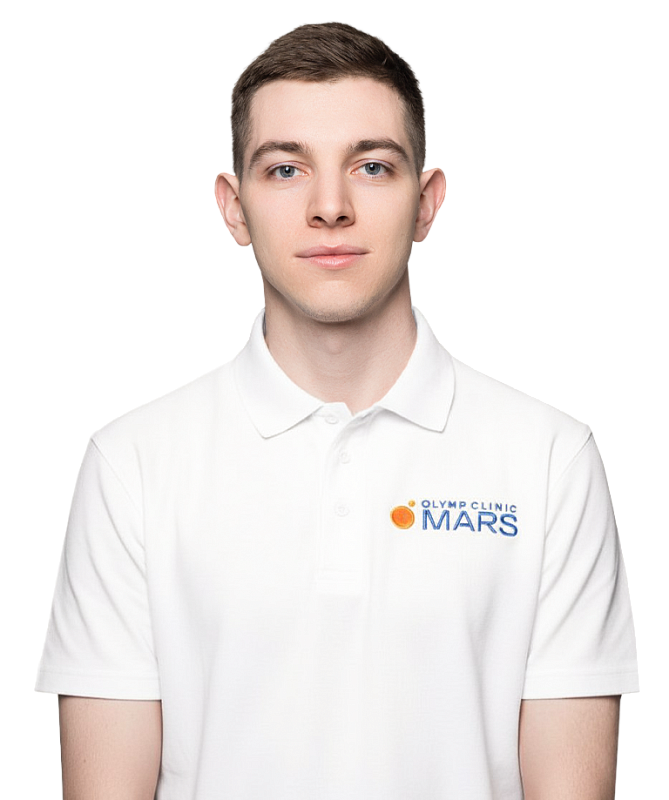
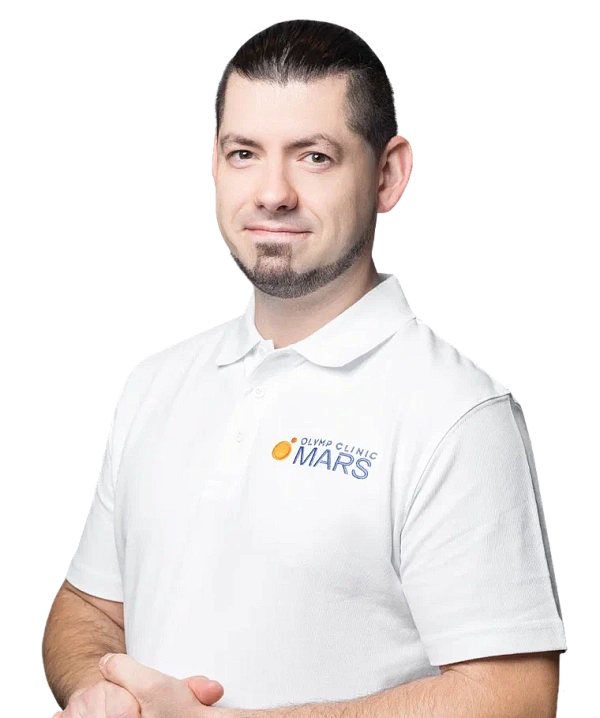
Specializes in rehabilitation after injuries and operations, conservative treatment of pathologies of the musculoskeletal system.

Vladislav Andreevich regularly takes advanced training courses
There is a scientific publication: An analysis of the description of therapeutic gymnastics procedures in the rehabilitation of patients with subacromial impingement syndrome: an assessment using the consensus checklist on exercise reporting (Srusl list CERT). Physiotherapy, balneology and rehabilitation. Authors: Gazimiev, A.M., Pilipson, J. Y., Koneva, E. S., Ilyin, D. O., Polonsky, V. A., Achkasov, E. E., and Korolev, A.V.
Education and qualifications
Analysis of the description of therapeutic gymnastics procedures in the rehabilitation of patients with subacromial impingement syndrome: assessment using the consensus checklist on exercise reporting (Crus list CERT)
Doctor of physical therapy and sports medicine, orthopedic traumatologist
Diagnosis and therapy of shoulder joint problems
Certificate of advanced training in the program “PNF Methodology” in the amount of 144 hours
Rheumatoid brush. The causes of deformation. Methods of treatment and prevention
Rehabilitation of the hand after injuries and operations
Rehabilitation after rupture of the anterior cruciate ligament
Ankle joint and foot. Postoperative rehabilitation
The shoulder joint. Postoperative rehabilitation
Fundamentals of physical rehabilitation
Principles of interaction with neurotic patients
Overload injuries of the knee joint
Training programming in the work of physical therapists and rehabilitation specialists
Rehabilitation for meniscus injuries
Myofascial release
Basic course on Rehabilitation Neuroortopedia
Clinical and imaging comparisons for herniated intervertebral discs and spinal canal stenosis
Tendinopathy
Individual orthosis of the upper limb
Sources of back pain: clinical-MRI-interventional comparisons
Orthosis of the upper limb
Certificate of advanced training under the Joint Mobilization program in the amount of 144 hours
Certificate of advanced training in the program "Shock wave therapy using high-intensity laser therapy and pulsed magnetic stimulation" in the amount of 72 hours
Certificate of advanced training in the program “Neurodynamics” in the amount of 36 hours
Professional retraining in the specialty “Traumatology and orthopedics” in the amount of 1296 hours
Specialty “Medical business”
Residency in the specialty “Physical therapy and sports medicine”
Patient reviews

Comment from the producers

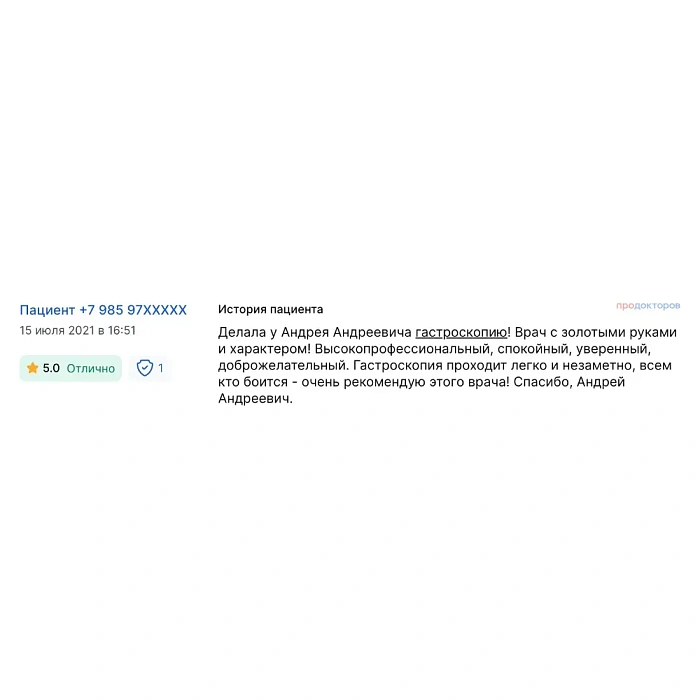
I did a gastroscopy with Andrey Andreevich! A doctor with golden hands and character! Highly professional, calm, confident, friendly. Gastroscopy is easy and unnoticeable, I highly recommend this doctor to anyone who is afraid! Thank you, Andrey Andr...
Comment from the producers

Many thanks to the wonderful endoscopist Andrey Andreevich. I remember him as a very competent and highly professional specialist who can be trusted. He treats his patients with care, answers all questions and is always polite and friendly. The time ...
Comment from the producers
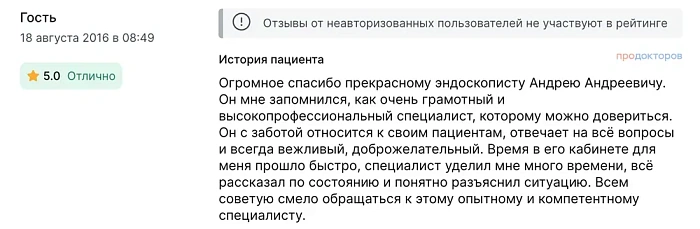
Many thanks to the wonderful endoscopist Andrey Andreevich. I remember him as a very competent and highly professional specialist who can be trusted. He treats his patients with care, answers all questions and is always polite and friendly. The time in his office passed quickly for me, the specialist gave me a lot of time, told me everything about the condition and explained the situation clearly. I advise everyone to feel free to contact this experienced and competent specialist.
Comment from the producers

Many thanks to Andrey Andreevich for the gastroscopy procedure performed on me. I did it for the first time, I was very worried. Everything went quickly, painlessly and without unpleasant sensations. The doctor and the nurse were very attentive to me...
Comment from the producers
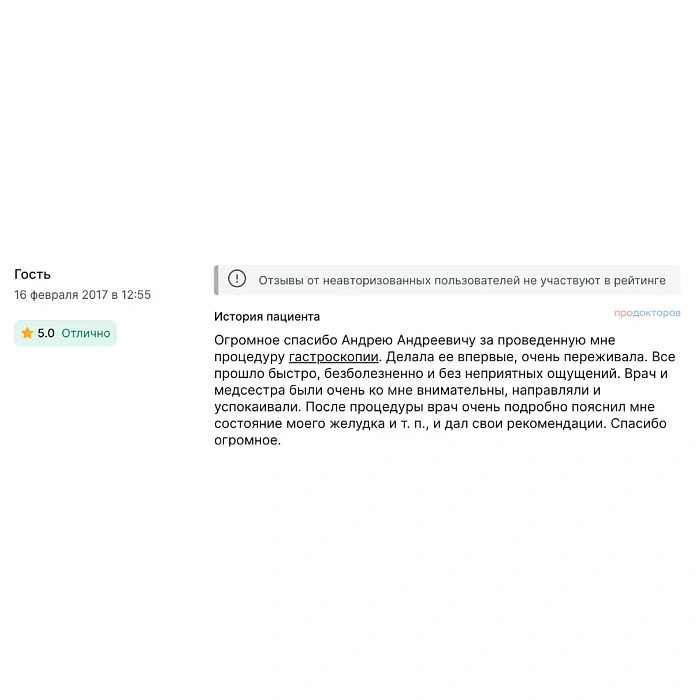
Many thanks to Andrey Andreevich for the gastroscopy procedure performed on me. I did it for the first time, I was very worried. Everything went quickly, painlessly and without unpleasant sensations. The doctor and the nurse were very attentive to me, guided and calmed me down. After the procedure, the doctor explained to me in great detail the condition of my stomach, etc., and gave his recommendations. Thank you so much.
Comment from Yandex.Maps

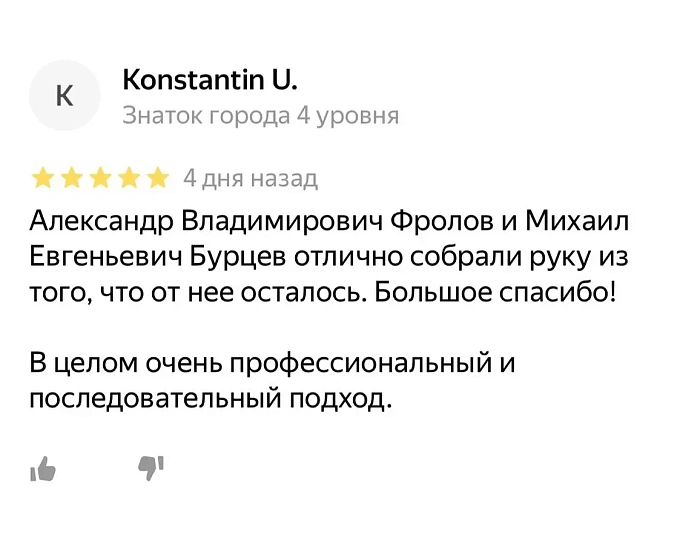
Alexander Vladimirovich Frolov and Mikhail Evgenievich Burtsev perfectly assembled the hand from what was left of it. Thank you very much! Overall, a very professional and consistent approach.
Comment from Yandex.Maps

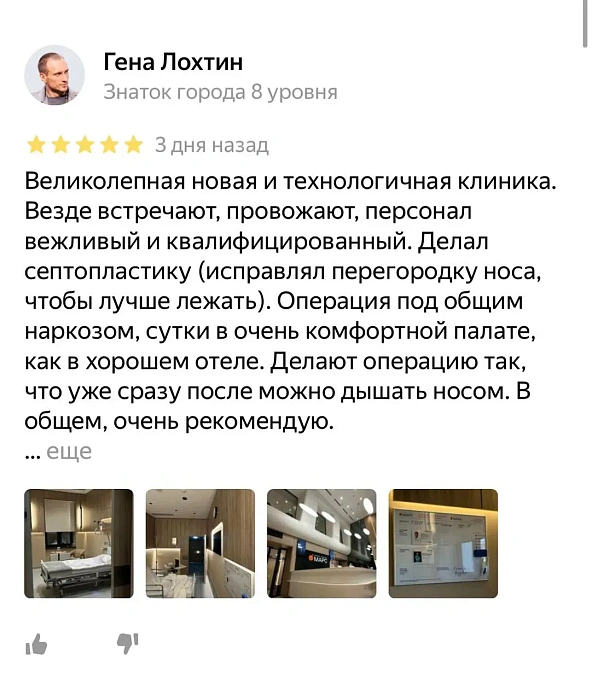
A magnificent new and technologically advanced clinic. They meet and escort you everywhere, the staff is polite and qualified. I did a septoplasty (fixed the nasal septum to lie down better). The operation is under general anesthesia, a day i...
Comment from Yandex.Maps
A magnificent new and technologically advanced clinic. They meet and escort you everywhere, the staff is polite and qualified. I did a septoplasty (fixed the nasal septum to lie down better). The operation is under general anesthesia, a day in a very comfortable room, like in a good hotel. The operation is performed so that you can breathe through your nose immediately after. In general, I highly recommend it. The operation was performed by Pugacheva Elena Nikolaevna (head of the department), a wonderful professional. I have never questioned the choice of the clinic.
Comment from Yandex.Maps

I am grateful to all the staff for their careful attitude and professionalism. She underwent a week-long rehabilitation at the clinic after a serious surgery on her leg. To Doctors Alexey Nikolaevich Logvinov and Many thanks to Denis Vladimirovich Il...
Comment from Yandex.Maps
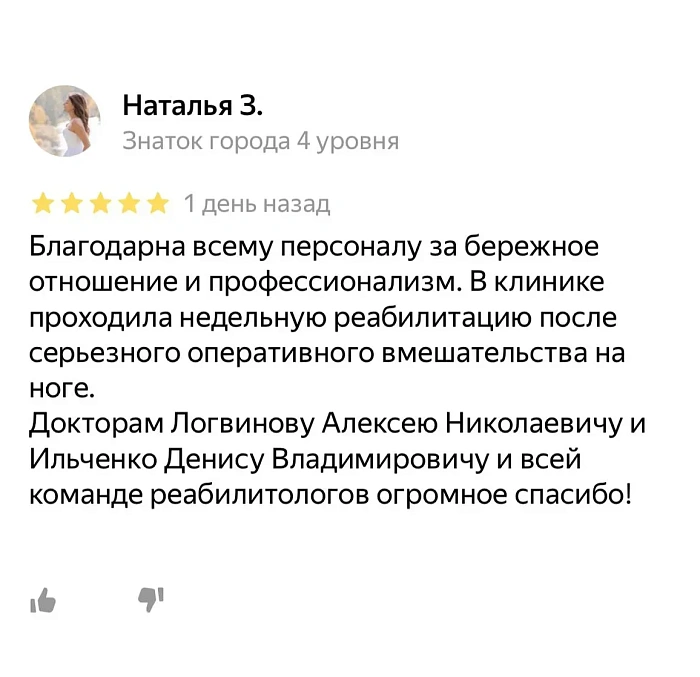
I am grateful to all the staff for their careful attitude and professionalism. She underwent a week-long rehabilitation at the clinic after a serious surgery on her leg. To Doctors Alexey Nikolaevich Logvinov and Many thanks to Denis Vladimirovich Ilchenko and the entire rehabilitation team!
Comment from Yandex.Maps
I am grateful to all the staff for their careful attitude and professionalism. She underwent a week-long rehabilitation at the clinic after a serious surgery on her leg. To Doctors Alexey Nikolaevich Logvinov and Many thanks to Denis Vladimirovich Il...
Comment from Yandex.Maps
I am grateful to all the staff for their careful attitude and professionalism. She underwent a week-long rehabilitation at the clinic after a serious surgery on her leg. To Doctors Alexey Nikolaevich Logvinov and Many thanks to Denis Vladimirovich Ilchenko and the entire rehabilitation team!
Comment from Yandex.Maps

Olympus Clinic Mars is not just a clinic, but a place where you will be taken care of from the doorstep. Polite staff, cozy atmosphere, incredible interior - everything is thought out to the smallest detail. But the main thing is a great team and a t...
Comment from Yandex.Maps
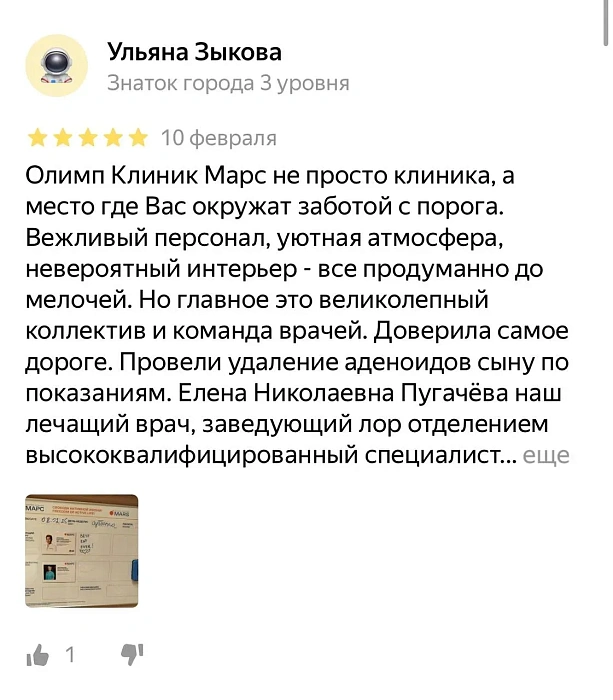
Olympus Clinic Mars is not just a clinic, but a place where you will be taken care of from the doorstep. Polite staff, cozy atmosphere, incredible interior - everything is thought out to the smallest detail. But the main thing is a great team and a team of doctors. I trusted you with the most precious thing. My son's adenoids were removed according to the indications. Elena Nikolaevna Pugacheva, our attending physician, head of the ENT department, is a highly qualified specialist, a fan of her field, competent, inspiring calm and confidence. Denis V. Myanovsky is a pediatric anesthesiologist, an excellent specialist, who answered all the questions concerning anesthesia as much as possible. After the operation, he invited me to the awakening room so that the child would wake up and see his mother. I am grateful for the sensitive attitude, care, and the fact that the child has only positive memories of treatment and hospital stay. Thanks to the whole team for a day on Mars. I wish the clinic prosperity and grateful patients!
Comment from Yandex.Maps

The clinic is new, recently opened, everything is very clean and fresh. It is convenient that you can communicate with the reception via WhatsApp and make an appointment there. She moved here after her doctor, an obstetrician-gynecologist, Natalia Vl...
Comment from Yandex.Maps
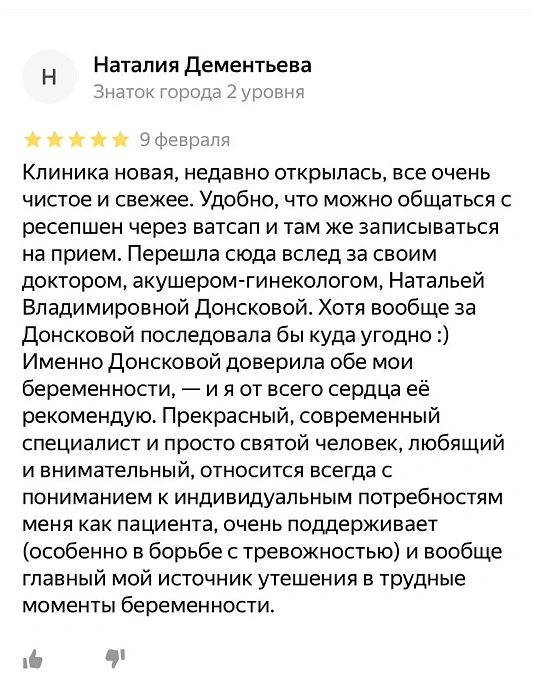
The clinic is new, recently opened, everything is very clean and fresh. It is convenient that you can communicate with the reception via WhatsApp and make an appointment there. She moved here after her doctor, an obstetrician-gynecologist, Natalia Vladimirovna Donskova. Although I would have followed Donskova anywhere :) It was Donskova who entrusted both of my pregnancies, and I wholeheartedly recommend her. A wonderful, modern specialist and simply a holy man, loving and attentive, always understands the individual needs of me as a patient, is very supportive (especially in the fight against anxiety) and generally my main source of comfort in difficult moments of pregnancy.
Comment from Yandex.Maps

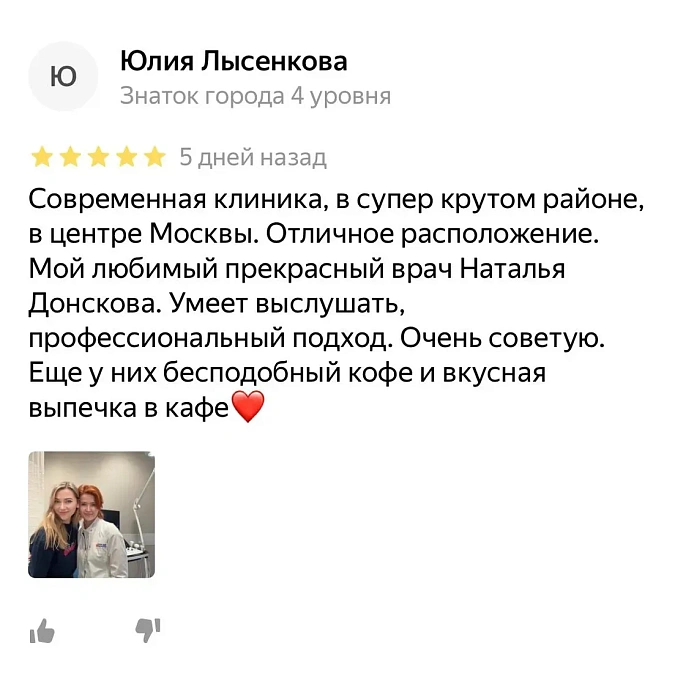
A modern clinic in a super cool area in the center of Moscow. Great location. My beloved wonderful doctor Natalia Donskova. Knows how to listen, professional approach. I highly recommend it. They also have great coffee and delicious pastries in the c...
Comment from Yandex.Maps

We asked Elena Nikolaevna Pugacheva for her opinion on adenoids in a child. We thought for a long time, we were afraid, we wanted to avoid surgery. As a result of a competent consultation with the video monitor, we decided to trust the doctor. The de...
Comment from Yandex.Maps
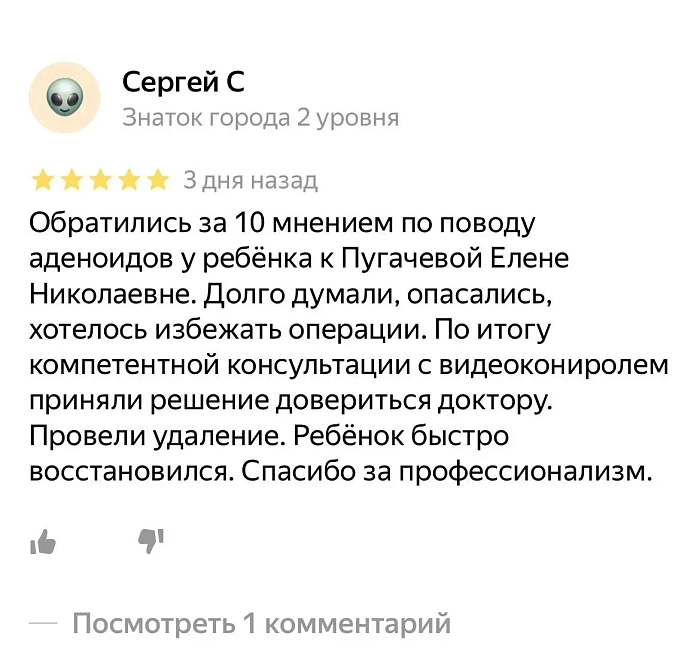
We asked Elena Nikolaevna Pugacheva for her opinion on adenoids in a child. We thought for a long time, we were afraid, we wanted to avoid surgery. As a result of a competent consultation with the video monitor, we decided to trust the doctor. The deletion was carried out. The child recovered quickly. Thank you for your professionalism.
Comment from Yandex.Maps

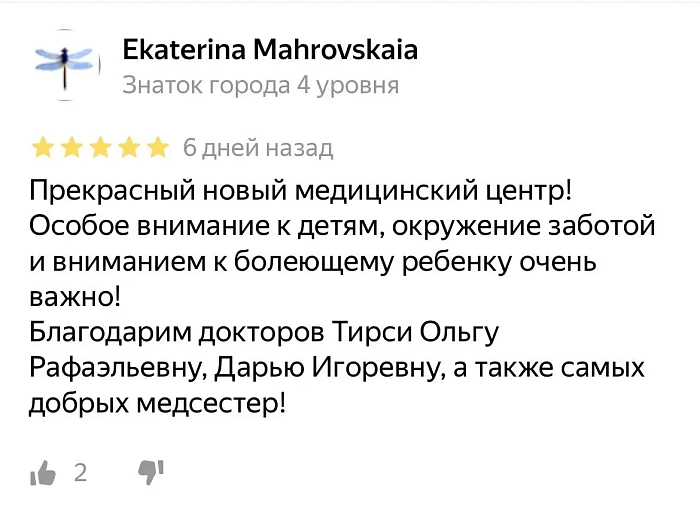
A wonderful new medical center! Special attention to children, being surrounded by care and attention to a sick child is very important! We thank doctors Olga Rafaelevna Tirsi, Daria Igorevna, as well as the kindest nurses!
Comment from Yandex.Maps

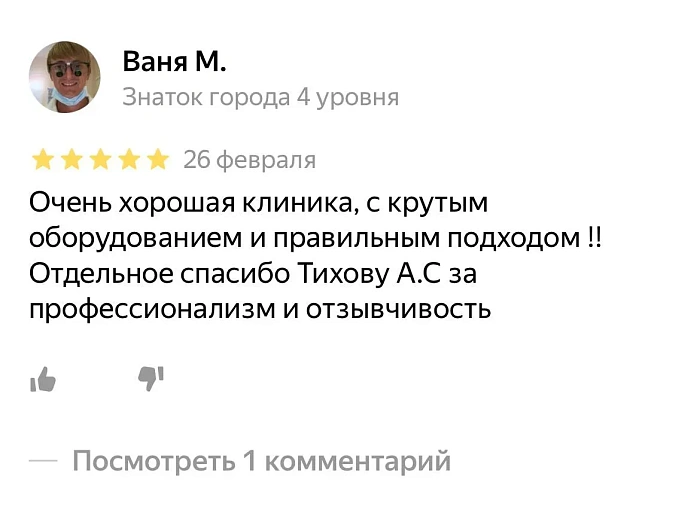
A very good clinic, with cool equipment and the right approach!! Special thanks to A.C. Tikhov for his professionalism and responsiveness.
Areas of activity
Joint mobilization
Manual therapy procedure focused on restoring joint mobility, relieving pain and eliminating functional limitations.
Myofascial release
Manual technique aimed at eliminating muscle and fascial strains, improving joint mobility and reducing pain.
Exercise therapy on the AlterG anti-gravity treadmill
Метод реабилитации, основанный на использовании технологии разгрузки суставов нижних конечностей во время ходьбы и бега.
Training on the Huber 360 simulator
A rehabilitation technique based on complex neuromuscular stimulation, movement analysis and training of coordination, strength and balance of the body. It allows you to activate up to 80% of the muscles at the same time.
Exercise therapy on the Walker View TecnoBody treadmill
An innovative rehabilitation method based on the use of a treadmill with 3D cameras and an intelligent motion analysis system.
Diagnosis and treatment of balance disorders on the Biodex Balance device
A diagnostic method that allows you to determine the patient's ability to maintain balance, as well as an effective stability training system.

Freedom of active life!
Soon your achievements will become your habit.
Attention that heals
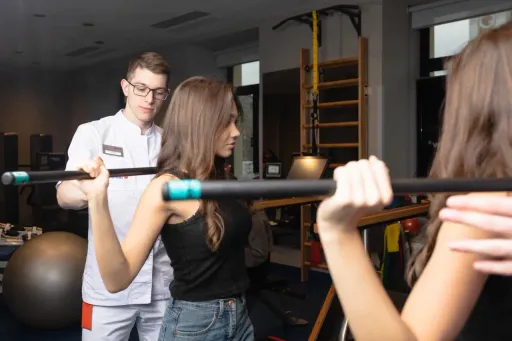
We know that a warm human attitude is just as important for recovery as high-quality equipment. From the very first minutes in the clinic, you will be surrounded by a team that sincerely cares about each patient. Our doctors are the best in their fields, but not only because of their education and experience, but also because of their sensitivity: they listen attentively, explain all stages of treatment and are always supportive. From the friendly receptionist to the professor in the operating room, all our specialists work together to make the patient feel in safe hands.
Technologies that work for your future
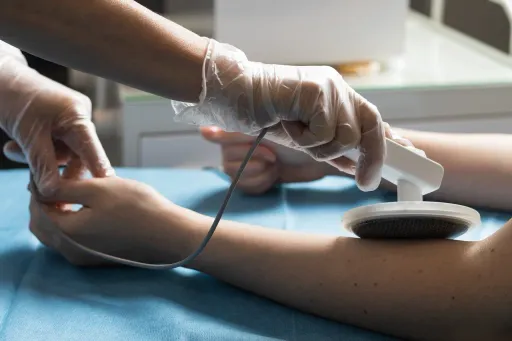
We carefully choose each device that will be used in working with the patient: from an MRI scan with 4D imaging to a CT scanner with accurate 3D model construction. In the operating unit, specialists also use the most advanced solutions — in emergency situations, in case of injuries and for solving complex surgical tasks. Our complex of high-tech equipment from the world's most reputable manufacturers allows patients to use all the achievements of modern medicine and get the best diagnostic and treatment results.
FAQ
Doctor: Polonskii Vladislav Andreevich
In addition, the warm-up should be specific to a particular sport. The easiest way is to perform the same movements that you will do in training, but with a lower load, gradually increasing it. For example, if you are going to bench press, you can first shake an empty bar without pancakes; before intense running, you can walk briskly or jog; in volleyball, before an attacking shot, you should first slowly simulate movement without a ball, gradually accelerating.
Doctor: Polonskii Vladislav Andreevich
You don't need to run for a long time right away. If you want to run for 20 minutes without a break, start with 5 minutes, for example, and gradually increase the duration over 2-3 weeks. Do not forget to arrange a fasting week every 3-4 weeks of training, when the load is lower than usual. If you have any difficulties, you can always consult a doctor of physical therapy and sports medicine, who will help you choose the optimal program.
Doctor: Polonskii Vladislav Andreevich
Specialists in this department
Find a Specialist
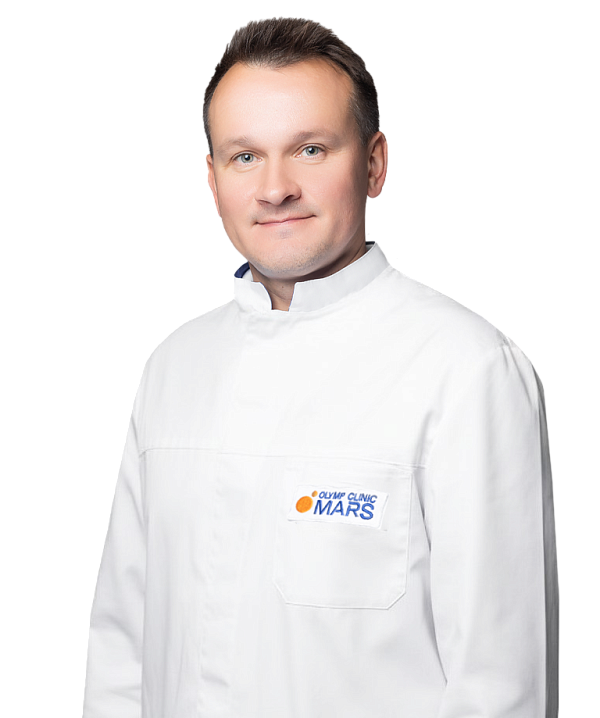
Candidate of Medical Sciences. Orthopedic Trauma Physician, Chiropractor, Sports Medicine Physician, Physical Therapist. Head of physiotherapy and rehabilitation medicine department
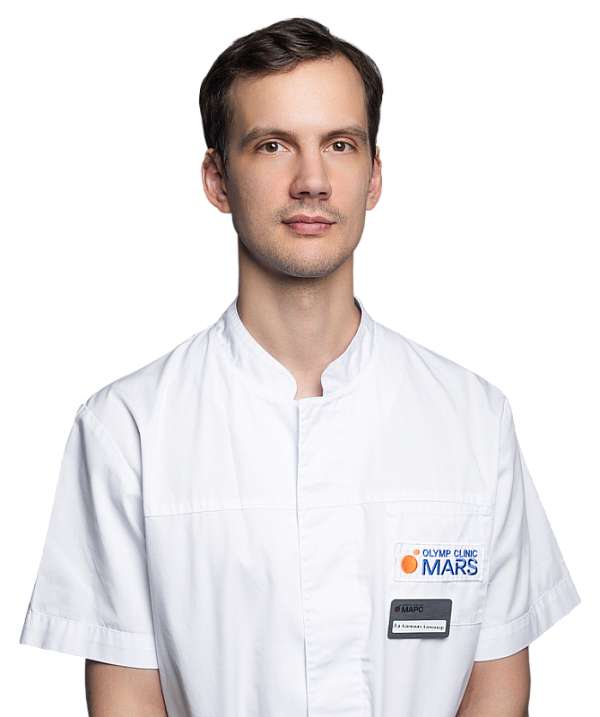
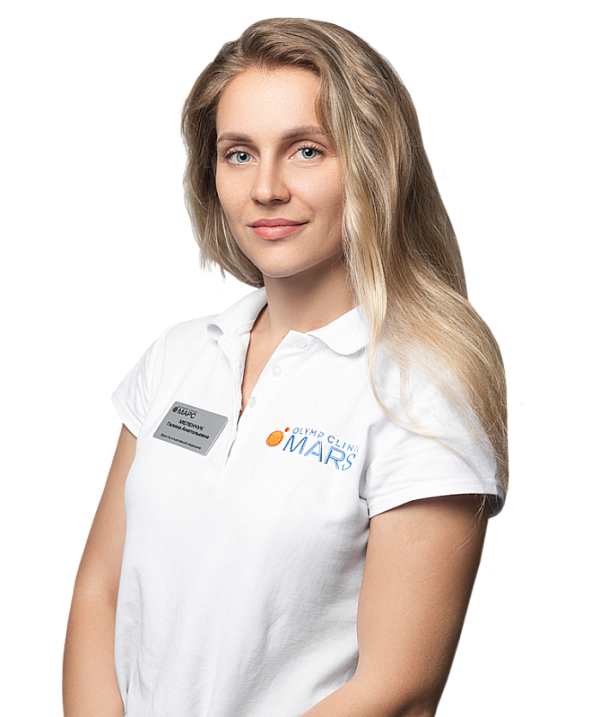
Manual Therapist, Exercise Therapy and Sports Medicine Specialist

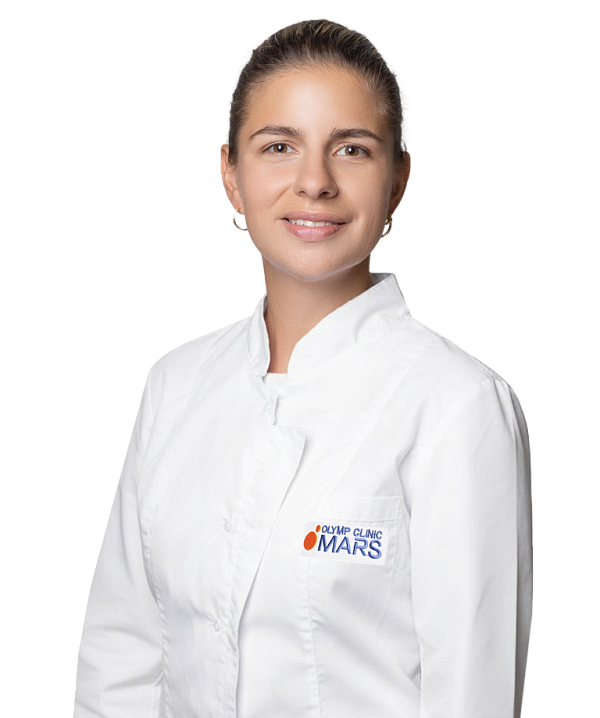
Rehabilitation Specialist
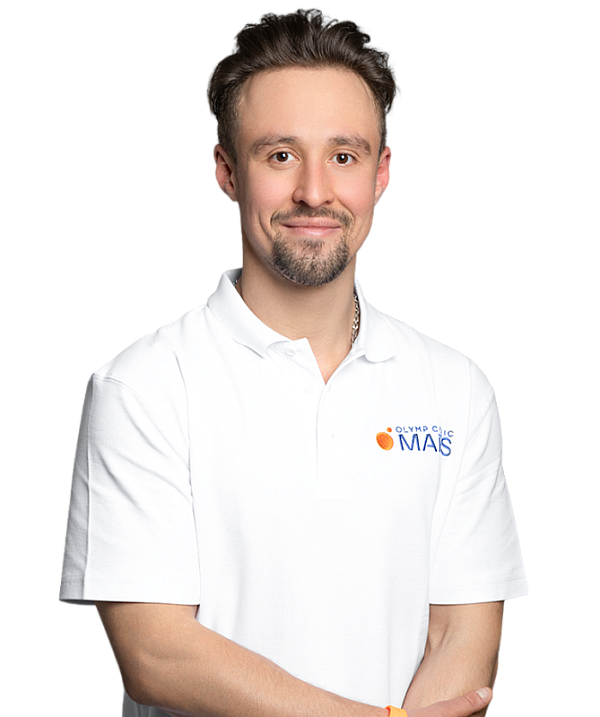
Neurologist, Manual Therapist, Exercise Therapy and Sports Medicine Specialist, Osteopath
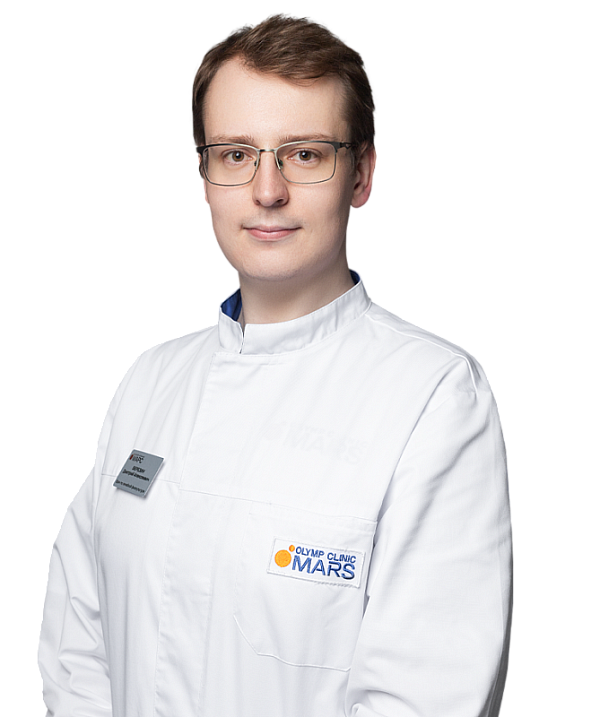
Exercise Therapy and Sports Medicine Physician
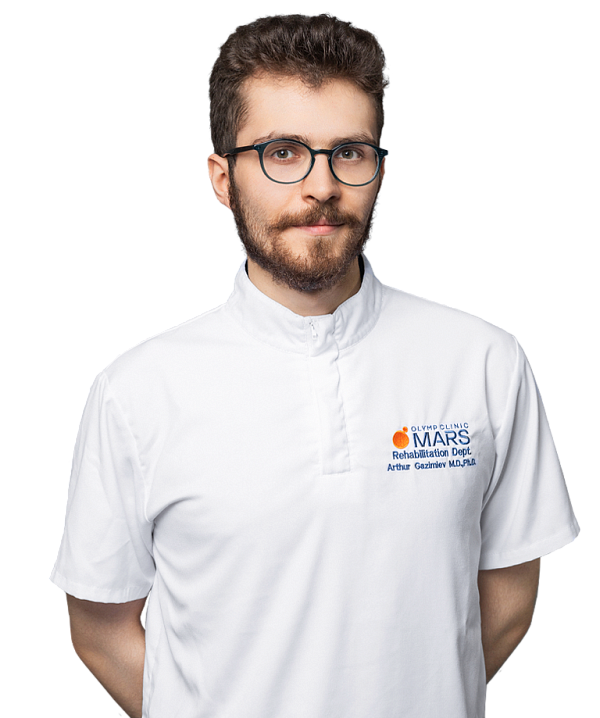
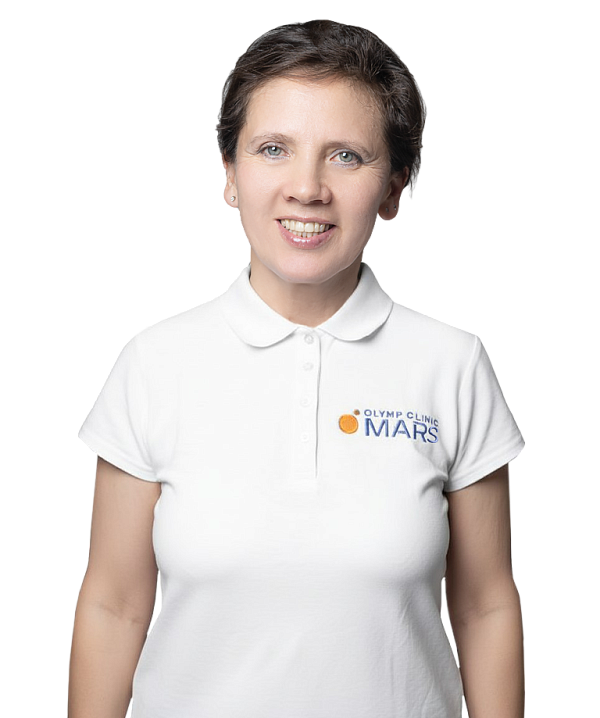
Rehabilitation specialist
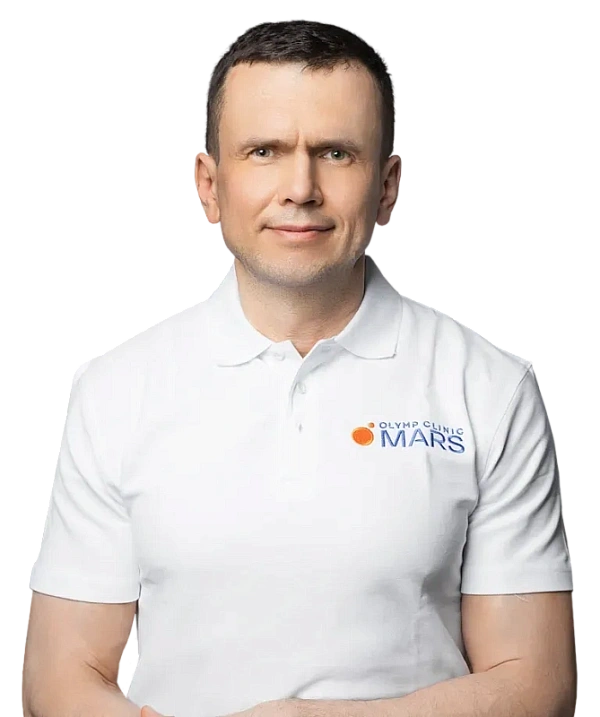
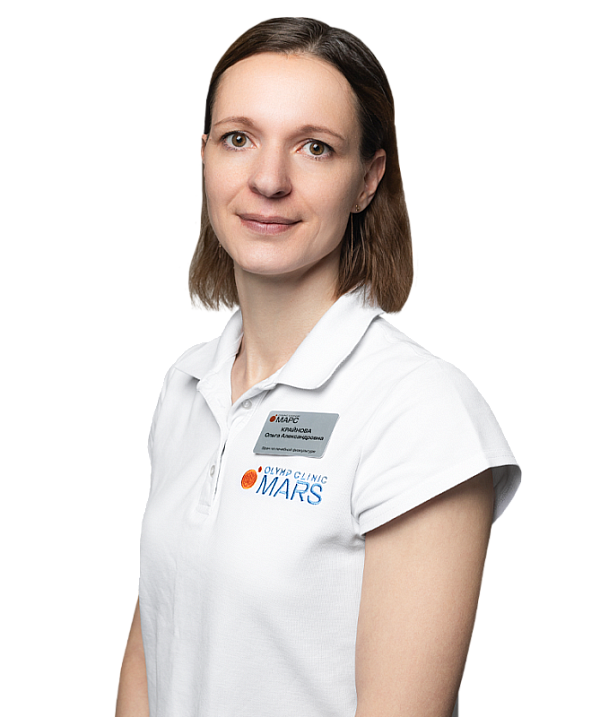
Rehabilitation therapist, Orthopedic trauma physician, Chiropractic therapist, Sports medicine physician, Exercise therapist, Physiotherapist. Candidate of Medical Sciences. Leading specialist of physiotherapy and rehabilitation medicine department
Rehabilitation Therapist

How to reach


- Route from exit 4 of the «Belorusskaya» metro station
- Route from exit 2 of the «Belorusskaya» metro station
How to get
From the Belorusskaya metro station of the Zamoskvoretskaya line - exit 4 After exiting the subway, walk through the pedestrian tunnel and climb the stairs. Move towards the railway tracks, go down the stairs immediately after them and walk along the house, then turn right onto 1st Yamskoye Pole Street. At the turn to 3rd Yamsky Pole Street, cross the road at the pedestrian crossing and continue along 1st Yamsky Field Street, after a few buildings on the left you will see Olympus Clinic MARS.
Travel time
9 minutes
Landmark
Olympus Clinic MARS sign
How to get
From the Belorusskaya metro station of the Ring line - exit 2. After exiting the subway, turn left and walk to the pedestrian crossing. Cross the road through two pedestrian crossings and move along the Tverskoy overpass. Go down the stairs immediately after the railway tracks, walk along the house, then turn right onto 1st Yamskoye Pole Street. At the turn to 3rd Yamsky Pole Street, cross the road at the pedestrian crossing and continue along 1st Yamsky Field Street, after a few buildings on the left you will see Olympus Clinic MARS
Travel time
11 minutes
Landmark
Olympus Clinic MARS sign
Parking lot map
Exit 3 from the metro and 640 meters straight ahead, the clinic will be on the right. Landmark - sign Olymp Clinic