




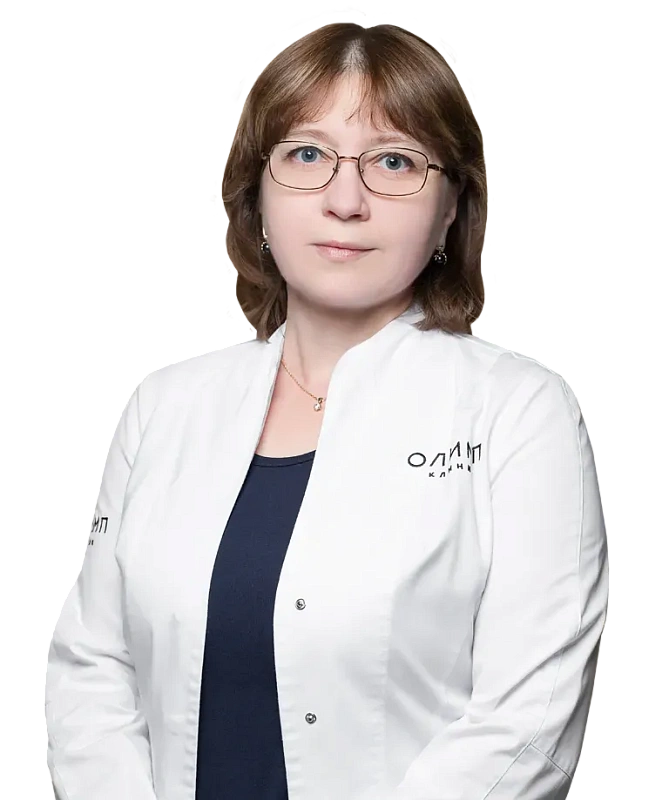
Inna Valeryevna is a specialist in the diagnosis of breast diseases, ultrasound of the mammary glands, fine needle puncture, biopsy of nodular formations, puncture of cystic formations under ultrasound control.

You're in good hands.
Inna Valeryevna will be able to understand the problem and help each patient.
Education and qualifications
Member of the Moscow Cancer Society
Member of RUSSCO (Russian Society of Clinical Oncology)
Author and co-author of more than 20 publications
Assistant of the Department of Radiation Diagnostics, Radiation Therapy
Oncologist, ultrasound diagnostics doctor
Oncologist, surgeon
Radiology
Oncology
Ultrasound diagnostics
Surgery
Pediatrics
Therapy
Areas of activity
Arthroscopy of the ankle joint
Ankle arthroscopy is a minimally invasive surgical procedure used to diagnose and treat various diseases and injuries of the ankle joint.
Pediatric endocrinologist appointment
Specialist consultation aimed at diagnostics and treatment of hormonal regulation disorders in children and adolescents.
Consultation of a gynecologist
Medical examination aimed at diagnosing, treating and preventing diseases of the female reproductive system.
Pediatric dermatologist appointment
Specialist consultation on diagnostics, treatment and prevention of skin, hair and nail diseases in children.
Rhinoplasty
Rhinoplasty helps reshape the septum to get rid of breathing difficulties and snoring, as well as change the shape of the nose to make it look more aesthetically pleasing.
Pediatric rehabilitologist appointment
Medical consultation focused on restoring function and movement following injuries, surgical procedures, congenital disorders, and neurological conditions in children under 18.
Allergist's appointment
An appointment with an allergist, where a specialist identifies the causes of an allergic reaction, prescribes diagnostic tests and selects treatment.
Pediatric allergist-immunologist appointment
Specialist consultation on diagnostics, treatment and prevention of allergic and immune diseases in children and adolescents under 18.
Pediatric GI specialist appointment
Specialist consultation on diagnostics and treatment of gastrointestinal tract diseases in children of any age.
Pediatric gynecologist appointment
Consultation intended to assess sexual development, prevention and treatment of gynecological diseases in girls under 18.
Pediatric neurologist appointment
Specialist consultation aimed at detecting and treating disorders of the nervous system in children and adolescents under 18.
Pediatric ophthalmologist appointment
Specialist consultation aimed at visual impairment diagnostics and treatment in children of any age.
Pediatric urologist appointment
Specialist consultation on diagnostics and treatment of genitourinary system diseases in children and adolescents under 18.
Endoscopic removal of epithelial formations of the gastrointestinal tract (removal of polyps)
Most gastrointestinal polyps belong to precancerous conditions, and colon polyps are essentially the only way to develop cancer, therefore they require mandatory removal.
13C-urea breath test
13C-urea breath test is a painless, non-invasive method used to detect Helicobacter pylori infection in the stomach. It is based on the ability of H. pylori to break down urea using the enzyme urease.
SIBO breath test
The hydrogen-methane breath test is a noninvasive method of diagnosing small intestinal bacterial overgrowth (SIBO). This test measures the concentration of hydrogen and methane in exhaled air after the patient ingests lactulose. This helps identify an imbalance in intestinal bacterial flora.
Implantable pacemaker programming
Adjustment and monitoring of an implanted pacemaker to optimize heart rhythm.
Child psychiatrist appointment
It is necessary to see a child psychiatrist when a child or teenager is experiencing emotional, behavioral, or communication difficulties. The specialist evaluates the patient's mental state and developmental characteristics, then selects appropriate methods of correction or treatment.
Arthroscopy of the knee joint
Knee arthroscopy is a minimally invasive surgical procedure for the diagnosis and treatment of injuries and diseases of the knee joint. It allows examining the joint for damage and eliminating the identified defects.
Secondary rhinoplasty
Revision (Secondary) rhinoplasty is a corrective surgery to improve the results of previously performed nasal surgeries (rhinoplasty, septoplasty, rhinoseptoplasty and any other interventions that have affected the structures of the nose).
Gastroscopy
Gastroscopy is a research method in which a doctor examines in detail the mucous membrane of the esophagus, stomach and duodenum using special endoscopic equipment.
MRI in patients with an implanted pacemaker
Specialist supervised MRI diagnostics for patients with implanted pacemakers.
Arthroscopic revision of the cystic joint
The condition of the wrist joints determines the functioning of the hand. Arthroscopic revision is a minimally invasive diagnostic procedure that assesses the condition of the joint tissues, which is necessary for planning subsequent treatment.
Arthrodesis of the joints of the fingers of the hand
The destruction of the joints of the fingers of the hand is accompanied by pronounced pain and impaired functions. Arthrodesis is a surgical intervention in which the affected joint is completely immobilized, which relieves pain and progression of inflammation.
Arthroscopy of the elbow joint
Arthroscopy of the elbow joint is a minimally invasive surgical intervention that allows for accurate diagnosis and simultaneous treatment of joint injuries.
Theorinoplasty
Theorinoplasty solves both functional and aesthetic problems with a minimal rehabilitation period. Conservative nasal plastic surgery is an innovative, minimally invasive technique.
Diagnosis and treatment of allergic reactions
Allergies can cause a lot of discomfort and, in severe cases, even be life-threatening. Modern diagnostic and therapeutic methods make it possible to identify allergens and bring allergy symptoms under control. In some cases, allergies can be cured permanently.
Colonoscopy
Colonoscopy is a research method in which a doctor uses endoscopic equipment to visually assess the condition of the mucous membrane of the colon and terminal ileum.
Electroneuromyography in patients with an implanted pacemaker
Muscle and nerve diagnostics using electroneuromyography in patients with an implanted pacemaker.
Arthroscopy of the shoulder joint
Arthroscopy of the shoulder joint is a minimally invasive surgical procedure designed to diagnose and treat various diseases and injuries of the shoulder joint.
Rhinoseptoplasty
Surgical correction of the shape of the nose and nasal septum. Comprehensive treatment of all nasal structures eliminates aesthetic defects and improves nasal breathing.
Diagnosis and treatment of urticaria
Крапивница — это аллергическая реакция, проявляющаяся зудящими волдырями на коже. Своевременная диагностика и лечение помогают устранить симптомы и предотвратить рецидивы.
Complex and combined rhythm and conduction disorder treatment
Comprehensive treatment of arrhythmias and heart blockages using medical and surgical methods.
Hip arthroscopy
Hip arthroscopy is a minimally invasive surgical procedure that allows the examination and treatment of hip joint pathologies through small incisions.
Preschool health checkup
Find everything you need to complete the Child's Medical Record (Form 026/y) right here!
Arthroscopy of the foot and ankle joint
Arthroscopy is a microsurgical operation that is prescribed for injuries and diseases of the foot and ankle joint. With the help of arthroscopy, it is possible to examine the joints for damage and eliminate pathologies with a minimum amount of intervention.
Rehabilitation arthroscopy of a large joint
Removal of the infectious process from the joint cavity to restore its normal functioning.
Osteosynthesis of the bones of the fingers of the hand
The osteosynthesis of the bones of the fingers of the hand due to the comparison and fixation of the ends of the fragments ensures rapid rehabilitation and proper fusion.
Osteosynthesis of the bone of the wrist
The pathologies of the wrist joint are engaged in pathologies of the wrist joint. With damage to the bones, it will perform the osteosynthesis procedure.
Restoration of the arches of the foot
The restoration of the arches of the foot is the surgical correction of flat feet and other deformities of the arches of the foot. Correcting flat feet with surgery allows you to restore the normal supporting function of the foot and avoid deformation of the entire musculoskeletal system.
Aseptic bone necrosis
This is a condition in which bone cells die due to insufficient blood supply. This can occur as a result of injury, alcohol abuse, prolonged use of corticosteroids, infections or systemic diseases.
Restoration of the ligamentous apparatus of the foot
Complex operation aimed at treating injuries and ruptures of the ligaments of the foot. This procedure is important to restore stability, functionality and reduce foot pain, especially after injury or as a result of degenerative changes.
Minimally invasive surgery of the forefoot
This is a modern mini-foot surgery that allows you to eliminate various pathologies with minimal surgical intervention. The method is characterized by a small incision size, a shortened recovery time and a reduced risk of complications.
Joint-saving corrective surgery for deformities of the anterior and posterior parts of the foot
Joint—saving corrective surgery on the foot is an advanced method of treating deformities of the anterior and posterior parts of the foot, which allows to restore its anatomically correct structure and functionality, minimizing injury to healthy tissues.
Bone deformity treatment
Bone deformity is a change in the shape or position of bones that can occur due to injury, diseases such as arthritis, rickets or osteoporosis, or congenital abnormalities. Deformities can cause pain, impaired mobility and limit daily activities.
Treatment of peri-implant fractures
Peri-implant fractures are bone fractures that occur around orthopaedic implants: artificial joints or metal pins. The fractures can be caused by trauma, weakening of the bone around the implant or deterioration of the implant itself.
Admission of an orthopedic traumatologist
Assessment and diagnosis of diseases of the musculoskeletal system. An orthopedic traumatologist conducts an examination, evaluates the functionality of the musculoskeletal system, prescribes the necessary studies and develops a treatment or rehabilitation plan.
Revision arthroplasty of a large joint
Replacement of a previously installed endoprosthesis due to the development of complications such as paraendoprosthesis infection, which is carried out to completely eliminate the infection and restore joint function.
Stress fractures
Stress fractures are microtrauma of the bones, which are usually caused by chronic overload. They are especially common in the femur, shin and feet, and are characterized by gradually increasing pain during exertion.
PRP therapy for sports injuries
One of the effective non—surgical methods of treating sports injuries is PRP therapy with its own plasma.
Consultation with a gastroenterologist
Gastroenterology appointment focuses on diagnostics, treatment and prevention of gastrointestinal (GI) diseases.
Orthopedic trauma pediatrician appointment
Specialist consultation on diagnostics, treatment and prevention of diseases and disorders of the musculoskeletal system in children.
The Restless Belly Program
A comprehensive examination aimed at identifying the main causes of problems with the gastrointestinal tract. Modern non-invasive diagnostic methods ensure fast and accurate diagnosis.
Healthy Liver Program
A method for the detection and treatment of liver diseases that combines various diagnostic and therapeutic approaches. A comprehensive examination and consultations with experts allow you to quickly and accurately establish a diagnosis.
Juvederm facial contouring
Injections with fillers based on hyaluronic acid, which help eliminate wrinkles and other age-related skin changes and restore youth to the face.
Cheek contour contouring
a non-surgical injection technique that allows you to make your face shape more pronounced and clear
Metal self-ligating braces
Metal self–ligating braces are one of the types of systems for orthodontic treatment to correct dental pathologies. This technique makes it possible to work with each tooth individually, which helps to reduce the traumatic nature of the process.
Ceramic self-ligating braces
Self-ligating braces are a bracket system with a more complex device, but without additional devices in the form of ligature rings. The bracket lock in its device has a recess for the arc and a lid that securely closes the arc in the groove.
Professional oral hygiene
Professional oral hygiene allows you to remove plaque and tooth stone at one time, which serves as a prevention of dental diseases, and also improves their appearance.
White teeth whitening ZOOM4
The advantage of teeth whitening using ZOOM4 technology is a long effect after the procedure and the preservation of the upper layers of enamel. Whitening can be carried out even with advanced fluorosis.
Dentist consultation
The dentist will advise in the presence of diseases of the oral cavity, prescribe treatment, and also select care and talk about the prevention of dental diseases and gums.
Simultaneous implantation
The installation of an implant immediately after tooth extraction in one visit to the doctor is called a one-time implantation. This technique is used to replace lost teeth in the smile area.
All on 6
Implantation of all on 6 is an effective alternative to removable prostheses. The essence of the method is to install four artificial implants on one jaw with subsequent fixation of a fixed prosthesis on them.
All on 4
All-on-4 implantation is an effective alternative to removable dentures. The procedure involves placing four artificial implants in one jaw and attaching a denture to them.
Prostheses on implants
Prosthetics on implants is an innovative method of restoring missing teeth. With a large loss of teeth, systems with an instant load are considered effective: all on 4 and all on 6. The patient immediately receives a beautiful smile and functional teeth.
Zirconium crowns
Zirconium crowns are an orthopedic ceramic construction, which is made of a unique material - zirconium dioxide. It has excellent aesthetic and strength properties, as well as a long service life. It is installed on the front and side surfaces of the tooth, without requiring maximum turning
Atraumatic removal of wisdom teeth
Wisdom tooth extraction is a surgical operation to extract the third molar from the dental alveoli. The peculiarity of the intervention is the difficulty of access, especially to the roots of the eights.
Plastic bridles and cords
The plastic of the bridles and cords is considered minimally invasive manipulation in the dentist - surgeon's office. The essence of a gentle intervention is to truncate a thin fold of the mucous membrane.
Aligners
Aligners are special transparent orthodontic mouthguards made of silicone or polyurethane, which help to align the teeth, eliminating the wearing of braces. According to the principle of operation, aligners are similar to braces. They have an orthodontic effect and correct various malocclusion
Ultrasound of the joints
A diagnostic method that allows you to assess the condition of soft tissues, tendons, ligaments and cartilage structures of the joint. It is used to detect inflammatory, traumatic and degenerative changes in joints.
Endoprosthetics of small and large joints of the foot
Endoprosthetics is an operation in which damaged or deformed joints of the foot are replaced with artificial prostheses. The functionality of the foot is restored within a few days after surgery and the pain in the foot no longer bothers.
Open fractures
An open fracture is an injury in which bone penetrates through the skin. This can happen as a result of a strong impact, a car accident, or other serious injuries. Such fractures are fraught with a high risk of infection and require immediate and thorough medical intervention.
Knee arthroplasty
Knee replacement in Moscow is an operation to replace damaged elements of the knee joint with artificial ones. The operation helps to restore joint function and eliminate pain. The patient can move as before without any symptoms.
Hip arthroplasty (THR)
Hip arthroplasty is a high-tech surgery to replace damaged elements of the hip joint with artificial implants (prosthetics). The surgery enables complete restoration of joint function, pain relief, and a return to an active lifestyle.
Treatment of hip fractures
A fracture of the femoral neck is a serious injury. This condition requires immediate intervention, as it can lead to serious complications and loss of mobility. Older people are more likely to experience a hip fracture.
Treatment of hip fractures
A hip fracture is one of the most serious and complex injuries, often requiring immediate medical intervention. It can be caused by a fall, direct impact, or as a result of osteoporosis, especially in the elderly.
Treatment of ankle fractures
Ankle fractures are injuries that can be caused by a misstep, fall, punch, sports injury, or car accident. This type of injury requires a professional treatment to ensure full recovery of leg function and to prevent long-term complications.
Treatment of shin fractures
Shin fractures can occur as a result of a direct blow, fall, or twisting load. They cause severe pain, swelling, impaired mobility and can even lead to leg deformity, which seriously affects quality of life.
Treatment of fractures of the wrist bones
Fractures of the wrist bones are a common injury, usually caused by a fall on an outstretched arm or a direct blow. These fractures can cause severe pain, swelling, a change in the shape of the wrist and significantly impair the function of the hand.
Fabulous surface of the joint of the finger
The function of the fingers of the hand depends on the condition of the joints. In some diseases or injuries, they are destroyed and lose their usual function. Operation on plastic joint surgery will help to return performance to the fingers.
Treatment of metacarpal fractures
Metacarpal fractures are common injuries to the hand, usually caused by a direct blow or fall. These injuries cause significant pain and limit motion range, affecting quality of life.
Treatment of clavicle fractures
Clavicle fractures are injuries typically caused by a fall on an outstretched arm or a direct blow to the shoulder. It can lead to significant pain, swelling, and restricted shoulder joint mobility.
Plastic medial holder of the patella
Dislocation of the patella occurs at the moment of twisting in the joint and displacement of the kneecap: falling to the knee, hitting the straightened leg in the knee area. A gentle method of surgical treatment is arthroscopic intervention.
Stitching of the meniscus
A strong turn in the knee, a fall, deep squats, sports injury can lead to a meniscus rupture. The modern method of surgical treatment of knee injuries is arthroscopic surgery.
Injections of hyaluronic acid into the knee joint
The introduction of hyaluronic acid-based drugs into the joint or into the soft periarticular tissues will help to stop the inflammatory, pain syndrome, slow down the progression of the disease.
Intra-articular knee joint fractures
Intra-articular knee fractures are severe injuries that result in damage to the bones that form the knee joint. They require accurate and timely medical intervention to restore joint function and prevent long-term complications.
Shoulder joint replacement (arthroplasty)
Shoulder arthroplasty is an advanced and effective surgery to replace the damaged components of the shoulder joint with an artificial prosthetics. Once the surgery is performed, the replaced joint will function and move no differently than a healthy shoulder.
Treatment of fractures of the humerus
Shoulder fracture is one of the most common injuries caused by falls, direct blows or accidents. It can lead to sharp pain, swelling, impaired shoulder movement and loss of arm function, which significantly affects the patient's quality of life.
Treatment of fractures of the radius
Radius fractures are among the most common limb injuries. They are most often caused by falling on an outstretched arm. Such fractures require timely treatment to restore the function of the upper limb.
Treatment of forearm fractures
A forearm bone fracture is one of the most common skeletal injuries, often caused by falls on an outstretched arm or from direct blows. Injuries can lead to severe pain, swelling, deformity and impaired arm function.
Treatment of rib fractures
Ribs protect the vital chest organs - the heart and lungs - and provide upper body support. Rib fractures are often caused by falls, sports injuries, or car accidents. The injury leads to severe pain and can seriously affect respiratory function.
Helping patients with diabetic foot and Charcot's foot
Diabetic foot and Charcot's foot are serious diseases that can lead to ulcers, infections, deformities and bone destruction. Both conditions require timely and qualified intervention to prevent the progression of pathologies.
Surgical treatment of valgus deformation of the stop
Hallux valgus deformity of the feet (Hallux valgus) is accompanied by pain in the legs and leads to pathologies of the ligamentous apparatus. There is also a characteristic bone on the finger. Plastic foot allows you to solve these problems.
Elongation of short metatarsal bones
Elongation of short metatarsal bones is an operation aimed at correcting deformities of the foot caused by insufficient length of one or more metatarsal bones.
Treatment of fractures of the foot bones
Foot bone fracture is an injury that can involve one or more of the 26 bones that make up the foot. Precise anatomy restoration of the foot allows for the most complete recovery of the stato-dynamic function of the foot.
Treatment of pelvic bone fractures
Fractures of the pelvic bones sometimes occur in car accidents and falls from a great height. Often a fracture is part of a complex polytrauma with damage to many organs and tissues and requires urgent medical intervention.
Urological consultation
An appointment that involves a urologist diagnosing and treating diseases of the genitourinary system, including the kidneys, bladder, urethra, and in men, the prostate and male genitalia.
Preconception health for men
We offer a set of diagnostic measures aimed at assessing the general state of health, reproductive function and identifying possible diseases that may affect conception and the health of the future child.
Erectile dysfunction treatment
Еrectile dysfunction (ED) - is inability to achieve or maintain erection sufficient enough for satisfactory sexual activity. The treatment is aimed at recovering normal erection and providing better quality of male sexual activity.
Diagnostics and treatment of cystitis
A comprehensive approach to identifying the causes of bladder inflammation and their effective elimination. Our professionals develop individualised treatment plans for each patient.
Diagnostics and treatment of urethritis
A comprehensive approach to identifying the causes of urethral inflammation and developing an effective treatment plan.
Diagnostics and treatment of prostatitis
A comprehensive approach to identifying the causes of prostate inflammation and prescribing individual treatment.
Hydrocele surgery
Surgical intervention aimed at eliminating the pathological accumulation of fluid in the testicular membranes.
Circumcision
Circumcision is the surgical removal of the foreskin covering the head of the penis. It may be performed for medical indications, sanitary purposes, or cultural and religious reasons.
Minimally invasive kidney stone removal
An advanced technique aimed at safe and effective removal of kidney stones with minimal trauma.
Minimally invasive ureteral stone removal
An advanced technique aimed at safe and effective removal of ureteral stones with minimal trauma.
Microsurgical varicocele treatment
Surgical treatment of varicocele. During surgery, the dilated veins of the testicle and the spermatic cord are removed to restore normal blood supply and improve reproductive function.
Microsurgical varicocele treatment (Marmar method)
One of the most efficient and safe ways to treat varicocele, particularly when it comes to preserving fertility and minimising the risks of recurrence.
Прием детского кардиолога
Консультация специалиста по диагностике и лечению заболеваний сердечно-сосудистой системы у детей и подростков.
Treatment of endometriosis
Endometriosis is a serious gynecological disease, the complications of which can be infertility, bleeding, the need to amputated the uterus. In early diagnosis, radical treatment is possible by sparing minimally invasive intervention.
Treatment of ovarian cyst
Removal of cystic formation, prevention of its complications and restoration of normal ovarian function.
Treatment for abnormal uterine bleeding
Abnormal uterine bleeding (AMC) is excessive bleeding in duration (more than 8 days), volume of blood loss (more than 80 ml), frequency (less than 24 days or more than 38 days) and/or regularity (cycle variability >9 days).
Plastic surgery of the vagina and perineum
Surgical restoration of the anatomical structure and function of the vagina and perineum. Surgery is performed to correct changes caused by childbirth, age, or injury.
Hysteroscopy
A highly accurate informative research method that is designed to diagnose and treat various pathologies of the uterine cavity.
Hymenoplasty
Hymenoplasty is an operation to restore virginity, during which the remains of the hymen (hymen) are stitched together.
Treatment of benign diseases, vulvar and vaginal cysts
Benign growths in the vulva and vagina are a problem that many women face. Although the formations do not cause much discomfort, they often require surgical treatment.
Treatment of uterine fibroids
Uterine fibroids can cause unpleasant symptoms, as well as reduce fertility. Modern treatment methods make it possible to remove fibroids, preserving the uterus and reproductive function,
Treatment of stress urinary incontinence
Urination in women is a common complaint, with age the number of cases increases. This problem is radically solved by minimally invasive surgical TVT-mixing.
labiaplasty
Labioplasty is a plastic surgery aimed at changing the structure of the labia minora and majora.
Treatment of cervical dysplasia
A pathological condition in which the cells covering the cervix change and acquire signs of atypia. This condition can lead to the development of cervical cancer if it is not diagnosed and cured in a timely manner.
Removal of the uterus
This is a surgical operation that is performed to treat various gynecological diseases when other methods have proved ineffective or impractical.
Diagnostic hysteroscopy for infertility
A highly accurate informative examination method that is used to examine the inner surface of the uterus using a hysteroscope to identify abnormalities that may be the cause of infertility.
Perineoplasty
Surgical correction of the entrance to the vagina and perineum. During the operation, the physiological norm of the vagina is restored, which may be disrupted as a result of childbirth, trauma or age-related changes.
Removal of polyps without curettage of the uterus
A minimally invasive procedure aimed at removing polyps from the uterine cavity without damaging its structure. The method allows you to preserve a woman's reproductive function and increase the chances of a successful pregnancy.
Treatment of cysts and benign ovarian diseases
Cysts and benign ovarian growths can cause abdominal pain, menstrual irregularities and problems with conception.
Treatment of uterine prolapse and vaginal walls
Treatment helps to return the pelvic organs to their normal anatomical position and eliminate unpleasant symptoms.
Hysterorepertoscopy
Minimally invasive gynecological intervention, which is used to diagnose and treat pathologies inside the uterine cavity, such as polyps, fibroids, intrauterine septa and synechia (adhesions).
Intimate rejuvenation on the Inmode radio frequency apparatus
A non-surgical procedure designed to improve skin tone, elasticity and strengthen the muscle layer in the intimate area.
Injection of gel into the G-spot
G-spot gel injection is a procedure to enlarge the G-spot by injecting hyaluronic acid to enhance sensitivity during sexual intercourse.
Intimate contouring
Aesthetic correction of the external genitalia. The technique involves the introduction of fillers based on hyaluronic acid to restore the volume of the labia minora and labia majora.
Гименопластика
Гименопластика — операция по восстановлению девственности, в ходе которой сшиваются остатки гимены (девственной плевы).
Vulvoscopy and colposcopy
Instrumental gynecological examinations that help to identify and detect pathology of the female genital organs in the early stages.
PRP-therapy with plasma in gynecology
Plasma therapy helps to eliminate dryness, atrophy of the vaginal mucosa by activating cell regeneration, collagen synthesis, and attraction of intercellular fluid.
Correction of menopause problems
The onset of menopause is often accompanied by a number of physical and mental manifestations unpleasant for a woman. The gynecologist will choose therapy, which can relieve or completely eliminate the symptoms.
Treatment of vulvar diseases
Vulvar diseases, including chronic fissures, sclerotrophic lichen and other dermatological conditions. We offer modern and effective treatment methods aimed at reducing symptoms and restoring the normal condition of the vulva skin.
Coloproctologist consultation
Appointment with a coloproctologist to diagnose, treat and prevent diseases of the rectum, anal canal and colon.
Nonspecific ulcerative colitis diagnostics and treatment (NUC)
A comprehensive approach to NUC diagnostics and treatment to control inflammation and achieve remission.
Hemorrhoid diagnostics and treatment
Effective solution to hemorrhoids: from nonsurgical treatment to minimally invasive and surgical procedures.
Crohn's disease diagnostics and treatment
Eliminating inflammation, preventing complications, and ensuring long-term remission in Crohn's disease.
Circular facelift
It is a surgical procedure designed to rejuvenate the face and neck. Circular lift helps eliminate sagging skin, smoothen deep wrinkles and restore facial contours.
Temporal Lift
Plastic surgery to rejuvenate the upper third of the face by lifting the temporal area, forehead and eyebrows.
Endoscopic upper third face suspension
Endoscopic upper third face suspension is a surgery involving the use of an endoscope to lift and maintain the upper third to rejuvenate and improve facial contours.
Endoscopic forehead lift
Endoscopic forehead lift is a safe and effective procedure aimed at eliminating forehead wrinkles.
Brow lift
It's an aesthetic procedure aimed at enhancing the look of the eyebrows and forehead. It lifts drooping eyebrows and eliminates forehead wrinkles, giving the face a youthful and fresh appearance.
Transconjunctival blepharoplasty
Surgery on the inner part of the lower eyelid, which allows you to remove bags under the eyes, eliminate physical and age-related changes, and most importantly - to rejuvenate your appearance.
Asian blepharoplasty
Asian blepharoplasty is a surgery aimed to create a crease on the upper eyelid.
Periorbitoplasty
Periorbitoplasty involves the removal of age-related skin changes in the temporal area and the skin around the eyes, resulting in an immediate and permanent rejuvenation effect.
Lower blepharoplasty
Lower blepharoplasty is a surgery aimed at changing the shape, cut of the eyes, removal of hernia sacs by correcting the lower eyelids. The surgery creates a lifting effect, making the eye area look more youthful and attractive.
Blefaroplasty
Blepharoplasty is a surgery aimed at altering eyelids and eye shape, and removing bags under the eyes. Blepharoplasty is performed in Moscow by expert plastic surgeons at Olymp Clinic. The procedure leaves a youthful and fresh look, and a rested-looking face.
Endoscopic facelift
Endoscopic facelift helps create a lasting effect of lifting the tissues of the upper and midface.
Endoscopic suspension of the middle third of the face with expanded detachment DMAS
Endoscopic suspension of the middle third of the face with extended DMAS detachment is an operation for rejuvenation and correction of the middle part of the face. The surgeon works with the muscular and aponeurotic layers of tissues to tighten the facial area.
Endoscopic Suspension of the Upper Two Thirds of the Face with Deep Detachment DMAS
Endoscopic suspension of the upper two-thirds of the face with deep detachment DMAS is an operation in which the surgeon uses an endoscopic technique to rejuvenate the face.
Buccal fat removal
Buccal fat refers to encapsulated fat deposits in the cheek area. These fat deposits make the face look round. The plastic surgeon will remove buccal fat with no general anesthesia and minimal trauma to make the facial outline look visually more elegant.
Otoplasty
Otoplasty is a minimally traumatic procedure, which allows you to eliminate protruding ears, auricle asymmetry, and trauma consequences of the outer ear.
Facial lipofilling
Facial lipofilling at Olymp Clinic in Moscow can help emphasise cheekbones, add volume to your lips or change facial contours by injecting your own fatty tissue.
Face liposuction
Face liposuction helps reshape chin contours, emphasize cheekbones and proportionate the face, making it look graceful.
Piezo rhinoplasty
An advanced technique of nasal bone sculpting that involves ultrasound technology to minimize trauma to the surrounding tissues. It helps change the shape and thickness of the bones by gently trimming them, if necessary, without damaging the adjacent tissues.
Nasal septal perforation
Nasal perforation repair (nasal septum perforation) is a surgery aimed at closing a nasal septal defect. Nasal perforation repair is performed at Olymp Clinic Moscow by qualified plastic surgeons.
Cheiloplasty
Cheiloplasty is used to alter the shape and volume of the lips, give a more dramatic curve and eliminate asymmetry.
Mentoplasty
Mentoplasty is a surgery aimed at correcting the chin to balance facial proportions. Mentoplasty is performed in Moscow at Olymp Clinic by highly qualified plastic surgeons.
Platysmoplasty
Platysmaplasty aims to tighten the underlying neck muscle, resulting in a defined chin and neck contours.
Chin liposuction
Chin liposuction is a procedure that removes excess fatty tissue in the chin area through small punctures.
Bulhorn
Bullhorn lip lift is a correction of the shape of the upper lip by removal of the skin under the nose. The surgery is minimally traumatic and is performed under local anaesthesia. As a result, the upper lip is lifted and looks more plump.
Smas-lifting
SMAS facelift is a procedure aimed at achieving a circular facelift, affecting the deeper layers of the skin. Rejuvenating surgery is required in the most difficult cases, when the skin tightening effect of minimally invasive procedures is absent.
Breast augmentation
Breast augmentation surgery helps change the size and shape of the breasts according to individual preferences to emphasize femininity and beauty.
Breast lift (mastopexy)
A breast lift, or mastopexy, is a surgery that tightens and shapes the breasts in an appealing form.
Breast lipofilling
Breast lipofilling at Olymp Clinic in Moscow helps enlarge and correct the breasts according to the patient's specific preferences by injecting the patient's own fatty tissue rather than installing implants.
Gynecomastia treatment
Gynecomastia is a male breast gland pathology characterised by breast enlargement. It causes physical and aesthetic discomfort. Plastic surgeons at Olymp Clinic in Moscow will help to find out the causes and develop ways of correction.
Nipple correction
Nipple correction is a mammoplasty surgery that changes areola size, nipple position or shape in case of congenital and acquired defects.
Brachioplasty
Brachioplasty is an aesthetic surgery that is performed to remove excess skin or age-related sagging in the arm area. After brachioplasty, the skin on the arms becomes firm, toned and elastic, making the upper part of the arms look attractive.
Back lipofilling
Back lipofilling is surgery designed to fill in missing volume, create a refined outline and an aesthetically pleasing back shape.
Back Liposuction
Surgery aimed at eliminating fat deposits and creating even and smooth body outlines.
Liposculpture
Liposculpture is a comprehensive body shaping procedure, which allows to form shaped abs, waist, hips and breasts simultaneously based on the patient's requests.
Stomach liposuction
Stomach liposuction is a minimally invasive plastic surgery aimed at removing excess fat in the abdominal area. Stomach liposuction in Moscow is performed at Olymp Clinic using advanced high-tech equipment by qualified plastic surgeons.
Mini abdominoplasty
Mini-abdominoplasty is a surgery aimed at correcting the lower abdomen. As opposed to abdominoplasty, this procedure is less traumatic.
Abdominoplasty
Abdominoplasty is an abdominal correction surgery performed in Moscow. It helps create an athletic shape, remove fat and loose skin, correct or change the shape of the navel, restore the shape of the abdomen after childbirth and remove muscle diastasis.
Buttock lift
Это операция, направленная на коррекцию и улучшение формы и контуров ягодичной зоны.
Lipofilling of the buttock area
Buttock fat grafting is a surgical procedure that is performed to enhance and reshape the buttocks by transferring the patient's own fat.
Buttocks liposuction
Buttock and thigh liposuction aims to eliminate fat deposits in this area to create a balanced body shape.
Gluteoplasty
Глютеопластика — это операция, направленная на изменение объема, формы, силуэта ягодиц. Пластика ягодиц проводится хирургами в Олимп Клиник в Москве. Результат появляется сразу после операции и сохраняется в течение длительного времени.
Thigh liposuction
Thigh liposuction is a popular surgery to remove excess fat and make thighs look more attractive.
Coroplasty
Cruroplasty (shin plastic surgery) is a surgical procedure that eliminates leg asymmetry, makes the calves look more athletic and toned, and creates definition. Cruroplasty is performed at Olymp Clinic in Moscow by highly qualified plastic surgeons.
Joint mobilization
Manual therapy procedure focused on restoring joint mobility, relieving pain and eliminating functional limitations.
Myofascial release
Manual technique aimed at eliminating muscle and fascial strains, improving joint mobility and reducing pain.
Manual therapy
A method of treating diseases of the musculoskeletal system based on manual action on joints, spine, muscles and ligaments.
Exercise therapy on the AlterG anti-gravity treadmill
Метод реабилитации, основанный на использовании технологии разгрузки суставов нижних конечностей во время ходьбы и бега.
Training on the Huber 360 simulator
A rehabilitation technique based on complex neuromuscular stimulation, movement analysis and training of coordination, strength and balance of the body. It allows you to activate up to 80% of the muscles at the same time.
Exercise therapy on the Walker View TecnoBody treadmill
An innovative rehabilitation method based on the use of a treadmill with 3D cameras and an intelligent motion analysis system.
Diagnosis and treatment of balance disorders on the Biodex Balance device
A diagnostic method that allows you to determine the patient's ability to maintain balance, as well as an effective stability training system.
Physical therapy
A rehabilitation method based on the performance of complexes of physical exercises that help restore body functions, strengthen health and prevent the development of complications.
Therapeutic massage
One of the options for manual action on the soft tissues of the body, aimed at the restoration, treatment and prevention of various diseases.
Mechanotherapy
A rehabilitation method based on the use of mechanical devices to restore joint mobility and increase muscle strength in patients after injuries and operations on the musculoskeletal system.
Low-frequency electrostatic therapy
A method of physiotherapy based on the effect of a low-frequency electrostatic field on body tissues.
Shock Wave therapy (UHT)
A treatment method based on the effect of acoustic shock waves on body tissues.
Techar therapy
A method of physiotherapy based on the use of electromagnetic waves of a certain frequency for a deep impact on the tissues of the body.
High-intensity magnetic therapy (SIS)
The method of physiotherapy, which is based on the effect of a powerful pulsed magnetic field on body tissues, which contributes to pain relief, reduces inflammation and accelerates tissue regeneration.
Cryomothydration of the COOLTECH COCOON MEDICAL device (Cryolipolysis)
The cryomodeling effect on the Cooltech Cocoon Medical device is carried out by lowering the temperature of fat cells. Metabolic processes decrease in them, which leads to programmed cell death. As a result, there is a decrease in body fat.
Body-FX Lipomodeling
The procedure of non-surgical lipolysis for the correction of fat deposits, based on the method of radiofrequency diathermy and electroporation.
ENDOSPHERES THERAPY (ENDOSPHERE)
Therapy on the Endospheres AK Sensor Body device is aimed at eliminating cellulite and excess weight due to the effect of a lymphatic pump, which activates blood circulation and lymph outflow, and also accelerates metabolism in fat cells.
Exosomal therapy
An innovative treatment method designed to regenerate and rejuvenate tissues using exosomes.
Fotona Piano Laser Therapy
Rejuvenation, skin restoration, and hair growth stimulation using the PIANO mode of the Fotona laser system.
Fanging body lifting
Fanging body lifting is a non -surgical technique of tightening the skin of the hands, abdomen and hips by installing special threads. The procedure is almost painless, with a short recovery period.
Ultrasonic liposuction ULFIT-TERAPY
Ultrasonic liposuction by Lift-Therapy device, due to the effect of ultrasound on the cells that make up adipose tissue, helps to reduce fat deposits.
Emsculpt muscle stimulation
The effectiveness of muscle stimulation on the EMSCULPT apparatus is comparable to the result of training in the hall, since the device through pulses stimulates the contractions of the transverse-striped muscles.
Chin contouring
Chin contouring (Jolie angle) is a non-surgical method of administering hyaluronic acid-based drugs to correct the external shape of the chin.
Lip contouring
A non-surgical injection procedure that helps to achieve the desired shape and volume of the lips with the help of fillers.
Magnetotherapy
After the magnetotherapy procedure, due to activation of metabolic processes in cells, improving lymph flow and blood circulation, edema decreases, the skin looks healthier.
Microtope therapy BIO-ULTIMATE GOLD
Bio-Ultimate Gold microcurrent therapy is aimed at activating metabolic processes in the cell and is prescribed for the purpose of rejuvenation or acceleration of recovery processes.
Treatment of pigmented disorders Candela
Pigment spots can be congenital and acquired. If they cause inconvenience, you can get rid of them by the treatment properly selected by the doctor-cosmetologist.
Acne treatment
We offer a comprehensive approach to diagnostics and treatment of acne, aimed at eliminating rashes, preventing scarring and improving skin condition.
Removing neoplasms with a radio wave knife Surgitron
Skin neoplasms can be removed using Surgitron radio wave knife, this is a sparing method with a short recovery period and minimal damage to healthy tissues.
Treatment of vascular defects on the face
Unaesthetic vascular defects on the face can be removed radically and painlessly. The cosmetologist for consultations will select the optimal method based on skin characteristics.
Treatment of skin defects VBEAM Perfecta
"Wine spots", rosacea, hyperpigmentation, rosacea – these changes in the skin of the face and body can be removed using a Vbeam laser. This procedure is practically painless, and does not require rehabilitation.
Program for grinding stretch marks, scars and post -acne
Located scars, scars, post -acne, stretch marks and vascular stars can be eliminated using the Fotona laser system, AcuPulse, Vivace and micro-needle RF lifting using the Vivace device.
Skin Tyte infrared thermolift
The Skin Tyte infrared thermalifting procedure eliminates age -related skin changes, increases its turgor and elasticity.
7D-rejuvenation Thermolifting Oligio
Oligio delivers RF energy to the dermal layer, stimulating the formation of new collagen and dermal remodeling. As a result, there is a pronounced lifting effect, three-dimensional sealing and contouring of the skin.
Contouring of the face
A procedure designed to correct wrinkles and restore skin volume. Radiesse filler consists of calcium hydroxyapatite microspheres, which not only fill wrinkles, but also stimulate collagen production in the skin.
Needle-lifting RF lifting Morpheus 8
The needle-shaped RF-lifting of Morpheus 8 affects the dermis and subcutaneous fat, causing acceleration of cellular metabolism in the tissues, activating regeneration processes, stimulation of collagen synthesis. The totality of these processes gives an anti -aging effect.
3D rejuvenation Fotona
A skin rejuvenation procedure that uses a combination of three different laser technologies. This is a safe, low-traumatic way to rejuvenate the skin. Foto na stimulates cell regeneration and activates collagen production.
Photorejuvenation BBL
The BBL photography procedure is the method of hardware cosmetology used by cosmetologists to level the skin tone, restore elasticity, elasticity, and eliminate scars.
Laser grinding CO2
Co2 laser grinding is used to rejuvenate the skin, eliminate scars and pigmentation. The effect is achieved due to the controlled microtraumatization of the skin in order to actively stimulate the production of its own collagen.
Microneedle RF lifting Vivace
The technology combines a micro-needle mechanism with radiofrequency energy to improve skin texture and lift, reduce wrinkles and scars, and reduce hair loss.
Cellular rejuvenation of SPRS
Единственная одобренная в России технология коррекции возрастных изменений кожи, основанная на применении собственных культивированных фибробластов
Peeling
Peeling is one of the stages of care aimed at deep cleansing of contaminated pores and removing the surface layer of dead skin cells
Mesotherapy
Microinjections with drugs aimed at improving the condition of the skin. The procedure helps to eliminate wrinkles, flabbiness, dullness, pigmentation of the skin, reduce the visibility of scars.
Mechanical facial cleaning
Mechanical cleaning of the face is aimed at removing impurities from the pores. As a result of cleansing, the skin of the face becomes smooth, even and looks fresher.
Dermadrop TDA ™ non -injection mesotherapy
Mesotherapy is an effective method of replenishing the deficiency of vitamins, trace elements and amino acids in the skin. For patients who are afraid of injections, there is an injection-free Dermadrop Tda™ technology.
Hydrafacial skin cleansing
Hydrafacial is a hybrid skin care method that combines an athletic vacuum cleaning and simultaneous moisture with special serum. After the first procedure, the skin becomes clean, smooth and moisturized.
Fanging lifting Aptos
APTOS lifting is non -surgical intervention that tightens the skin of the face and neck, making their contours more clear.
SMAS lifting Ultraformer
A non-surgical method of rejuvenation and tissue tightening in the face and body by activating the skin’s own resources.
SMAS lifting Utims Hifu A3
Smas-lifting is a non-surgical method of skin tightening, which returns to her tone, elasticity and elasticity.
Radio frequency lifting Thermage
The method of deep lifting of all areas: from the upper and lower eyelids, decollete and face, to the neck and chin area through exposure to radio frequency energy.
SMAS-lifting Ulthera System
The Ulthera System Smas lifting has a pronounced effect on the skin of the face, as a result of the procedure, wrinkles disappear, the oval of the face becomes more tightened.
Mesonity
Mesonity is a non -surgical method of tightening the skin of the face, which works due to the formation of a durable frame on which the surrounding tissues are located. The rejuvenation effect is noticeable immediately after the procedure.
Biorevitalization Novacutan Ybio
NOVACUTAN YBIO biorevitalization is a procedure recommended by patients from twenty years. It eliminates dark circles under the eyes, dryness, irritation, vascular nets and facial wrinkles.
Botulin therapy
Botulinum therapy is indicated in the presence of facial wrinkles. It gives a lasting effect by blocking muscle contractions of the facial muscles. Miotox, Xeomin and Dysport drugs are used.
Beauty droppers
Placental therapy therapy provides the effect of skin rejuvenation, reduces hair loss. The effect is achieved by activating metabolic processes in cells.
Biorevitalization Profhilo
Profhilo biorevitalization is used for age -related pigmentation, the presence of wrinkles on the skin, pronounced folds and creases, when the oval is changed. The result is noticeable after the first session.
Biorevitalization Novacutan SBIO
The novacutan sbio biorevitalization eliminates the dryness and dullness of the skin, pigmentation, the fuzziness of the oval of the face, wrinkles. Recommended for patients over 35 years old.
Lumecca IPL Phototherapy
Lumecca IPL skin phototherapy allows you not only to rejuvenate your facial skin, but also to remove vascular meshes and pigmentation.
Collagen therapy
Collagen therapy works effectively by replenishing the deficiency of structural protein of collagen skin. It improves turgor, smoothes wrinkles and creases.
Plasmolifting, PRP therapy
Due to intradermal injections of the patient's blood plasma, the effect of activating their own skin cells is achieved, as a result, healing processes are accelerated, the skin becomes more elastic and elastic. Plasmolifting is used for the skin of the face, neck, arms, decollete area and scalp.
Photodynamic therapy Heleo 4
A non-invasive cosmetic procedure aimed at molecular-cellular rejuvenation and increasing the natural resus of the skin by getting rid of "old" and "damaged" cells.
Biorevitalization
При биоревитализации (биомоделировании, биорепарации) кожа получает большое количество гиалуроновой кислоты, которая притягивает и удерживает жидкость в тканях. Таким образом, кожа становится упругой, эластичной, устраняются темные круги под глазами и осветляются пигментные пятна.
Rehabilitation after botulinum therapy
Botulinum therapy is indicated in the presence of facial wrinkles. It gives a lasting effect by blocking muscle contractions of the facial muscles. Miotox, Xeomin and Dysport drugs are used.
Rehabilitation after photo rejuvenation
The BBL photography procedure is the method of hardware cosmetology used by cosmetologists to level the skin tone, restore elasticity, elasticity, and eliminate scars.
Rehabilitation after OLIGIO thermal lifting
Oligio delivers RF energy to the dermal layer, stimulating the formation of new collagen and dermal remodeling. As a result, there is a pronounced lifting effect, three-dimensional sealing and contouring of the skin.
Rehabilitation after plasma therapy
Due to intradermal injections of the patient's blood plasma, the effect of activating their own skin cells is achieved, as a result, healing processes are accelerated, the skin becomes more elastic and elastic. Plasmolifting is used for the skin of the face, neck, arms, decollete area and scalp.
Rehabilitation after rejuvenation Fotona
A skin rejuvenation procedure that uses a combination of three different laser technologies. This is a safe, low-traumatic way to rejuvenate the skin. Foto na stimulates cell regeneration and activates collagen production.
Rehabilitation after treatment of Vbeam skin defects
"Wine spots", rosacea, hyperpigmentation, rosacea – these changes in the skin of the face and body can be removed using a Vbeam laser. This procedure is practically painless, and does not require rehabilitation.
Rehabilitation after Candela laser hair removal
Aleksandrite laser hair removal on the Candela Gentlelase Pro-U and DEKA MOTUS AX MOVEO apparatus due to point heating and lesions of hair follicles provides removal of up to 95% of the hair under active growth.
Rehabilitation after CO2 laser resurfacing
Co2 laser grinding is used to rejuvenate the skin, eliminate scars and pigmentation. The effect is achieved due to the controlled microtraumatization of the skin in order to actively stimulate the production of its own collagen.
Rehabilitation after cryolipolysis
The cryomodeling effect on the Cooltech Cocoon Medical device is carried out by lowering the temperature of fat cells. Metabolic processes decrease in them, which leads to programmed cell death. As a result, there is a decrease in body fat.
Rehabilitation after contouring
Contour plastic is the method of introducing hyaluronic acid preparations, with which you can change the volume and shape of the lips, nose, remove the nasal hump, eliminate age -related changes.
Rehabilitation after needle RF lifting
The needle-shaped RF-lifting of Morpheus 8 affects the dermis and subcutaneous fat, causing acceleration of cellular metabolism in the tissues, activating regeneration processes, stimulation of collagen synthesis. The totality of these processes gives an anti -aging effect.
Rehabilitation after biorevitalization/ collagenotherapy/ mesotherapy
Biorevitalization is a procedure using hyaluronic acid to moisturize the skin. Collagen therapy is aimed at stimulating the production of collagen to rejuvenate the skin. Mesotherapy involves the introduction of active substances to improve the condition of the skin and treat acne and pigmentation.
Treatment of hyperhidrosis
Botulinum toxin injections are used to treat local hyperhidrosis by injecting the substance into the problem area. The action of the drug blocks impulses and eliminates the effect of increased sweating.
Reconstruction (seam) of the rotational cuff
The rupture of muscles or tendons that make up the rotational cuff of the hands can be eliminated using a minimally invasive arthroscopic operation.
Arthrodesis of the joint
This is an operation in which two or more bones in a joint are intentionally fused to eliminate pain and restore function. It is used in the treatment of joints damaged by arthritis, injuries or infections when other treatments prove ineffective.
Rear-shaped ligament plastic
Small ruptures of the posterior cruciate ligament can be restored by conservative treatment, in a more serious case, an arthroscopic surgery is performed.
Anterior cruciate ligament
The rupture of the anterior cruciate ligament is an injury that significantly reduces the quality of life. To preserve the functions of the knee joint, restoration of the integrity of the ligament is important. For this, an arthroscopic operation is performed.
Intimate laser rejuvenation FemTouch
FemTouch with the Acupulse laser is one of the most popular procedures in aesthetic gynecology, it allows you to eliminate external and internal defects of the genital organs, increase the elasticity of the vagina and enhance the processes of regeneration of the mucous membrane.
Vacuum-roller massage on the ICOONE device
Has your skin lost its elasticity? Worried about cellulite and excess body fat? Massage on the ICOONE device is an innovative technique of hardware massage, thanks to which you can make the skin elastic and the silhouette taut in just a few sessions.
Removal of atheroma of the ENT organs
An atheroma is a cyst that appears due to a blockage of the duct of the sebaceous gland. If an atheroma is detected, it should be removed to avoid self-autopsy.
Consultation of a doctor of ultrasound diagnostics
Our specialists with many years of experience in the field of ultrasound diagnostics will conduct a detailed consultation and examination using an ultrasound machine, which will help identify various diseases at an early stage, as well as accelerate recovery.
Vaginal surgery
It involves performing operations through the vagina, which avoids incisions on the anterior abdominal wall. It is used to correct the omission and prolapse of the pelvic organs, treat urinary incontinence, remove the uterus, as well as to perform plastic surgery on the cervix and vagina.
Hysteroresection
Minimally invasive surgical removal of pathological changes in the uterine cavity, such as polyps, submucous nodes, synechiae and intrauterine septa.
Cervical conization
This is the surgical removal of pathologically altered areas of the cervix. It serves as both a diagnostic and therapeutic method, allowing you to identify and remove atypical cells.
Laparoscopy in gynecology
A minimally invasive surgical procedure that is performed through small punctures in the anterior abdominal wall using a laparoscope equipped with a high-resolution video camera.
Cervical plastic surgery
Cervical plastic surgery (tracheloplasty) is a surgical restoration of the anatomical structure and function of the cervix, which helps to maintain the health of the reproductive system.
Colposcopy procedure
A procedure in which a doctor can use a colposcope to examine the vagina, cervix and vulva, examine the mucous membrane in detail and identify abnormal changes that may be a sign of diseases.
Reproductive surgery
Surgical treatment and simultaneous accurate diagnosis of female infertility factors: adhesions, endometriosis, congenital malformations of the genital organs, obstruction of the fallopian tubes, intrauterine pathology (septum and synechia), polycystic ovary syndrome.
Removal of tumors in the intimate area
A procedure aimed at eliminating benign growths such as papillomas, warts, cysts and genital warts.
Breast reduction
Mammary gland reduction is the best option for women, who feel physical and psychological discomfort caused by breast size.
Pediatric cardiology appointment
Specialist consultation on diagnostics and treatment of cardiovascular diseases in children and adolescents.
Pediatric surgeon appointment
Specialist consultation aimed at diagnostics and treatment of diseases, injuries and congenital pathologies in children.
Pediatric massage therapy
Safe and gentle muscle and tissue therapy to treat and prevent problems.
Pediatric exercise therapy
A set of safe exercises for recovery, correction and balanced development of the child.
Gastro screening
Complete diagnosis of the gastrointestinal tract, which helps to assess the condition of the body and identify any hidden disorders in the digestive system.
Facial beautification procedures
Facial beautification is a set of minimally invasive combined surgeries aimed at general rejuvenation and improvement of facial appearance. It improves skin turgor and elasticity, making the face look more youthful.
Consultation with a rehabilitation medicine physician
The doctor of the department of rehabilitation and restorative treatment is engaged in restoring or compensating for the lost functions of the patient after various injuries, operations and diseases.
Consultation with an anesthesiologist-resuscitator
Our specialists will help to create the most favorable and safe conditions for patients, consult in detail and select the most appropriate method of anesthesia, as well as help prepare for surgery.
Pediatric 13C-urea breath test
Pediatric 13C-urea breath test is a painless, non-invasive method used to detect Helicobacter pylori infection in children. It is based on the ability of H. pylori to break down urea using the enzyme urease
Dermatologist's appointment
Skin, hair, or nail problems? A dermatologist will prescribe a diagnosis, as well as draw up a treatment or prevention plan for dermatological problems.
Diagnosis and treatment of atopic dermatitis
Комплексный подход к диагностике и лечению атопического дерматита, включающий индивидуальный подбор схем терапии и уход за кожей.
Dermatoscopy
A method for diagnosing skin neoplasms (moles, age spots, and others) using a dermatoscope, which enlarges the image of the skin and allows you to study the structure of neoplasms in detail.
Comprehensive program "Adult heart 45+"
Diagnosis of the cardiovascular system for patients over 45 years of age.
The complex program "Adult heart 18+"
Early diagnosis of cardiovascular diseases for young people and active people.
Cardiologist's appointment
Медицинское обследование состояния сердца и сосудов, на котором врач выявляет риски развития сердечных заболеваний и разрабатывает рекомендации для улучшения сердечного здоровья.
X-ray
A diagnostic method that is used to examine bones, internal organs, and other body structures. X-rays allow you to get an image of internal organs and tissues in different projections.
Densitometry
A diagnostic method that allows you to measure bone density and detect osteoporosis in the early stages. The study helps to assess the risk of fractures, determine the level of calcium and the overall structure of bones.
Computed tomography (CT)
A diagnostic method based on obtaining layered images of the studied area using X-ray radiation. It allows you to get detailed images of internal organs, bones and soft tissues.
Magnetic resonance imaging (MRI)
A diagnostic method that is used to visualize internal organs, tissues, and body systems. The procedure allows you to obtain detailed images of organs without the use of X-rays.
Pediatric CT scanning
This technology allows for safe and accurate internal organ and tissue diagnostics with minimal radiation exposure.
Pediatric MRI
Safe and effective diagnostic procedure for internal organs, joints and brain without X-rays.
Pediatric radiology
Diagnostics aimed at quick assessment of a child's bones and internal organs.
Pediatric densitometry
A painless examination that helps assess bone density and identify the risks of skeletal growth and development disorders in children.
Lumbar puncture
Minimally invasive sampling of cerebrospinal fluid to study its composition in order to identify the causes of diseases of the nervous system.
Botulinum therapy for neurological diseases
This is a treatment method based on the injection of botulinum toxin type A into certain muscles to temporarily block nerve impulses, reduce muscle spasms and relieve pain.
Suturing nose wounds
Surgical intervention in which damage to the skin and soft tissues in the nasal area caused by injuries, operations or other influences is closed.
Endoscopic adenotonsillotomy
Removal of enlarged adenoids and reduction of the volume of the palatine tonsils using endoscopic equipment.
Bypass surgery of the eardrums
This is a surgical procedure to ins ert a shunt tube in to the eardrum to ensure the outflow of exudate and restore normal ventilation of the middle ear cavity.
Functional submucosal operations on the lower nasal sinks, including drug rhinitis
Chronic rhinitis is a frequent pathology that is poor in radical treatment. In difficult cases, the most effective method will be the operation on the nasal sinks.
Functional endoscopic surgery in chronic inflammatory diseases
Endoscopic ENT operations are the most gentle and effective modern method of treating the pathologies of ENT organs.
Ear wound suturing
A surgical procedure aimed at closing a wound on the ear after injury or surgery, as well as to correct cosmetic defects.
Removal of osteoma of the ENT organs
Extraction of benign bone neoplasms (osteomas) that can develop in the area of ENT organs such as the sinuses, ear or larynx.
Removal of ear formations
A surgical procedure aimed at removing tumors or other abnormalities that may occur on the ear.
Cyst removal (bags) Thornwald
Surgical intervention in which the cavity of the cystic element is opened and all contents are removed from it.
Septoplasty
Surgical correction of the nasal septum to improve nasal breathing and correct a limited number of natural defects.
Rhinophymal resection
A surgical procedure designed to correct rhinophyma and restore the normal shape and function of the nose.
Puncture of the maxillary sinus in sinusitis
One of the methods of treating sinusitis, in which a special tool is inserted through a small puncture in the wall of the maxillary sinus to remove accumulated pus and relieve inflammation.
FESS polysinusotomy (endoscopic polysinusotomy)
A modern method of surgery of the paranasal sinuses. The operation is performed on more than two paranasal sinuses simultaneously.
Planned surgical ENT Operations
Chronic diseases of ENT organs, for example, chronic rhinitis, can be eliminated using planned surgery.
Surgical treatment of snoring
Obstructive apnea syndrome is a pathology, accompanied by snoring. One of the most effective treatment methods is surgical.
Myringoplasty
An operation aimed at restoring the integrity of the eardrum by closing the perforation with a grafted flap.
Treatment of silent sinus syndrome
A condition in which the walls of the maxillary sinus are deformed, which causes a decrease in the volume of one or more paranasal sinuses without obvious symptoms of inflammation.
Endoscopic examination of ENT organs
A highly accurate diagnostic method that allows doctors to examine the internal structures of the ear, nose and throat, visualize mucous membranes, detect inflammation, foreign bodies, tumors and other pathologies.
Fibroendoscopy of the nose, nasopharynx, larynx
A highly informative and safe research method using a flexible fibroendoscope equipped with a video camera and a light source. It allows you to visualize the mucous membrane of the nose, nasopharynx and larynx, identify inflammatory processes and other pathologies.
Removal of a foreign body from the paranasal sinus
A procedure that allows you to safely and effectively remove a foreign object, restoring normal breathing and preventing the development of complications.
Removal of a foreign body from the nose
Removal of foreign objects from the nasal cavity that may cause breathing difficulties, discomfort or inflammation.
Tympanometry
A diagnostic procedure aimed at assessing the function of the eardrum, middle ear and its structure by measuring the mobility of the eardrum in response to changes in air pressure in the ear canal.
Nose cavity procedures
In diseases of the nasal cavity, sinuses, the presence of a foreign body, a dotorinolaryngologist is trying on instrumental methods of treatment.
Procedures in the ear area
For diseases of the ears, the presence of a foreign body in the ear, a dotorinolaryngologist uses instrumental methods of treatment.
Ground and larynx procedures
To treat diseases of the larynx and pharynx, removal of foreign objects from these areas, special procedures are carried out using modern equipment.
Ear canal flushing
Purification of the auditory canal from sulfur, secretions and impurities. It can be both part of the treatment of ear diseases and a preventive measure to maintain the health of the auditory organs.
Rinsing of the nasal cavity
Простая и эффективная процедура, направленная на очищение носовых ходов от слизи, пыльцы, пыли и микроорганизмов. Часто используется как вспомогательный метод санации носа для облегчения симптомов заболевания, так же применяется после операций в полости носа как послеоперационный уход. .
Anterior and posterior nasal cavity tamponade
Procedures to stop incessant nosebleeds. Anterior tamponade is used for bleeding from the front of the nose, and posterior tamponade is used for bleeding from the back of the nasal cavity.
Otoscopy
Visual examination of the external auditory canal and eardrum to detect inflammation, infections and other abnormalities of the ear.
Ear treatment with medicinal substances
The introduction of drugs directly into the ear canal for the treatment of various ear diseases.
Treatment of auricle hematoma
A procedure aimed at draining or removing hemorrhage under the skin of the auricle. Treatment is necessary if the hematoma causes significant pain, or may lead to scar formation.
Laryngoscopy
A diagnostic procedure that allows a doctor to examine the larynx and vocal cords to detect inflammation, infections and other pathologies of the larynx.
Complex treatment of patients with polypose rhinosinusitis
Are you experiencing ear, throat or nose issues? We understand how important it is to hear, breathe and speak properly, so we offer the latest diagnostics and treatment methods.
Consultation of Otorinolaryngologist
Прием ЛОР-врача, направленный на диагностику, лечение и профилактику заболеваний уха, горла и носа.
Coagulation of vessels of the Kisselbach zone
A highly effective medical procedure designed to treat chronic nosebleeds caused by vascular damage in this area.
Sinus probing
Probing of the middle nasal passage is prescribed for nasal breathing disorders associated with a difficult outflow of secretions from the paranasal sinuses.
Opening of purulent formations
A procedure to ensure drainage of the infected area to alleviate symptoms and prevent the spread of infection.
Autopsy of an auricle hematoma
Removal of accumulated blood from under the skin of the auricle for pain relief and proper restoration of the shape of the ear.
Opening of an ear abscess
A procedure aimed at removing pus from the ear tissues. It is required in the presence of an abscess — a formation with purulent contents.
Video endoscopy
A detailed examination of the patient's upper respiratory tract during sleep in order to identify the cause of snoring, the severity of obstructive sleep apnea syndrome and to resolve the issue of long-range treatment tactics.
Administration of drugs into the nasal cavity
One of the treatment methods that allows direct delivery of medicinal substances into the nasal cavity to combat infections, inflammation, allergies and other diseases of the nose and nasopharynx.
Anemia of the nasal cavity
Medical manipulation aimed at reducing blood flow in the nasal mucosa to reduce swelling and facilitate breathing.
Pediatric ENT specialist appointment
Specialist consultation on diagnostics, treatment and prevention of ear, throat and nose diseases in children.
Consultation with an ophthalmologist
A complete examination of vision and eye condition to identify problems such as myopia, hyperopia, astigmatism, cataracts, glaucoma and other eye diseases.
Pediatrician appointment
Specialist consultation for comprehensive health monitoring from birth to adulthood.
Consultation with a pediatrician
The pediatrician's consultation includes the assessment, diagnosis and treatment of medical conditions in children from newborns to adolescents.
Consultation of an infectious disease specialist
An infectious disease specialist evaluates symptoms, identifies infectious agents, and develops recommendations for the treatment and prevention of the spread of infections.
Consultation with a psychologist
Professional assistance in solving personal, family and professional problems. Psychological consultations are aimed at improving the psycho-emotional state, resolving conflict situations, improving the quality of life and personal growth.
Consultation with a rheumatologist
Rheumatologist's consultation includes diagnosis, treatment and monitoring of diseases affecting joints, muscles, as well as systemic connective tissue diseases.
Therapist consultation
An initial medical appointment, during which the doctor evaluates the patient's health status, diagnoses various diseases, prescribes treatment or directs to specialized specialists.
Pediatric hip ultrasound
Hip ultrasound is a safe and painless ultrasound examination that helps assess the development and condition of the hip joints in infants and young children.
Neurosonography
Neurosonography is an accurate and harmless ultrasound brain study in infants, performed through the natural “windows” in the bones of the skull through the fontanelles.
Pediatric pelvic ultrasound
Pelvic ultrasound is a safe and highly informative imaging of internal organs of the pelvis in children. This examination helps assess the state of the bladder, uterus and ovaries in girls, as well as the prostate gland and seminal vesicles in boys.
Pediatric peripheral nerve ultrasound
Peripheral nerve ultrasound is a safe way to assess the nervous system, helping identify various pathological changes that disrupt the conduction of nerve impulses. This method helps diagnose inflammation and trauma in nervous system dysfunction in children.
Pediatric thyroid ultrasound
Pediatric thyroid ultrasound is a safe and painless diagnostic procedure that helps assess the structure, size, and blood supply of a child's thyroid gland. The examination helps identify congenital anomalies, thyroiditis, cysts, tumors, and other pathologies at the earliest stages.
Pediatric joint ultrasound
Joint ultrasound is a non-invasive diagnostic procedure used to obtain detailed assessment of periarticular structures, including cartilage, ligaments, tendons, and soft tissues. It is particularly relevant in children, as mobility and active growth may be accompanied by pain and injuries.
Pediatric breast ultrasound
Pediatric breast ultrasound is a non-invasive diagnostic procedure used to assess the structure of breast tissue and detect potential abnormalities such as inflammation, cysts, and tumors. It is a safe and radiation-free method based on the use of ultrasound waves, making it suitable even for the youngest patients.
Pediatric abdominal ultrasound
Pediatric abdominal ultrasound is a safe, accurate and painless diagnostic examination of internal organs: the liver, gallbladder, pancreas, spleen, intestines, lymph nodes, and abdominal aorta.
Pediatric musculoskeletal ultrasound
Pediatric musculoskeletal ultrasound examines the musculoskeletal system in children using ultrasound waves to assess the condition of muscles, tendons, joints, and bone surfaces. It is used to detect injuries, inflammation, ligament tears, and minor fractures that may not be visible on X-rays.
Phlebologist's appointment
Consultation with a specialist who is engaged in the diagnosis and treatment of venous diseases. A phlebologist will help identify the early stages of varicose veins, thrombophlebitis and other vascular pathologies, and will also suggest the optimal treatment plan.
Nissen Fundoplication
Nissen fundoplication is the surgical treatment of gastroesophageal reflux disease (GERD) by strengthening the lower esophageal sphincter. The procedure helps to prevent the reflux of gastric contents into the esophagus and alleviate the symptoms of reflux.
Surgical treatment of obesity
Surgical treatment of obesity is a set of procedures aimed at weight loss in patients with severe forms of obesity who do not respond to conservative treatment methods.
Treatment of hiatal hernia
A set of measures aimed at eliminating hernias that occur when the abdominal organs are displaced into the chest.
Treatment of hernias of the anterior abdominal wall
Surgical removal of pathological protrusion of internal organs through weak spots in the muscle tissue of the abdominal wall.
Laparoscopy of an umbilical hernia
A low-traumatic operation aimed at eliminating a hernia in the navel area.
Laparoscopic longitudinal gastric resection
Laparoscopic longitudinal gastric resection is a surgical procedure aimed at reducing the volume of the stomach to treat obesity. It helps to significantly reduce weight and improve health.
Laparoscopic cholecystectomy
This is a minimally invasive operation aimed at removing the gallbladder through small incisions in the abdominal cavity using laparoscopic equipment.
Consultation with a neurosurgeon
A medical examination aimed at diagnosing diseases and injuries of the nervous system, brain and spinal cord, peripheral nerves and vascular abnormalities requiring surgical intervention.
Consultation with a surgeon
На приеме врач осматривает пациента, анализирует его жалобы и историю болезни. Это первый этап в диагностике и планировании лечения хирургических заболеваний.
Gastric bypass surgery
Gastric bypass surgery is the surgical treatment of obesity by reducing the volume of the stomach and changing the way food passes through the digestive system.
Consultation with a psychiatrist
Often mental disorders do not allow the patient to adequately assess his condition and help himself. A psychiatrist will diagnose, prescribe treatment and provide support for mental disorders and emotional problems.
The path to a healthy weight. Achieving the result
A comprehensive program. Stage 2 The support program offers a comprehensive approach to achieve sustainable weight loss results under the guidance of experienced professionals.
The path to a healthy weight. We start competently
A comprehensive program. 1st stage A full-fledged examination and an individual approach to weight correction with specialists from the clinic of evidence-based medicine. Our goal is to help you achieve and maintain a healthy weight, taking into account all aspects of your health and lifestyle.
Consultation with an endocrinologist
Consultation is necessary for the diagnosis, treatment and monitoring of diseases of the endocrine system, which includes endocrine glands that produce hormones.
Pediatric colonoscopy
Colonoscopy is an examination which involves using special equipment to visually inspect the inner surface of the large intestine and the terminal ileum. The procedure helps identify inflammation, ulcers, polyps, and other changes that may cause abdominal pain, blood in the stool, constipation, or diarrhea. If the child has a polyp, a biopsy will be performed for histological examination. Then, the need for endoscopic removal will be determined.
Pediatric gastroscopy
Gastroscopy is a safe procedure during which the esophagus, stomach, and initial section of the small intestine are carefully examined using a thin, flexible device called a gastroscope.
Pediatric gastric and colonic mucosal biopsy
Endoscopic biopsy in children is a painless method of obtaining a small sample of tissue during gastroscopy or colonoscopy. The procedure helps identify the causes of chronic diseases, inflammation, digestive disorders, and other pathologies.
Fractured nasal bone reduction
Surgical procedure aimed at restoring the nasal bones, eliminating cosmetic defects and functional disorders caused by a fracture.
Soft facial tissue flap surgery
Surgery to restore facial shape and function using different types of skin flaps.
Benign tumor and cyst removal
Surgical removal of tumors and cystic formations in the face and neck area.
Salivary gland surgery
Surgical procedure designed to remove either the entire salivary gland or a portion of it, typically in cases of inflammation, cysts, or tumors.
Maxillary sinus surgery
Surgical treatment of chronic or complicated maxillary sinusitis with restoration of maxillary sinus drainage.
Emergency maxillofacial surgery
Surgical care in cases of severe trauma and acute conditions of the face and neck.
Bimaxillary splinting
A method of fixing both jaws in cases of multiple fractures to restore their anatomical integrity.
Intermaxillary fixation with screws
Temporary jaw stabilization in fractures and postoperative care.
Lower jaw osteosynthesis
A surgical procedure designed to repair broken bones in cases of mandibular fractures.
Cheekbone reduction and osteosynthesis
Surgical restoration of the zygomatic bone using titanium plates to fix the fragments.
Naso-orbital reduction and osteosynthesis
Facial skeleton restoration surgery involving nose and eye socket fractures.
Facial and neck surgical wound treatment
Primary surgical treatment and soft tissue plasty aimed at preventing complications and accelerating healing.
Maxillofacial purulent inflammations diagnostics and dissection
Surgical treatment of abscesses, phlegmons, and other acute inflammations with drainage and sanitation.
Post-traumatic facial deformities treatment
Surgical restoration of facial bones and soft tissues after trauma to restore function and appearance.
Labial adhesion separation surgery in girls
Minimally invasive procedure to remove labial adhesions and restore urinary function.
Pediatric vaginal swab
Procedure designed to analyze microflora and detect inflammatory processes.
Pediatric vaginoscopy
Endoscopic vaginal examination designed to detect damage and defects in the mucous membrane, foreign bodies, injuries, and congenital developmental abnormalities.
Pelvic ultrasound in the pelvic organs in girls
This is a painless instrumental study of the reproductive system in children.
Emface facial lift
Non-invasive lifting procedure acts on the skin and facial muscles to restore clear contours and elasticity.
Exion face and body non-invasive RF lift
Radiofrequency and ultrasound lifting treatment helps tighten the skin and correct facial and body contours without causing pain.
Exion face and body RF microneedling
Radiofrequency rejuvenation procedure designed to tighten the skin and correct age-related changes without surgery.
Sprained ankle treatment
Comprehensive treatment of damaged ligaments aimed at eliminating pain and swelling, as well as restoring joint mobility.
Lymphedema liposuction
Liposuction is a surgical treatment used for chronic lymphedema of the hand, particularly when the swelling is accompanied by excess fat deposits and limited mobility. Removing fibrofatty tissue reduces limb volume, improves hand function, and enhances the patient's overall well-being.
Vascularized Lymph Node Transfer
Vascularized lymph node transfer is a surgical treatment method for chronic lymphatic edema of the upper extremities, including the hand. This procedure involves creating new pathways for lymph drainage from the affected area using functioning transplanted lymph nodes.
Lymphaticovenous anastomosis
Lymphaticovenous anastomosis is a supermicrosurgical procedure used to treat chronic lymphatic edema of the hand resulting from trauma, surgery, or postmastectomy syndrome. During the procedure, lymphatic vessels in the back or palm of the hand are connected to venules that drain excess lymph directly into the venous system. This reduces edema severity and slows lymphedema progression.
Hemangioma diagnostics and treatment
Hemangiomas are benign vascular growths that can be congenital or infantile. In cases of suspected hemangioma, we recommend consulting a vascular surgeon for an accurate diagnosis.
Tunnel syndrome treatment
Treatment involves eliminating nerve compression and restoring sensitivity and proper limb mobility. This can be achieved through minimally invasive surgery.
Cherry angioma removal
Cherry angiomas (CA) are benign vascular growths that appear as bright red bumps on the skin. They are usually no more than 5 mm in diameter. They often appear on people over 25 or 30 and are found on the neck, arms, chest, and abdomen.
Carpal tunnel syndrome treatment
Comprehensive median nerve compression treatment: from diagnostics to restoring hand mobility.
Lymphatic and venous malformations treatment
Lymphatic and venous malformations are congenital vascular disorders with various symptoms, including pain, swelling, heaviness, and distension. Sclerotherapy and laser treatment are considered the most effective methods of treating such malformations.
Emotional disorders in children and adolescents diagnostics and treatment
Emotional disorders in children often manifest during developmental transitions, including adolescence. These disorders affect well-being, academic performance, communication with peers, and overall quality of life. Therefore, they require timely diagnosis and treatment.
Behavioral disorders in children and adolescents diagnostics and treatment
Behavioral disorders in children and adolescents are characterized by disruptive behavior, such as aggression, stubbornness, impulsiveness, a tendency toward conflict, and antisocial behavior. These aren't just mood swings or a bad attitude, but rather signs the child needs medical and psychotherapeutic help.
Mental disorders in children and adolescents diagnostics and treatment
Mental disorders refer to a wide range of mental health conditions, including affective, cognitive, personality, and psychotic disorders, which affect a child's thinking, perception, emotions, and development.
Neuropsychiatric disorders in children and adolescents diagnostics and treatment
Neuropsychiatric disorders are conditions that fall at the intersection of neurology and psychiatry. Examples include ADHD, tics, and ASD. These disorders are associated with peculiarities of the nervous system and are manifested in behavior and mental health.
Dietician appointment
Appointment with a dietitian is an individual consultation with a specialist who diagnoses and corrects nutritional disorders, selects diets, and supports patients with metabolic, gastroenterological, endocrine, and other diseases.
Bioelectrical impedance analysis
Bioelectrical impedance analysis (BIA) is a modern, noninvasive diagnostic method used to determine body composition. It involves measuring the electrical resistance of body tissues.
Customized nutrition plan from a dietitian
Customized nutrition planning is a personalized approach that considers a patient's health, lifestyle, preferences, and goals.
Trigger finger treatment
Comprehensive treatment of Knott's disease involving surgical intervention.
Hand tendon surgical suturing
Surgical procedure designed to repair damaged tendons and restore finger function.
Peripheral nerve damage treatment
Microsurgical repair of peripheral nerves after trauma and disease.
X-ray-guided sacroiliac and lumbar facet joint injections
Sacroiliac and lumbar facet joint block is a minimally invasive procedure aimed at eliminating pain associated with degenerative-inflammatory changes in the facet joints and sacroiliac joints.
X-ray-guided sacroiliac joint injection
X-ray-guided sacroiliac joint block is a minimally invasive injection aimed at eliminating pain in the lower back, pelvis, and lower extremities.
X-ray-guided knee or hip joint nerve injection
Knee or hip joint nerve block is an injection procedure that helps relieve pain caused by degenerative, inflammatory, or postoperative changes in the joints.
X-ray-guided facet joint injection (1 spinal segment)
X-ray-guided facet joint injection is a minimally invasive procedure aimed at eliminating pain caused by inflammation or degenerative-dystrophic changes in the facet joints of the spine.
Goel-Harms fixation
Goel-Harms fixation is a standard decompression and stabilization technique used for compression fractures, spinal stenosis, segmental instability, or spondylolisthesis.
X-ray-guided transforaminal injection (1 zone)
X-ray-guided transforaminal injection provides targeted relief for pain caused by pinched or inflamed nerve roots in the intervertebral foramen area. This method ensures the accurate administration of drugs with minimal trauma.
Endoscopic discectomy
Endoscopic discectomy is a minimally invasive surgical procedure aimed at removing pathological disc protrusion that puts pressure on the nerve, with minimal impact on the surrounding tissue.
Scoliosis and kyphosis spine surgery (Spine straightening)
Surgical treatment for scoliosis and kyphosis is performed when the spinal curvature progresses and causes pain or impaired posture, or when the patient has a pronounced cosmetic defect. The procedure aims to restore the correct spinal alignment, address cosmetic deformities, and stabilize the spine.
Endoscopic stenosis decompression
Endoscopic stenosis decompression is a minimally invasive surgical procedure designed to relieve pressure on the spinal cord and nerve roots caused by narrowing of the spinal canal.
Nephrologist appointment
A nephrologist specializes in diagnosing, treating, and preventing kidney and urinary tract diseases. Consult a nephrologist if you experience swelling, high blood pressure, changes in urination, a feeling of heaviness in your lower back, or abnormal urine test results.
Breast oncologist consultation
Breast oncologist appointment involves consulting with a healthcare professional who specializes in both breast health and cancer treatment.
Hearing aid fitting
Hearing aid fitting is a procedure designed to restore hearing perception in cases of partial hearing loss.
Otoacoustic emissions (OAE) testing
Otoacoustic emissions (OAE) testing is a noninvasive diagnostic method that helps assess the function of the outer sensory cells in the inner ear.
Triplex scanning of the vessels of the upper and lower extremities
An ultrasound technique that allows you to assess the condition of arteries and veins, as well as the features of blood flow in them. The study covers extracranial (neck, thoracic region) and intracranial (head) vessels, as well as vessels of the arms and legs.
Diagnosis of memory disorders
A comprehensive examination that helps assess brain function, identify the causes of forgetfulness, and develop measures to strengthen cognitive functions.
Headache Treatment
An individual approach to the treatment of headaches, aimed at eliminating symptoms and identifying the root cause.
General Practitioner's appointment
The general practitioner is competent in the diagnosis and treatment of a wide range of diseases related to cardiology, gastroenterology, neurology, surgery, otolaryngology and other areas.
Microosclerotherapy
Микросклеротерапия – метод удаления сосудистых звездочек, некрупных расширенных подкожных вен путем введения склерозанта через иглу маленького диаметра.
Electrocardiogram (ECG)
Electrocardiography, or ECG, is a method of assessing the electrical signals in the heart. It records cardiac activity in real time, identifies irregular heart rhythms, signs of insufficient blood flow to the heart, and previous heart attacks, as well as hidden changes that are not visible during a medical exam.
24-Hour Ambulatory blood pressure monitoring (ABPM)
24-hour ambulatory blood pressure monitoring (ABPM) is a noninvasive diagnostic test that measures blood pressure levels continuously throughout the day under normal activity conditions.
Ultrasound of the abdominal cavity
Ultrasound allows you to visualize internal organs such as the liver, gallbladder, pancreas, spleen, kidneys and other structures.
Diagnosis of numbness
Комплексный подход к выяснению причин онемения, покалываний и других неприятных ощущений в конечностях.
Migraine Treatment
Treatment aimed at reducing the frequency and intensity of migraine attacks. It may include drug therapy, behavioral and cognitive techniques, as well as recommendations for lifestyle and nutrition changes.
Диагностика и лечение железодефицитной анемии
Железодефицитная анемия — это состояние, при котором организму не хватает железа для нормального синтеза гемоглобина. Лечение помогает восстановить баланс железа, вернуть энергию и здоровье.
Miniflebectomy
Miniflebectomy allows you to remove varicose veins through incisions under the incisos under the local anesthesia. Indications for such an operation are determined by a phlebologist after consultation.
Holter monitor
Holter monitor is a small device used for continuous ECG recording. It is designed to monitor the heart function in a patient's daily life.
Ultrasound of the gallbladder
A study that allows you to assess the condition and functionality of the gallbladder, as well as identify pathologies such as stones, inflammatory processes and neoplasms.
Cardiac screening
Comprehensive diagnostics of the heart and blood vessels for the prevention of diseases of the cardiovascular system.
Cardiac screening
Comprehensive diagnostics of the heart and blood vessels for the prevention of diseases of the cardiovascular system.
Neurologist's appointment
Specialists diagnose neurological symptoms. Among the disorders of NS, it is customary to distinguish several groups of clinical signs — pain syndrome, motor and/or sensory disorders, coordination disorders, pelvic disorders and general symptoms.
Comprehensive program "No strength"
An examination aimed at diagnosing the causes of apathy, weakness, and decreased energy that affect the quality of life.
Flebectomy
Flebectomy is a radical method of treating varicose veins, which eliminates visible varicose veins, normalizes blood outflow, eliminates edema.
Ultrasound of the female genital organs
A diagnostic method that allows you to visualize and assess the condition of the uterus, ovaries, fallopian tubes and other pelvic structures. The study may include transabdominal and transvaginal ultrasound.
Complete diagnosis of the body
Комплексная проверка здоровья за один день, которая помогает оценить состояние организма и подтвердить отсутствие серьёзных рисков.
Endovascular laser coagulation
Evvk is a minimally invasive intervention, directed treatment of varicose veins, not requiring anesthesia, cuts and stay in the hospital.
Ultrasound of the musculoskeletal system
Ultrasound examination, which provides high-precision visualization of muscles, tendons, joints and bone surfaces, allows you to quickly identify injuries and diseases.
Annual maintenance program
Personal physician, diagnostics and medical care with a 20% discount for 1 year.
Ultrasound of the mammary glands
A diagnostic method that allows you to evaluate the structure of breast tissue and identify pathological changes. Suitable for women of all ages and health conditions.
Health Screening for women
A comprehensive assessment of the condition of the female body, which will help to make sure that everything is in order with health.
Ultrasound of soft tissues
A study that allows you to assess the condition of the skin, subcutaneous fat, muscles, tendons, lymph nodes and blood vessels. It helps to identify inflammatory processes, hematomas, tumor formations and traumatic injuries.
Health Screening for Men
Комплексное обследование мужского организма, которое помогает оценить состояние ключевых систем.
Ultrasound of the pelvic organs
Ultrasound allows you to visualize and assess the condition of the internal organs of the pelvis in women and men. In women, the study includes examination of the uterus, ovaries and fallopian tubes, in men — the prostate gland and seminal vesicles.
Sports diagnostics
Diagnostics is for those who want to train safely, improve their results and maintain their health at a high level.
Periodontitis treatment
Periodontitis is a complicated and serious dental disease that can lead to discomfort while eating, bad breath, and even tooth loss.
Ultrasound of peripheral nerves
A diagnostic method that allows you to assess the condition of nerve trunks and identify pathological changes that disrupt the conduction of nerve impulses.
Morton's neuroma surgery
Minimally invasive surgery designed to remove the thickening of the plantar nerve and relieve chronic foot pain.
Ultrasound of the liver
Ultrasound examination of the liver allows you to visualize the structure and assess the condition of the liver.
Heel spur removal surgery
Minimally invasive surgery to remove pathological bone growth and inflammation of the plantar fascia to relieve chronic pain.
Ultrasound of the kidneys and ureters
Ultrasound of the kidneys and ureters is a diagnostic study using ultrasound waves to visualize the kidneys and ureters, which allows you to identify stones, tumors, cysts, inflammatory and other pathological processes in these organs.
Ultrasound of the thyroid gland
A diagnostic method that allows you to evaluate the structure, size and blood supply of the thyroid gland, parathyroid glands and regional lymph nodes. It is indispensable in the diagnosis of diseases such as thyroiditis, thyrotoxicosis, nodular goiter and tumor processes.
Ultrasound guidance for punctures and blockages
A procedure in which a doctor can use ultrasound to accurately control the movement of a needle or catheter by administering a drug or taking material for analysis.
Echocardiography (echocardiography)
Ultrasound examination of the heart, which helps to visualize the structure of the heart muscle, valves, main vessels and surrounding tissues, as well as to assess the functional state of the heart.
FAQ
if changes are detected, consult a specialist. Healthy women aged 19-39 years
are regularly examined by a mammologist at least once every 2 years.
The ultrasound picture of unchanged mammary glands is variable, in the reproductive period
it primarily depends on the phase of the menstrual cycle. For any breast examination
, the optimal days after the end of menstruation are from the 5th to the 14th day of the month.
Doctor: Novikova Inna Valeryevna
remains a clinical examination, consisting of anamnesis collection, examination and
palpation of the mammary glands and regional lymph nodes.
Ultrasound has been used to examine the breast since the mid-70s of the last
century, for more than 50 years. Currently, ultrasound of the mammary glands is widely used to
detect diffuse mastopathy, ductal pathology, cysts, benign nodular
pathology, and malignant tumors.
This is a highly informative, effective, non-invasive and safe method that has its
advantages.:
- the possibility of widespread use in all women, with and without complaints,
for preventive purposes
- safety and information in pregnant and lactating women (for example, during diagnosis
lactostasis, mastitis)
- no radiation exposure
- no special training is required before ultrasound
However, it is worth noting that no diagnostic method, even the most modern one, gives a 100%
result.
The main disadvantages of ultrasound include:
- low information content in case of breast fat involution
- the inability to visualize small non-palpable tumors up to 4-5 mm,
represented by an accumulation of microcalcinates, and against the background of a local severe
restructuring of the structure of the mammary glands.
Ultrasound is not the only, but only one of the methods of comprehensive breast examination.
Mammography, MRI, and other radiation diagnostic methods are used to visualize the breast, in addition to ultrasound examination.
Women over the age of 40 need to perform mammography of both mammary glands in two
projections (Order of the Ministry of Health of the Russian Federation dated January 28, 2021 No. 29N) once every 2 years, in
over the age of 50 – annually.
Doctor: Novikova Inna Valeryevna
- with increasing age, the risk of breast cancer increases, reaching its maximum
maximum in postmenopause.
- the presence of mutations in genes whose function is related to cell cycle regulation and/or
DNA repair - BRCA1 and BRCA2, p53, PTEN, etc.
and controlled:
- age during the first pregnancy
- number of pregnancies, IVF
- the number of abortions
- breastfeeding
- taking hormonal drugs
- concomitant gynecological pathology, endocrine diseases
- diet and exercise level
- alcohol consumption
- exposure to ionizing radiation, mechanical injuries, operations
- working conditions with occupational hazards
Doctor: Novikova Inna Valeryevna
Specialists in this department
Find a Specialist
How to reach


From Sokol metro station
The last car from the center: follow the signs for Exit 5. From the glass doors to the right and go to the end of the passage. Exit to the city by the steps to the left. After exiting the crossing to the street, go straight along Leningradsky Prospekt to the intersection with Chapaevsky Lane. Next, turn right (onto Chapaevsky Lane) and walk to the Triumph Palace residential complex. Entrance to the territory: through checkpoint No. 1, opposite the Vkusville store, you will need to present your passport. After passing through the checkpoint, go up the stairs to the fountain, opposite it you will see our clinic.
Travel time
10-12 minutes
From the Airport metro station
The first car from the center: follow the Exit 2-3 signs. Turn left out of the glass doors and walk to the end of the passage. After exiting the crossing to the street, go straight along Leningradsky Prospekt to the intersection with Chapaevsky Lane. Next, turn left (onto Chapaevsky Lane) and walk to the Triumph Palace residential complex. Entrance to the territory: through checkpoint No. 1, opposite the Vkusville store, you will need to present your passport. After passing through the checkpoint, go up the stairs to the fountain, opposite it you will see our clinic.
Travel time
12-15 minutes
How to get
Entry to the territory is prohibited, but there are free city parking lots around the Triumph Palace residential complex, where you can easily find a place for your car. Free parking area:
